
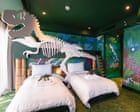
Part of the dinosaur suite at the Park Plaza London Riverbank hotel created in collaboration with the Natural History Museum. Photograph: Will Ireland/PinPep View image in fullscreen Part of the dinosaur suite at the Park Plaza London Riverbank hotel created in collaboration with the Natural History Museum. Photograph: Will Ireland/PinPep Retail industry From hotel suites to virtual reality, museums turn to licensing deals as costs rise Natural History Museum and British Museum among cultural institutions leveraging collections and exhibitions
Prefer the Guardian on Google They are often free to visit but museums are bolstering their finances by putting their stamp on everything from upmarket hotel suites to trendy jumpsuits and virtual reality experiences.
Forget buying a T-shirt. If you can afford the “from £724” price tag, you can spend the night in the Natural History Museum family suite at the Park Plaza London Riverbank hotel, which has an interior inspired by the museum’s founder, Sir Richard Owen, complete with Tyrannosaurus rex bunk beds.
Deals such as this are becoming more commonplace as cultural institutions look to leverage their renowned collections and trusted brands in the face of funding cuts and rising costs.
View image in fullscreen One of the Natural History Museum’s previous deals was with the paint manufacturer Farrow & Ball. Photograph: Farrow & Ball x Natural History Museum Data shows that overall UK sales of licensed merchandise and services grew 7% to $19.2bn (£14.5bn) last year, according to the industry trade body Licensing International.
A breakdown of the UK market figures shows that the “art property” category, which includes museums, grew by more than 8%, while “attractions and promotions” (which includes immersive experiences at museums and art galleries) soared by 53%.
“Our licensing programme continues to grow consistently at about 15% year on year,” said Louisa Skevington, the licensing manager at the Natural History Museum, who added that “experiences” were becoming an increasingly important part of that. “It’s about finding creative ways to bring the museum and its stories to people wherever they are, while continuing to grow the reach and impact of the programme.”
The Natural History Museum’s previous deals include a Farrow & Ball paint range inspired by Werner’s Nomenclature of Colours and a collection with the fashion brand Lucy & Yak featuring dinosaur-print jumpsuits and dungarees, aimed at millennials and gen Z. More recently it worked with the virtual reality experience company Sandbox on the prehistoric adventure Age of Dinosaurs.
View image in fullscreen Gameplay footage from the Age of Dinosaurs. Photograph: Sandbox VR & Natural History Museum The importance of licensing means a growing number of museums, galleries and heritage organisations are exhibiting at this week’s Brand Licensing Europe conference in London.
New attenders include the National Gallery, the National Trust for Scotland, the Ashmolean Museum in Oxford and Tate Enterprises. They join the British Museum , the Natural History Museum, the Victoria and Albert Museum and the Imperial War Museum. The competition is stiff, however, as the agenda includes talks on the “Bluey effect” and the new Harry Potter TV series.
View image in fullscreen The British Museum has collaborated with the London department store Liberty for a Bayeux tapestry collection. Photograph: Liberty London The huge demand for Bayeux tapestry ticke…