
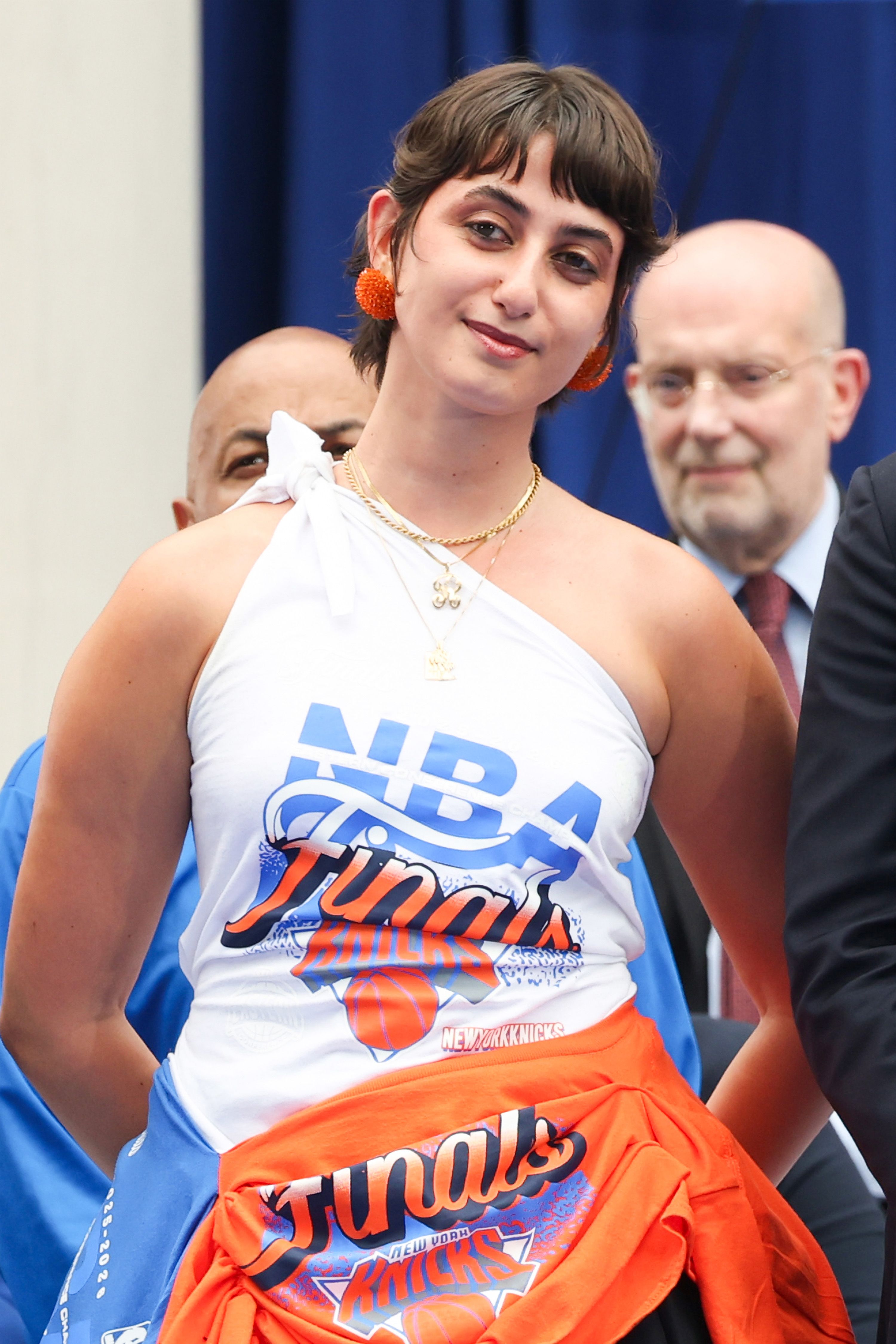
Rama Duwaji wearing a custom dress, made of bootleg T-shirts, by Miss Claire Sullivan. Photo: Getty Images Save Story Save this story Save Story Save this story It was just after 7pm on Wednesday, August 26, the opening night of Harry Styles’s Together, Together residency at Madison Square Garden, and a man in his 30s was haggling with a trio of young women outside the arena. Between them was a wagon overflowing with T-shirts in an assortment of colors.
“I’ll tell you what,” said the man with the wagon, who later introduced himself as Rob. “Let’s play rock, paper, scissors. If you win, it’s $50 for three; if I win, it’s $60.” Deal. “Rock, paper, scissors, shoot” — paper covers rock. Rob won. Three for $60. The women weren’t too upset about their loss, though. They’d already talked him down from $30 a shirt.
Harry Styles pop-up store in Borough Yards ahead of the singer’s Together, Together show at Wembley Stadium.
Scenes like this one played out all evening around the Garden, where Rob was one of more than a dozen entrepreneurial vendors who had gathered to sell Styles-themed apparel to concert-goers for a fraction of what it would cost for merch inside. None of these vendors had permission from Styles or Merch Traffic — the exclusive US licensing agent of the singer’s merchandise and a subsidiary of Live Nation — to produce and sell apparel featuring his brand. In doing so, they were likely committing trademark infringement. And yet, this unlicensed, or bootleg, merchandise is a signature stitch in the fabric of fandom, one that fills an integral role in the live entertainment ecosystem.
“This is part of the experience, coming to the show, buying a shirt, going inside,” says Rob, who spoke on the condition that only his first name be used. “This is part of the fun.”
Bootleg merch is nothing new, but it is having a moment right now. In no place has that been more apparent than New York City, which this year hosted several major cultural events, such as Bruce Springsteen’s Land of Hope and Dreams tour in May, the New York Knicks’s NBA Finals run and the Fifa Men’s World Cup in the summer, and most recently, Styles’s 30-night residency, which runs through October 31.
A street vendor selling outside the Seattle Stadium during the Fifa 2026 World Cup.
The buzz has extended beyond the venues themselves. In almost every neighborhood of the city, you’re bound to bump into vendors who have set up shop near parks, subway stations, and bars looking to meet the fervent demand for soccer kits, Styles swag and Knicks gear. Influencers have promoted the products on Instagram and TikTok, and fans are sharing information about where you can find the apparel in group chats. The result is a black market operating in plain sight.
Although there are occasional calls from companies like Merch Traffic to crack down on bootleg apparel, hardly anyone in position to do something about it seems to care. “We are definitively not enforcing it at the level that we used to,” says Robert Boland, a sports law professor at Seton Hall Law School.
There is no official data on the size of the unlicensed apparel industry because it is decentralized and unregulated; based on its proliferation alone, however, it appears to be thriving. The most obvious explanation for the bootleg boom is that there’s a massive market for merch right now. Recognizing this, brands have opened new avenues to sell apparel to their fans beyond venues, flagship stores and the internet, mo…