
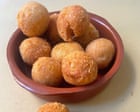
Crunch bunch: Rachel Roddy’s cheese and bread balls. Photograph: Rachel Roddy/The Guardian View image in fullscreen Crunch bunch: Rachel Roddy’s cheese and bread balls. Photograph: Rachel Roddy/The Guardian A kitchen in Rome Food Rachel Roddy’s recipe for cheese and bread balls These highly crunchable cheesy bread balls are a great way to use up odds and ends
Rachel Roddy Thu 8 Oct 2026 07.00 CEST Share Prefer the Guardian on Google S adly, I’m never going to be able to recreate the cheese and bread balls I made a few weeks ago, because, of the four cheeses used, I recognised only two of them: a bit of gorgonzola and a slice of precious Montgomery cheddar, bought from Da Corrado, a stall on Testaccio market. The other two lumps of cheese, both wrapped in white waxed paper and both quite dry, were, I think, a piece of grana padano and the end of the pecorino we brought back from Umbria. But I can’t be sure, because I didn’t really examine them. Even if I had, it would have been hard to guess; the description “heels of cheese” is appropriate here. What I do know, however, is that the combination of those four grated cheeses with two eggs and enough breadcrumbs to turn the mix into a soft, malleable dough made for fantastic deep-fried balls.
The inspiration for using up the uncertain contents of the cheese box was pallotte cacio e ova, which translates as “little cheese and egg balls” , a typical and much-loved thing in both Molise and Abruzzo, which were, in fact, one region until 1964. Pallotte are resourceful, and were surely invented as a way of using up scraps of cheese (almost certainly local pecorino) and bread. Whatever combination of cheese you use, though, the important thing is to add enough soft white breadcrumbs – anything from 80g to 120g – to turn the mixture into a soft dough that you can then mould into balls, but not so compactly that the tenderness is lost. Like meatballs, cheese balls benefit from a rest in the fridge, so they can firm up before frying. The rest in the fridge also ensures that they are cold, which is important, because the thermal shock of the cold surface meeting the hot oil helps create a crisp shell.
It’s not just my fridge that was (and remains) chaotic; our whole kitchen, which is still missing four cabinets since they fell off the wall, is disorderly to say the least. One of my various justifications is that I am in a suspended state until I finish editing my next book, an exuberant regional recipe book that includes a fair bit of frying. Editing and testing means I’m also feeling pretty fluent in my frying advice. I fry in a smallish, high-sided frying pan, so a litre and a half of oil comes 8cm up the sides; I use a mixture of one-third olive oil (which gives great flavour) and two-thirds neutral peanut or sunflower oil, and keep the temperature around 180C (and certainly not much hotter). Good fritti need a good set-up, too: the pan with oil positioned safely at the back of the stove; a slotted spoon and pair of tongs; a plate lined with kitchen towel to blot excess oil, or a wire rack set over a tray to catch drips; and a big serving plate.
Pollette are a perfect pre-dinner snack, or turn them into a light meal by serving with a mixed salad. Either way, just-fried and steaming-hot cheese and bread balls call for a drink: beer, lemonade, wine. Just make sure it’s cold.
2 eggs 150g grated cheese (whatever you have) Nutmeg 80-120g soft white breadcrumbs 1½ litres sunflower or peanut oil , or…