
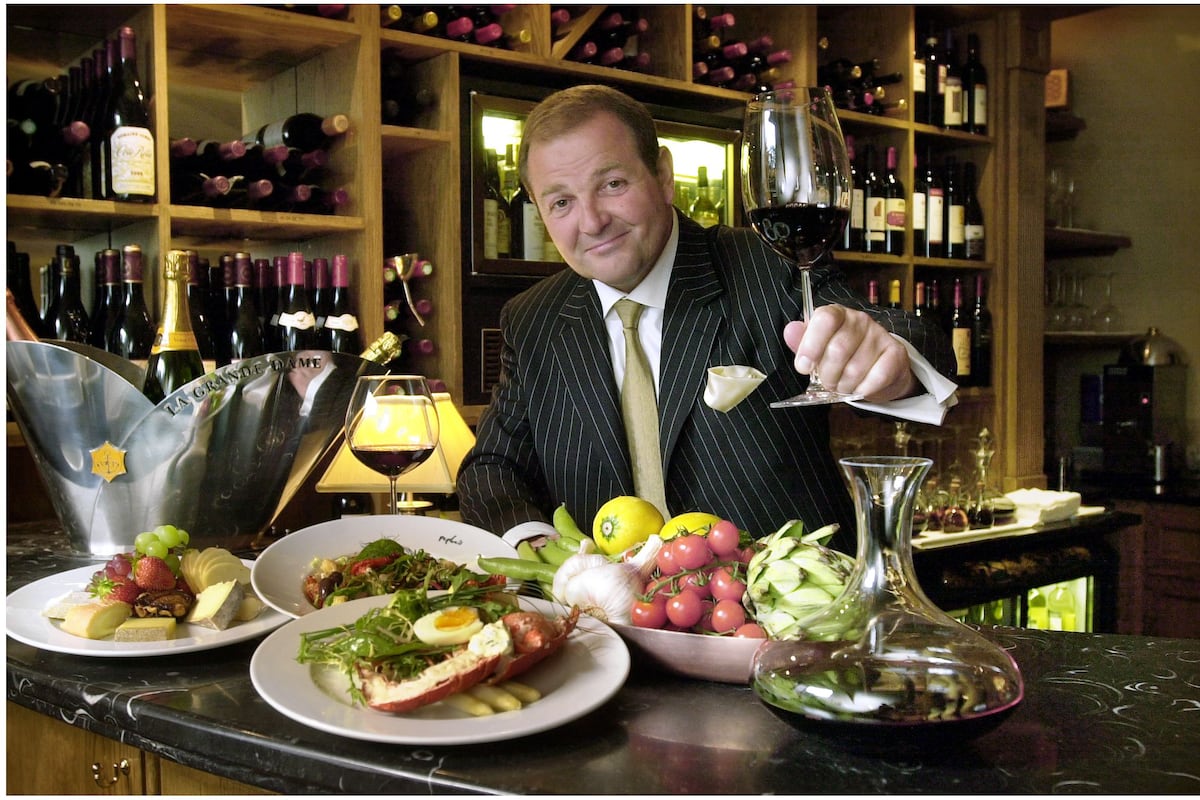
Dublin restaurateur Barry Canny , founder of Peploe’s restaurant, left an estate valued at €2.86 million, papers published by the Probate Office have shown.
Canny, of Dalkey, Co Dublin, established Peploe’s – named after the Scottish post-impressionist painter Samuel John Peploe – in the style of an upmarket New York brasserie, located at 16 St Stephen’s Green, in 2003.
The restaurant became quickly notable, hosting such celebrities as former US president Bill Clinton , Luciano Pavarotti, Julia Roberts and Bono .
Canny famously got into a spat with then CEO of Intel , Craig Barrett, when the latter publicly complained of the price of eating in Peploe’s.
Barrett had referred to the cost of the meal for two as an example of the high costs of doing business in Ireland. Canny reportedly replied: “He can’t come in here with his big cigar and tell us how to run our country.”
Among Canny’s other hospitality ventures was Brownes Townhouse on St Stephen’s Green, which opened in 1998. This was one of Dublin’s first boutique hotels and featured 12 luxury bedrooms above a brasserie grill. He ran it with his wife Dee for five years before selling to a Spanish group. The building later became The Cliff Town House, then Floritz.
Another venture was The Olive restaurant in Sandycove, Co Dublin. He was also involved in a clothing boutique, Browns Boutique, which he operated before fully committing to the restaurant industry.
Other records at the Probate Office show Tony Hourihan, University College Dublin professor, finance expert and philanthropist, left €2.093 million when he died in October last year.
Hourihan, of Crosswaite Park, Dún Laoghaire, Co Dublin, specialised in banking and finance. Beyond his work in Irish academia, he championed charitable causes and was a primary supporter of Casa Nano Nagle – a foundation aiding vulnerable families and children in Alto Hospicio, Chile .
He died suddenly in Chile, where a formal funeral mass was held in Santiago.
The figures quoted in this article include all assets, typically including a family home, investments and land