
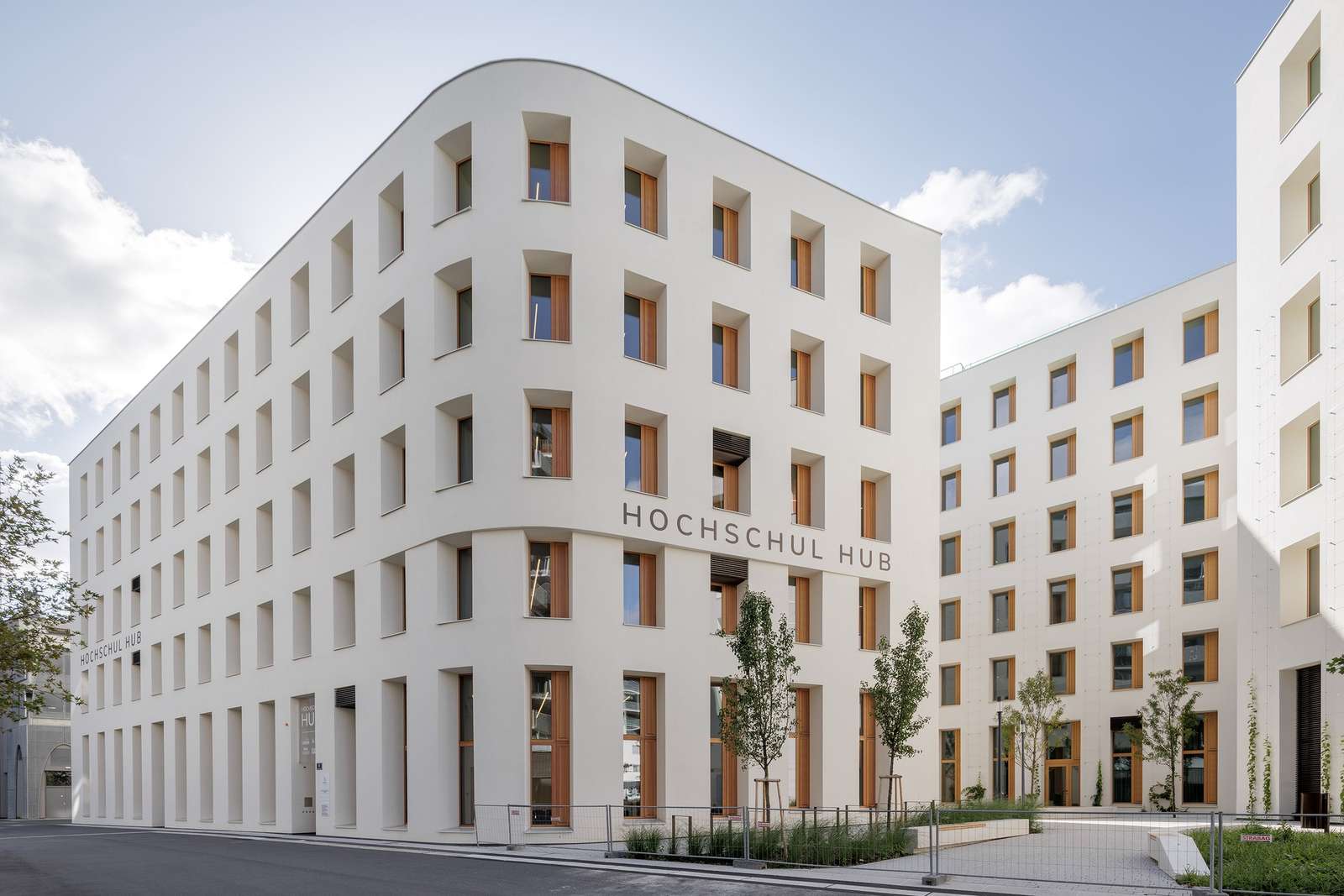
June 13, 2026 June 13, 2026 Home » Archive of Articles » Mass Guidance and Climate Management in Project 2226 as a Negative Ecological System Mass guidance and dynamic climate management achieve environmental efficiency in this architectural proposal through total reliance on the building mass as the main thermal regulator, abandoning traditional mechanical systems for cooling, heating, and ventilation. The design is based on the physic principle of (2226), where high-thickness walls act as a thermal reservoir, absorbing excess energy in summer and slowly releasing it in winter. This thought is reflected in the studied guidance of architectural masses and their elongation, allowing control over the angles of sunlight incidence and penetration into the internal spaces, while employing natural air movement through carefully studied openings that achieve the principle of cross ventilation without technological intervention.
The absence of mechanical solutions reflects on the daily user experience within buildings, where the architectural space transforms into a sensory environment that directly interacts with external variables. Visitors experience a gradual transition in temperature and humidity when moving from outside to inside, governed by the nature of the construction materials and their ability to breathe naturally. The movement of the sun throughout the day creates a living scenography of light and extended shadows across the versatile spaces, giving users a deeper temporal and spatial awareness, linking human and kinetic behavior inside the buildings with the natural rhythm of the surrounding climate.
The project offers a precise treatment directly related to the context and design concepts of the Aspern district, where the overall mass structure of the buildings unfolds through carefully considered spatial transitions. The mass language follows a formal inspiration from broader urban design principles, balancing containment and openness in its surrounding environment. This sculptural balance is manifested in the guidance of architectural masses to remain open to the public urban space and surrounding areas, while simultaneously closing walled and visually towards major traffic axes to provide the necessary sound and visual protection for internal spaces within cities.
Movement through the separating and internal spaces of the project transforms into a living human experience, revealing continuous visual transformations resulting from the mass formation. The user experiences a moment of transition from the open urban fabric to the depths of the architectural ensemble through a gradient in vision and lighting of the spaces, where the shadows resulting from the mass's curvatures create a protected and vibrant area. This guidance contributes to managing air movement and microclimate between buildings, enhancing the psychological and material effect on the user who feels a separation from the noise of traffic axes and an integration into a spatial realm designed to mimic the experience of a sustainable city.
The structural efficiency of the project is achieved by liberating the horizontal plans, where high spatial flexibility is concentrated in the area extending between the outer load-bearing walls and the vertical cores of movement and access. The architecture here relies on its eternal primary tools to manage the internal environment; using high thermal mass walls, with precisely balanced proportions for the spaces, and deliberate tuning of the openings to solid ratios in the facades. The (2226) operating system integrates with these physical data through self-moving mechanical ventilation panels, ensuring control over air quality and temperature stability within the spaces, keeping it steady between 22 and 26 degrees Celsius throughout the year, without activating the self-cooling system in buildings except when marked and exceptional increases in external temperatures in cities are observed.
These physical treatments create a scenographic experience perceived by the user through the interplay of sustainable architectural elements with the demands of daily quality of life. The proportion between wall masses and openings creates a changing rhythm of natural light and shadows throughout different hours, while the high durability of materials and the timeless aesthetics of the ensemble enhance the psychological and material effect on tenants, providing them with thermal and visual stability. Thanks to this approach, the architectural structure transforms from merely a rigid shell into a living membrane that breathes and interacts with air movement, achieving environmental and economic sustainability that translates the concept of sustainability into a tangible reality experienced by individuals with every movement within the space.
The diagnosis of the ROBIN project reveals a deep reliance on material mass instead of mechanical intervention, re-establishing heavy building materials as primary climatic regulators. By employing structural thermal mass and self-moving ventilation panels, the design challenges the contemporary reliance on complex air conditioning networks, asserting that the primary laws of thermodynamics alone can stabilize the interior climate within increasingly dense cities, without sacrificing the flexibility of space distribution.
However, this absolute reliance on the load-bearing structural envelope reveals an inherent programmatic rigidity; linking climate control to mass walls strictly confines future possibilities of adaptive reuse and spatial modification. Furthermore, this passive model assumes an anticipated climatic balance, overlooking sharp thermal spikes and the urban heat island phenomenon that often destabilizes the static non-mechanical envelopes within buildings.