
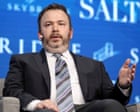
Assaults by Boaz Weinstein’s Saba Capital often look self-interested, short-termist or damaging for UK investors. Photograph: Richard Brian/Reuters View image in fullscreen Assaults by Boaz Weinstein’s Saba Capital often look self-interested, short-termist or damaging for UK investors. Photograph: Richard Brian/Reuters Nils Pratley on finance Financial sector Time to tell US raider Saba Capital to get lost – again Nils Pratley Boaz Weinstein’s hedge fund is waging an aggressive campaign against the FTSE 250’s Baillie Gifford US Growth Trust
H ere we go again: another episode in the Saba saga , the story of a New York hedge fund causing havoc in the UK investment trust sector by taking big stakes in funds and then demanding change, often in only vague terms.
The best that can be said about Saba Capital (and it’s not much) is that its belligerent boss, Boaz Weinstein, has disturbed the complacency that used to infect corners of the UK investment trust world, meaning companies that invest in other companies. It is now harder for a board to do nothing if the share price sits at a wide discount to the value of the underlying assets for long periods.
Too often, though, Saba’s assaults look self-interested, short-termist or damaging for UK investors. The attack on Baillie Gifford US Growth Trust, a FTSE 250 constituent usually known by its USA ticker, is all three.
Read more Regular shareholders in USA have roundly told Saba to get lost twice in the past 18 months but they will have to do so again if they value what they own, which they should. The US raider, sitting on a near-30% stake, wants to install three of its nominees on the board via a vote at next week’s annual meeting .
On a long view, USA’s performance has been excellent: an annualised return of 16.7% since launch in 2018, beating the S&P 500 over the period and within the top 10% of all UK investment companies. The only reason an opening, of a sort, has appeared for Saba is because the 16.7%-a-year returns haven’t happened in a straight line. The pop in AI valuations in late-2022 means USA’s five-year statistics are less impressive.
But volatility is what investors accept when they buy into a strategy of backing high-growth US companies for the long-term. The portfolio is stuffed with stakes in big names in the AI world – Anthropic, Databricks, OpenAI, SpaceX and Stripe – that were acquired when the companies were smaller and sometimes still privately owned. A little bit of biodiversity in the UK investment landscape will be lost if USA falls under Saba’s control.
What would a Saba-dominated board do? It’s hard to say definitively because this is all Saba says: “If our nominees are elected, we would urge them to offer all USA shareholders a 100% cash exit at or near NAV [net asset value] – providing a long-overdue liquidity event.”
The absurdity of that proposal lies in the fact that the board of USA says it has already offered Saba what it supposedly wants – a chance to get out at a price nearly equivalent to the value of the assets. But the US hedge fund declined.
The suspicion is that Saba’s nominees could try to appoint Saba itself as manager, or wrap USA into a Saba-managed vehicle. And, note, Saba’s main funds in the US now trade on far wider discounts to asset value than USA’s relatively modest 3%.
Since Saba hasn’t spelled out much, all one can say is that its nominees cannot possibly be regarded as independent. One is a Saba employee; the other two are serial pi…