
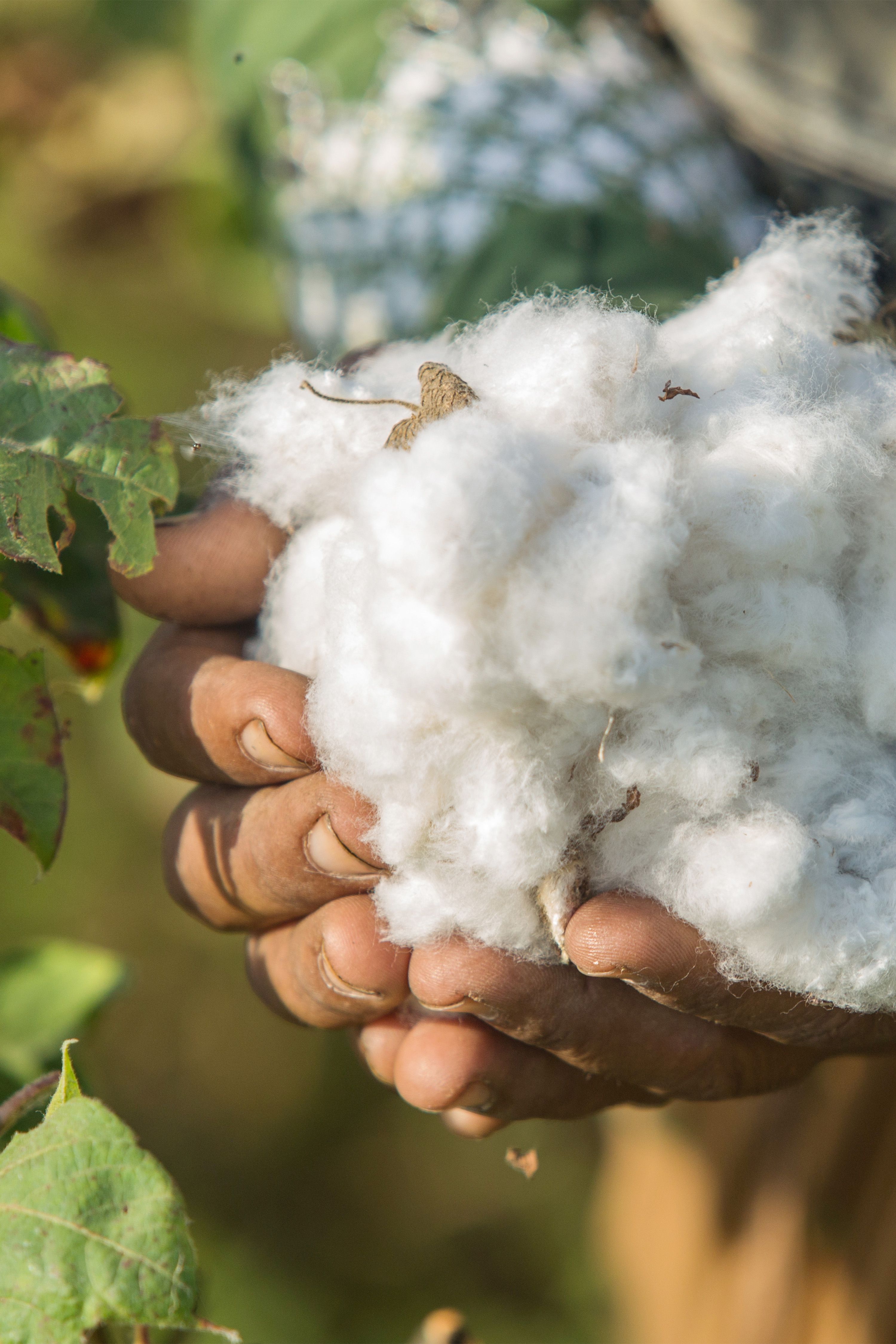
A worker picks up cotton at a flooded farm during the Pakistan 2022 flood. Photo: Getty Save Story Save this story Save Story Save this story In 2022, devastating floods left cotton farmers in Pakistan in an impossible position. As much as 40% of the annual cotton yield had been wiped out. Their livelihoods were at stake, and fashion companies like H&M that would have bought that cotton were left hanging.
The situation had a “huge impact” on H&M’s ability to get the cotton it needed at the price and time necessary, says H&M Group’s biodiversity impact lead Jennie Granström. “Now, we are scaling regenerative agriculture in cotton, and that’s primarily for resilience — so we can feel safe that there will be raw material production in a world where climate change puts a lot of pressure on nature and farmers.”
Situations like this are becoming increasingly frequent and more intense as the climate crisis accelerates . And it’s not just cotton. Fashion is vulnerable to a wide-ranging slate of nature risks, affecting everything from the quality and quantity of natural fibers to the effectiveness of dyeing and tanning processes , and the insurability of its supply chain and retail networks .
If there’s a silver lining to the continuous stream of climate change-related events globally, it’s that sustainability teams have never had an easier time making the business case for fashion to invest in nature. “It’s really come home for people this year,” says Rachel Kolbe Semhoun, head of sustainable sourcing and nature initiatives at French luxury group Kering. “People are finally realizing that old-fashioned approaches aren’t going to fit the bill.”
Shifts in nature can affect everything from the quality, strength, and length of natural fibers to how well dyes adhere to them.
Kering was one of the first companies to create a dedicated nature strategy, working with leading biodiversity consultancy Biodiversify in its infancy to map out fashion’s exposure to nature-related risks. It implemented the industry’s first Environmental Profit and Loss (EP&L) framework in 2016 to capture things like water and air pollution, land use, and greenhouse gas emissions on the balance sheet. This work underpinned the business case for nature at Kering, laying the groundwork for its 2020 biodiversity strategy, its early support of the science-based targets for nature in 2024, and its industry-leading water strategy in 2025.
Other fashion companies are starting to make similar investments, to varying extents. H&M has also set science-based targets for nature, and has a longstanding partnership with the World Wildlife Fund (WWF) to strengthen ecosystem resilience, including along the Satpura-Pench Corridor in India. Topshop owner Bestseller is also investing heavily in nature: at the Textile Exchange conference on Tuesday, sustainable raw materials manager Danique Lodewijks told attendees the company is heavily invested in regenerative agriculture for cotton, noting its $3 million donation to the Regenerative Fund for Nature , co-founded by Kering and non-profit Conservation International.
Also at the Textile Exchange conference, VF Corp’s VP of global product stewardship, sustainability and government affairs Sean Cady shared the company’s approach to scenario planning, in which nature plays a significant role. Some of the more extreme scenarios it has modeled include a future where snow melts and skiing ceases, so “no one buys The North Face puffer jackets”. (US…