
A re the Halloween pumpkins in shops smaller this year? You may indeed notice a certain shrinkage in your seasonal gourds as you lift them into your trolley, but why? It turns out that a few factors might be at play.
Pumpkin grower Gerard Toner of Ballymad Farm and Archie’s Acre Animal Farm in Co Meath explains: “You are going to see, depending on where you are in the country, slightly smaller pumpkins depending on how people were affected with the heatwave .”
Toner says the pumpkins themselves tend to enjoy the heat, “which is kind of counterintuitive”, and will grow well in warm weather.
“But when you have consecutive weeks with just heat and no rain ... pumpkins are made up of water, so they need a bit of water to keep them going. In areas of the country, depending on soil pipes, and how they have been planted and whether or not they have been irrigated, that will affect the final size of the pumpkin,” says Toner.
Ireland is not the only country facing this size issue, with England’s record-breaking summer heatwave and prolonged dry spell also resulting in reduced yields and smaller pumpkins .
Outcomes have depended on locality and soil type, with the harvest varying considerably, for example, between Yealmpton and Lifton in Devon, only 50km apart.
“I wouldn’t say they [smaller pumpkins] are harder to carve. I would say different varieties are trickier to carve,” says Toner. He points to smaller varieties with harder skin and “goosebumps”, which he says can be “quite tough”.
Larger pumpkins with a smoother surface can, on the other hand, “be softer inside and then easier to work on”.
Regardless, a smaller pumpkin means less surface area for making mistakes.
Here are some allegedly foolproof hacks from the infinite wisdom of the social media algorithm.
This nifty little trick could work for a pumpkin regardless of size, but it is particularly useful for the smaller ones. Instead of hollowing out your Jack O’Lantern from the top where the stem is, work from the bottom.
Making the place where your tea light sits the base of your pumpkin will leave it easier to light; the carved pumpkin can then be placed back on top like a hat. This trick saves a clawed hand getting licked by flames as you try to carefully lower your candle into the pumpkin.
A whisk can be used for a preliminary scoop-out of the pumpkin flesh in lieu of your hands, keeping them clean.
Once you have extracted most of the stringy flesh, you can run around the interior walls with a spoon to remove any remaining goo.
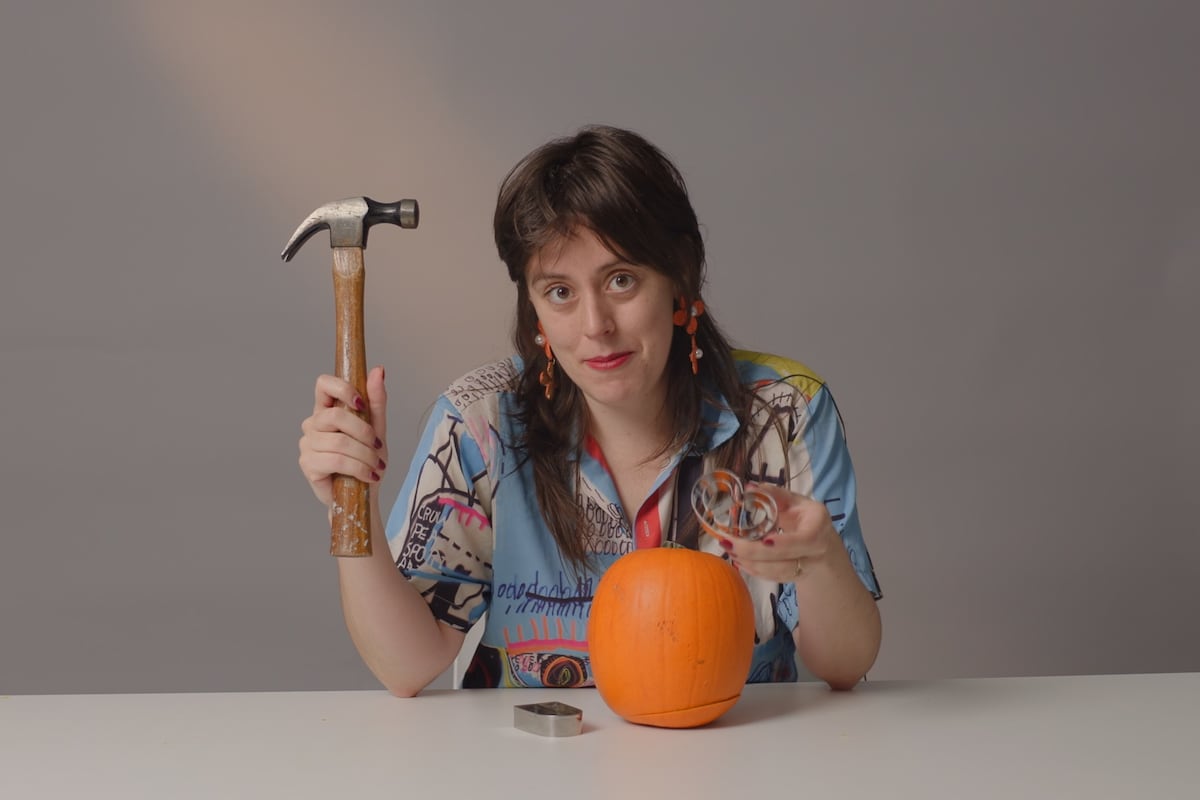
A well-placed biscuit cutter can be hammered into the face of the pumpkin to ensure your carving has clean cut-outs. It is a handy trick for the artistically challenged, although it is not advisable to use biscuit cutters to which you have a sentimental attachment. And it’s probably best to leave this one to the adults.