
See more of our coverage in your search results.
Make New York Post a Preferred Source Jessica — a wealthy mom to six children, ages 6 to 19, in California’s Bay Area — has done plenty of things raising her kids that some might find questionable. She has her nanny work Saturdays and gives her access to her Amazon account, and she thinks of her older kids as “test pancakes.”
But, she says the most “controversial” thing she’s done is subject each of her kids to an $8,000, nine-hour “recreational” — her word — neuropsychological evaluation.
Neuropsych evals have traditionally been used to diagnose children who are seriously struggling at school or home and may have significant learning disabilities and neurodevelopmental conditions, such as autism spectrum disorder (ASD) and attention-deficit/hyperactivity disorder (ADHD). But, increasingly, well-off parents are getting the evaluations, which typically cost $5,000 to $10,000 and are done over multiple days, to potentially get their kids extra time on tests and other accommodations — or, in the least, a better understanding of how they best learn.
“I am a total data person,” Jessica, who asked not to share her last name for privacy, told The Post. “I want to know how each kid’s brain works, what are their strengths, what are their weaknesses.”
The growing popularity of these intensive tests comes amidst rising rates of ASD and ADHD and better awareness, increased screening and changing criteria. According to CDC surveys , less than 6% of children aged 3 to 17 had an ADHD diagnosis in 1997. By 2024, that number had more than doubled. In 2000, the CDC identified the prevalence of autism to be 1 in 150 children; in 2022, it was 1 in 31.
Through the evaluations, Jessica found out that one of her children was an auditory learner but a verbal processor. “So it wasn’t just that he was repeating everything back to me, it’s how he learned,” she said. Another kid was discovered to have facial blindness, which means she can’t read emotions on someone’s face. “We now know she needs us to say how we are feeling, and not just make a face and assume she can read that,” she noted.
With both children, they made adjustments at home and told teachers how they best learned.
Most notably, thanks to the evaluations, two of her children were diagnosed with dyslexia and one with ADHD. All three now get extra time on tests.
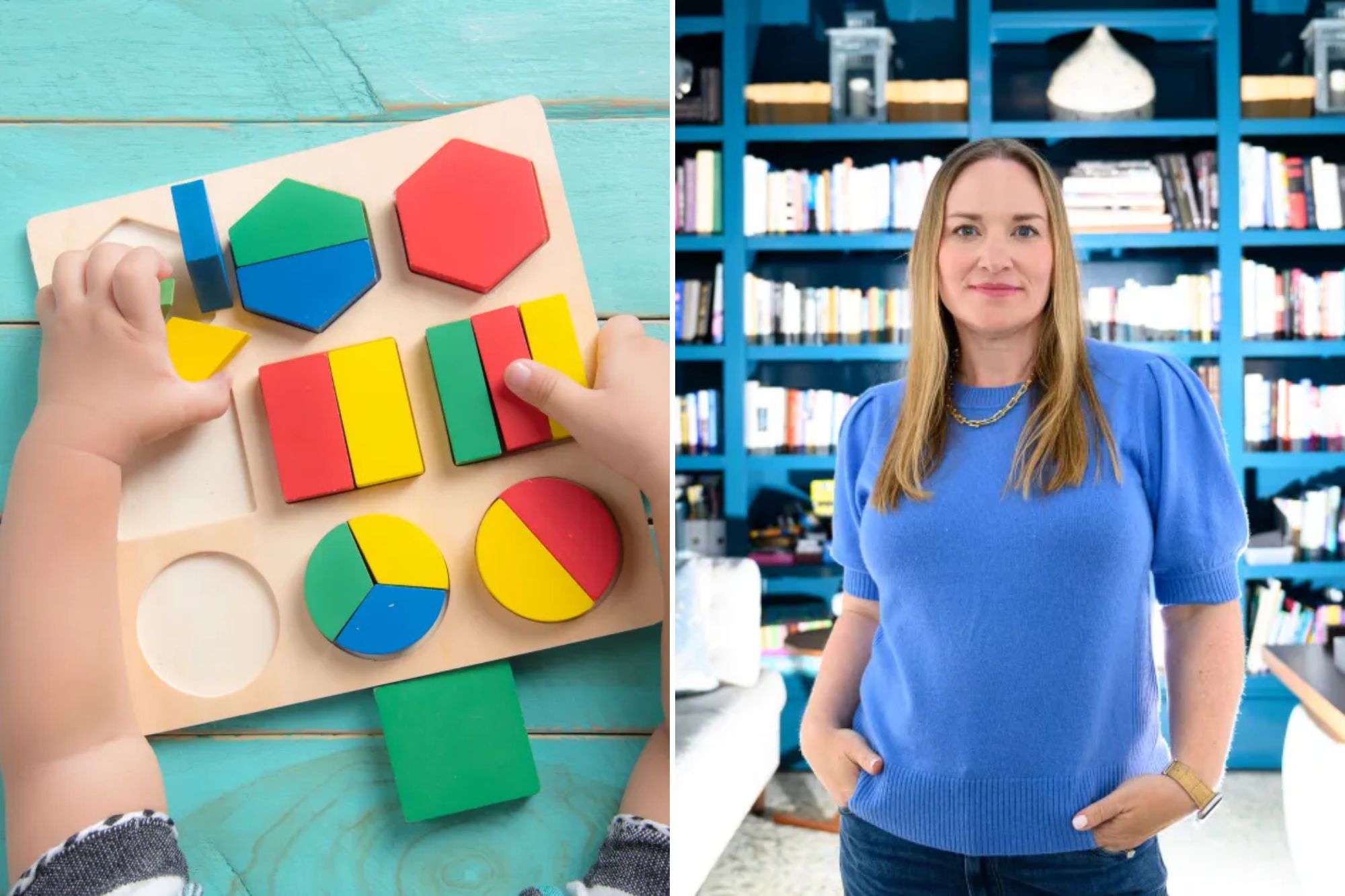
Katie Davis, a clinical neuropsychologist based in New York City, said that a decade ago, she did a neuropsych eval on a child who didn’t seem to need it about once a month. (The evaluations entail things like watching kids do puzzles and work with blocks to assess how good they are at concentrating, languages, math, reading, and emotional regulation, among other things. They also typically require parents and teachers to fill out lengthy questionnaires.)
Now, about 40% of the kids Davis tests are “neurodevelopmentally completely normal,” she said. “The whole concept has been twisted and bastardized.”
Davis, who just released a new book, “ Actually, You’re Fine ,” focused on the over-diagnosis of disorders in children, said she is also seeing more parents come in who are looking to get their kids special provisions, like extra time on exams, including those used for school admissions in New York City.
“It is thes…