
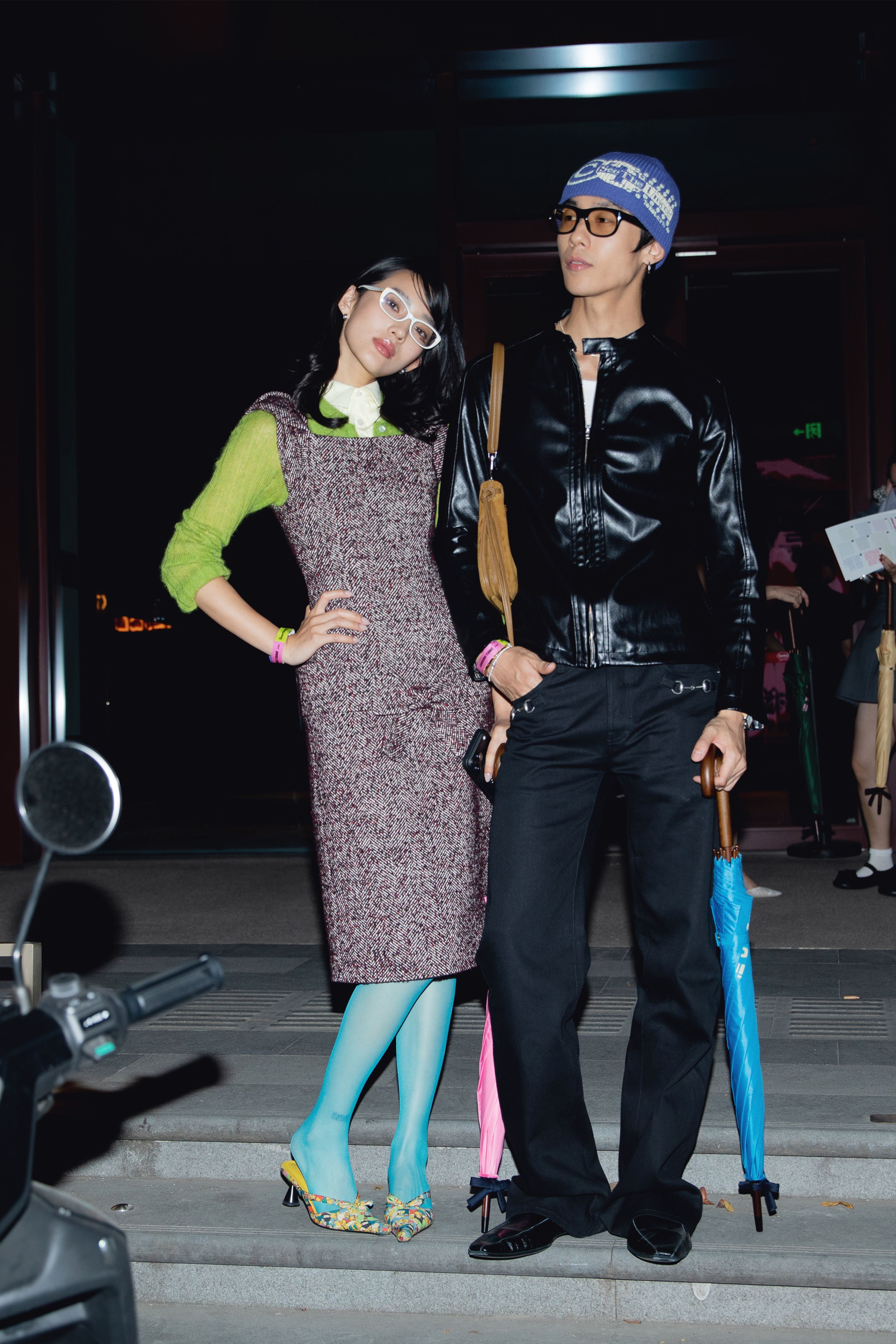
Shanghai SS27 street style. Photo: Yumeng Zheng Save Story Save this story Save Story Save this story Until recently, China’s importance to the global fashion industry has been largely measured by consumption: its appetite for luxury rather than its ability to produce the next generation of talent.
Now, against a backdrop of economic uncertainty, China’s luxury market is recalibrating, says Fflur Roberts, head of luxury goods at Euromonitor International. “Weaker consumer confidence, slower economic growth and heightened price sensitivity are weighing on discretionary spending, following more than a decade in which China was a key driver of global luxury growth,” she says.
And although China’s personal luxury goods market showed signs of stabilization in 2025, luxury fashion remained under pressure, and according to figures from Euromonitor, is still down considerably from its peak in 2023 (approximately $460 million, versus a projected $407 million for 2027). LVMH earlier this month posted a 5% drop in sales for the third quarter for fashion and leather goods, laying the blame on “less buoyant demand” in China. For global brands to maintain relevance in this environment, Roberts adds, it will require more than longstanding prestige.
“The growing presence of domestic brands is broadening the competitive landscape and offering consumers more diverse alternatives to established international houses,” she says.
At least in Western fashion industry terms, China’s domestic designer market is a mere three decades old, beginning in the 1990s as China aligned with seasonal norms and established its own formalized fashion institutions. It’s now finally maturing, thanks to a recent proliferation of designers, many of whom studied at renowned fashion schools in Europe and America and are now building their businesses back home. This generation of local brands is able to get a foothold in the market because of proximity and access to cost-effective manufacturing infrastructure that emerging brands in Europe and the US don’t have.
“It means an incredible potential to have fashion and style at all price points, at a large consumer level, which cannot exist in other places,” says Blake Abbie, editor-in-chief of A Magazine Curated By , who notes that China’s design industry has seen a recent burst in traction. “The majority of that growth has only happened in the last 15 years,” he says.
So what will the next 15 years look like –– and what will it mean for the global luxury brands that have relied on China for growth?
The rise of domestic designers in China comes at an exciting time for Asian fashion at large.
International fashion talent is increasingly looking to the wider region for new opportunities: Kim Jones’s new brand will be based in Hong Kong ; Kris van Assche partnered with Chinese sportswear giant Anta; Clare Waight Keller and Francesco Risso have taken up top positions at Fast Retailing’s Uniqlo and GU, respectively, in Japan; and former Gucci creative director Sabato De Sarno will present his first collection for Shanghai-based Icicle during Fall/Winter 2027. “It’s no longer a given that [a Western designer] is going to work in a European house,” says Jonathan Lee, a veteran fashion consultant based in Hong Kong. “Maybe someone from Asia will take you.”
It’s not just designers who are seeking opportunities in the region. David Siwicki, the Paris-based PR , has made a concerted effort in recent seasons to spend more time in Asia a…