
June 15, 2026 June 15, 2026 Home » News » The Quai Branly Museum Completes Two Decades of Architectural Presence in Paris The Quai Branly Museum – Jacques Chirac completes 20 years since the initial implementation began in Paris. Designed by Jean Nouvel, the museum complex, which opened its doors in 2006, aims to challenge traditional patterns of Western museums through a multi-faceted architectural language. The project occupies a prominent site along the Seine River and establishes a clear spatial identity within the city's cultural landscape.
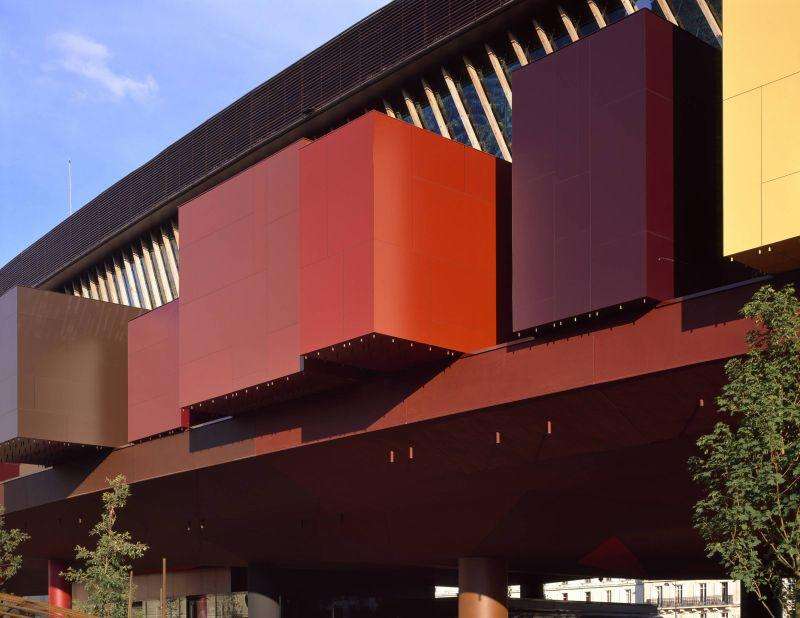
The museum complex consists of four independent buildings. Each structure features a distinct architectural character, while pedestrian bridges connect the entire group to ensure operational fluidity. This decentralized arrangement allows the project to function as a unified campus rather than a single massive institution.
A long, gentle slope guides visitors toward the heart of the complex. This transition leads to a spacious, open area that accommodates both the permanent collections and temporary exhibitions together. The interior layout emphasizes horizontality, creating a continuous environment that encourages movement among the various cultural displays without solid dividers.
The design team prioritized an unconventional approach to museum interior design. By avoiding the standard exhibition norms, the architecture creates specific atmospheres that support the museum's mission to celebrate world cultures. This spatial organization reflects this approach through diverse volumes and integrated pedestrian bridges.
The museum's curved shadow mirrors the natural curve of the nearby Seine River. Simultaneously, the surrounding garden acts as a physical extension of the Champ de Mars park. This architecture merges with the landscaping, erasing boundaries between the buildings and urban green spaces.
The exterior envelope and overall site plan respond directly to the context of the riverfront. By situating the cultural institution within a garden-like environment, the project creates a clear transition threshold between the bustling streets of Paris and the calm interior exhibition halls. This relationship between the built mass and nature remains a central element in the ongoing urban role of the site.
Project Team: Jean Nouvel (Atelier Jean Nouvel). Location: Paris, France.
Project Notes: The project was completed in 2006, following a design process that began in 1999. Additional credits include photography by Philippe Ruault, Roland Halbs, and Odile Decq.
The Quai Branly Museum represents a fundamental attempt to dismantle the rigid axial engineering of Parisian architecture and transform it into a porous museum campus driven by landscape. By replacing traditional monumental thresholds with a meandering garden path and gentle slopes, the project has succeeded in redefining the museum as an urban forest accessible to all. This decentralized layout prioritizes immersion in public atmospheres over the strict temporal accounts typical of Western cultural institutions.
However, this “multifaceted” liberation often conceals a profound functional complexity that undermines visitors' self-directed navigation. While blurring boundaries creates a poetic encounter with the site, the fragmented design risks reducing diverse global artifacts to mere scenic elements within a dim interior environment. The celebratory horizontality, aimed at cultural integration, ultimately imposes a choreographed journey resembling a controlled cinematic sequence more than a truly open civic forum.