
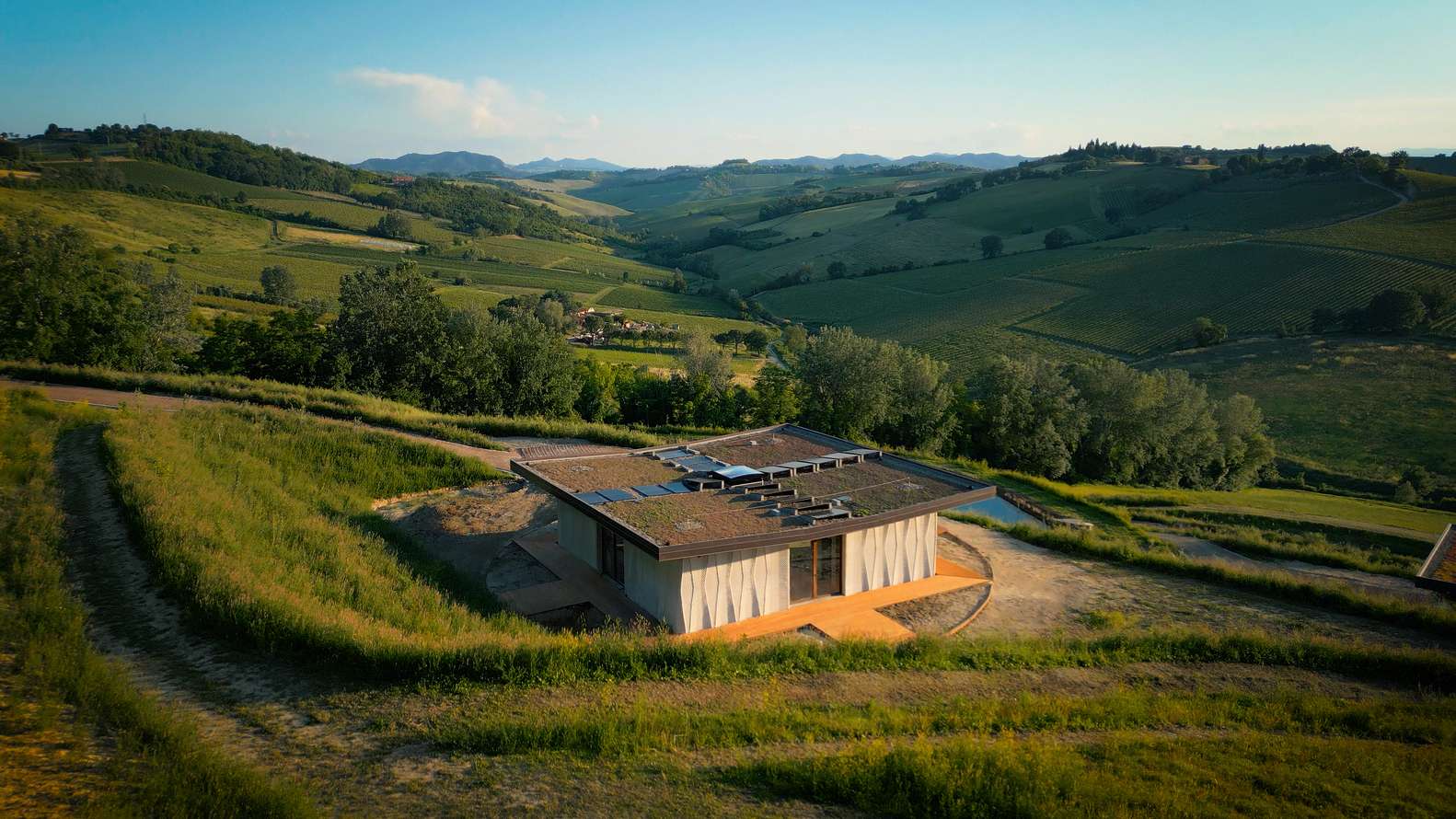
On June 15, 2026, the Shambala open research site and lab opened its doors on June 8, 2026, in the hills of Emilia Romagna, northern Italy. This complex, spanning 8 hectares, explores sustainable living methods through advanced 3D architectural printing techniques and biomimetic construction. The collaboration between the tech company WASP and the plant-based fragrance company Olfattiva led to the creation of this site, which hosts a manufacturer laboratory, a medicinal botanical garden, and a self-sufficient farm known as Ithaca (Itaca).
The project acts as a technical ecosystem to develop new strategies in sustainability and the circular economy. The site includes automated gardens and rainwater harvesting systems alongside dedicated research and development centers. The team designed the central 3D printed building as a replicable model compliant with regional safety and earthquake resistance standards, showcasing the viability of additive manufacturing in the construction sector.
WASP used large-scale modular 3D printers to construct the basic residential unit using locally sourced materials like raw earth and clay. This approach aims to reduce costs and environmental impact by eliminating the need for long-distance material transport. The design reflects a broader initiative to meet basic human needs, including housing and food, through alternative building methods and local production systems.
The building process integrated electrical systems and radiant heating directly within the 3D printed layers to improve the assembly timeline. The wall envelope uses a specialized blend of pure NHL lime and Geolegante material, supplied by Kerakoll, which generates lower carbon emissions compared to traditional cement. The mix also incorporates rice husks and natural insulation to enhance thermal performance and ventilation within the architecture.
In addition to the basic residential structure, the complex includes a 3D printed vertical garden designed for hydroponics. This vertical system increases agricultural yield within a minimal footprint while reducing water consumption and protecting crops from pests. A dedicated lab on-site hosts integrated 3D printers producing various items, including furniture, ceramics, and biomedical devices, at different scales.
The 8-hectare botanical garden supports a reforestation and agroforestry program featuring 500 fruit trees from ancient local varieties. The team planted 50,000 aromatic and medicinal plants to facilitate essential oil extraction and fragrance research. This green space acts as a testing ground for developing plant-based building materials and enhances biodiversity through the management of experimental crops.
The “Shambala” project places 3D printing within a regenerative context, integrating additive manufacturing with agricultural self-sufficiency. By utilizing raw earth and plant waste, the project shifts the concept of sustainability from mere carbon accounting to a holistic strategy for site coordination. This technical ecosystem reimagines housing not as a solid block but as a biological entity participating in a closed resource cycle, giving earth-based construction formal endorsement that meets modern seismic safety standards.
However, this pastoral tech mix risks romanticizing local production while overlooking the scalability of the machines used. While the earth remains local, robotic systems tend to be capital-intensive, and the exclusive binding materials are tied to global industrial supply chains. This tension unveils a recurring paradox; achieving a “natural” return to the land currently requires an advanced technological overlay that many resource-poor communities cannot afford or maintain.
The Shambala project aims to welcome the public for educational activities, including sensory workshops and olfactory experiences centered on the botanical collection. The project serves both as a functional shelter and a community lab in the open air. The site provides a framework for exploring self-sufficient living models in a modern context, merging advanced manufacturing with traditional agricultural practices.
Project team: WASP, Olfattiva, Kerakoll. Location: Emilia Romagna, Italy.
Project notes: The team opened the site on June 8, 2026. The complex includes the 3D printed Ithaca home and an 8-hectare botanical garden.