
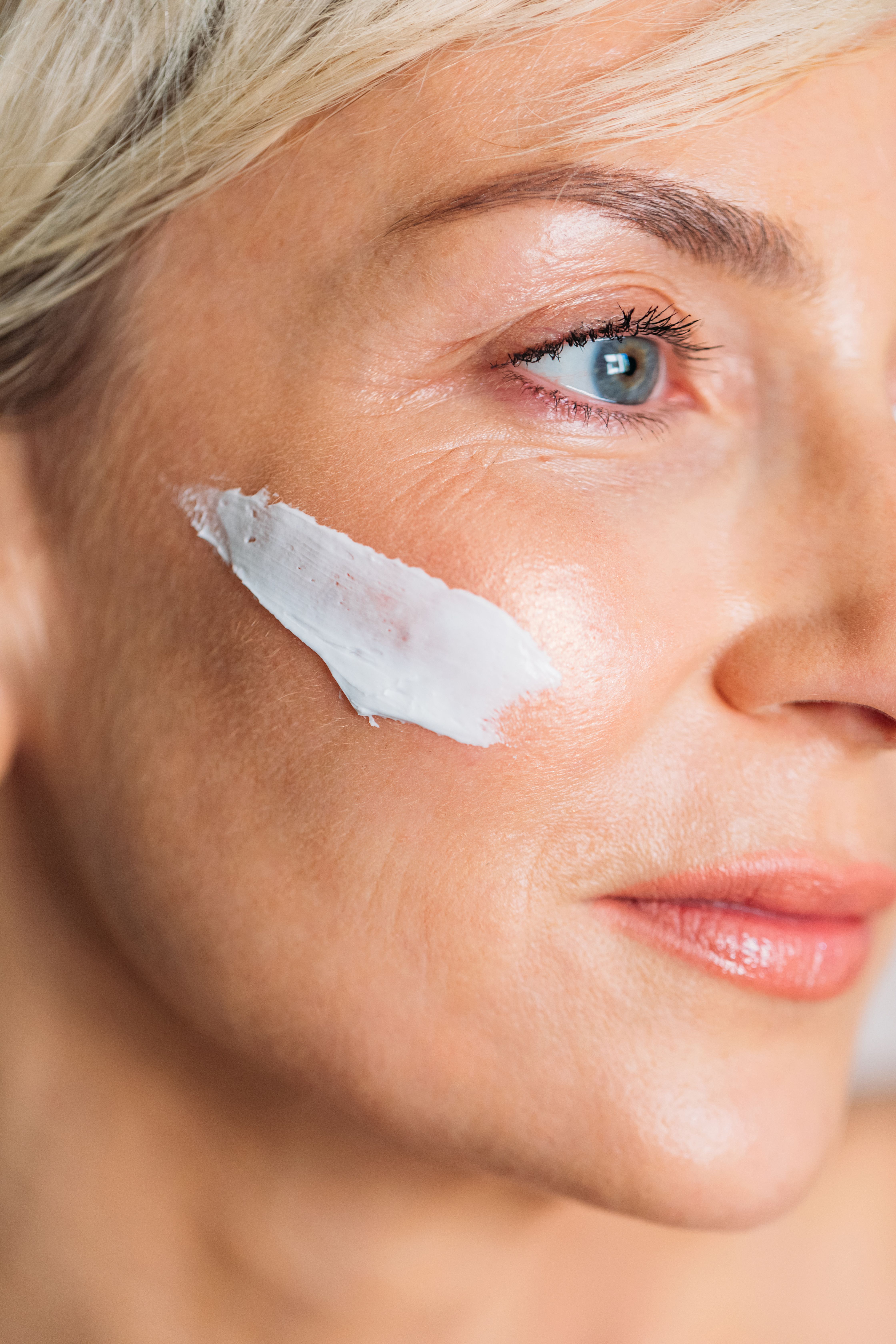
Adobe Stock Save Story Save this story Save Story Save this story At 45, Keenya Kelly gets more compliments on her skin than ever. But when she began experiencing perimenopause symptoms in her 30s, Kelly says her typically oily and plump skin became “almost like a Brillo pad overnight.” A friend told her to try putting estrogen-infused moisturizer on her face. So, every night for the past year, the video marketing strategist from Houston has religiously included estrogen cream, which she buys from the telehealth platform Musely, in her skin-care regimen . “People ask me what I’ve done to my face, and I say ‘It’s just estrogen.’”
Everybody seems to be talking about perimenopause and menopause , and that’s in many ways a good thing. Increased awareness about this often-stigmatized life phase, and the sometimes debilitating symptoms that can come with it, has made many women feel less alone in these mid-life trenches, where temperatures often spike suddenly and sleep can be hard to come by. It’s also helped them understand the range of treatment options, and advocate for themselves. But there comes a moment when we move from public health literacy (good!) to “wow, this is a really great market opportunity” (predatory?). A recent Wired report on the “ perimenopause industrial complex ” found that four leading telehealth startups in the space saw a 490% increase in web traffic from 2023 to 2026. Most of those companies do not accept insurance, charging up to $200 per month for custom hormone therapy in a variety of forms.
One of those forms: Skin-care creams with estrogen, purported to increase collagen and improve skin elasticity. The hormone-laced salves seem to be creeping toward a peak moment, with looksmaxxing and menopause influencers alike swearing that these formulas transformed their faces. Especially if you are a woman with a birthdate before 1990, a scroll through social media might be enough to convince you that slathering estrogen on your skin is commonplace. However, in our reporting, it was tough to find anyone outside of the professional social media creator career track who wanted to chat about their experience doing so. So first things first: Whatever the algorithm would have you believe, not all mid-life women with glowy skin have added estrogen-infused products to their skin-care routine.
Those who have made the addition are availing themselves of one of two types of estrogen commonly used in topical creams: estradiol and estriol. Estradiol is the “stronger” version, meaning it binds more strongly to estrogen receptors and generally produces more potent effects than estriol, the “weaker” one. Vaginal estrogen cream is a well-studied treatment for vaginal dryness, typically formulated with 0.01% estradiol, and frequently prescribed by gynecologists for women during the menopause transition. Estrogen skin-care creams are more commonly formulated with estriol (usually at 0.3%) and will always also include typical skin-care ingredients, such as hyaluronic acid .
But experts say more estrogen isn’t always better. Some of the doctors who spoke to Allure for this story voiced concerns that it comes with an elevated cancer risk. One recent review of existing clinical data on topical estrogen for skin care found “most controlled trials failing to demonstrate reproducible improvements in visible aging” while "safety data remain inconclusive.” Ultimately, the study's authors advised clinicians to “use caution” when deciding…