
The new restrictions are a test which is explicitly not supposed to impact these entities.
Screenshot (Meta) Add Engadget on Google: Preferred Source Google Discover Daniel Starks is the communications manager for Greenville, Texas, a city of about 35,000. He oversees nearly a dozen Facebook pages the city maintains. Recently, the page for the city's library was notified it could no longer post more than two links a month.
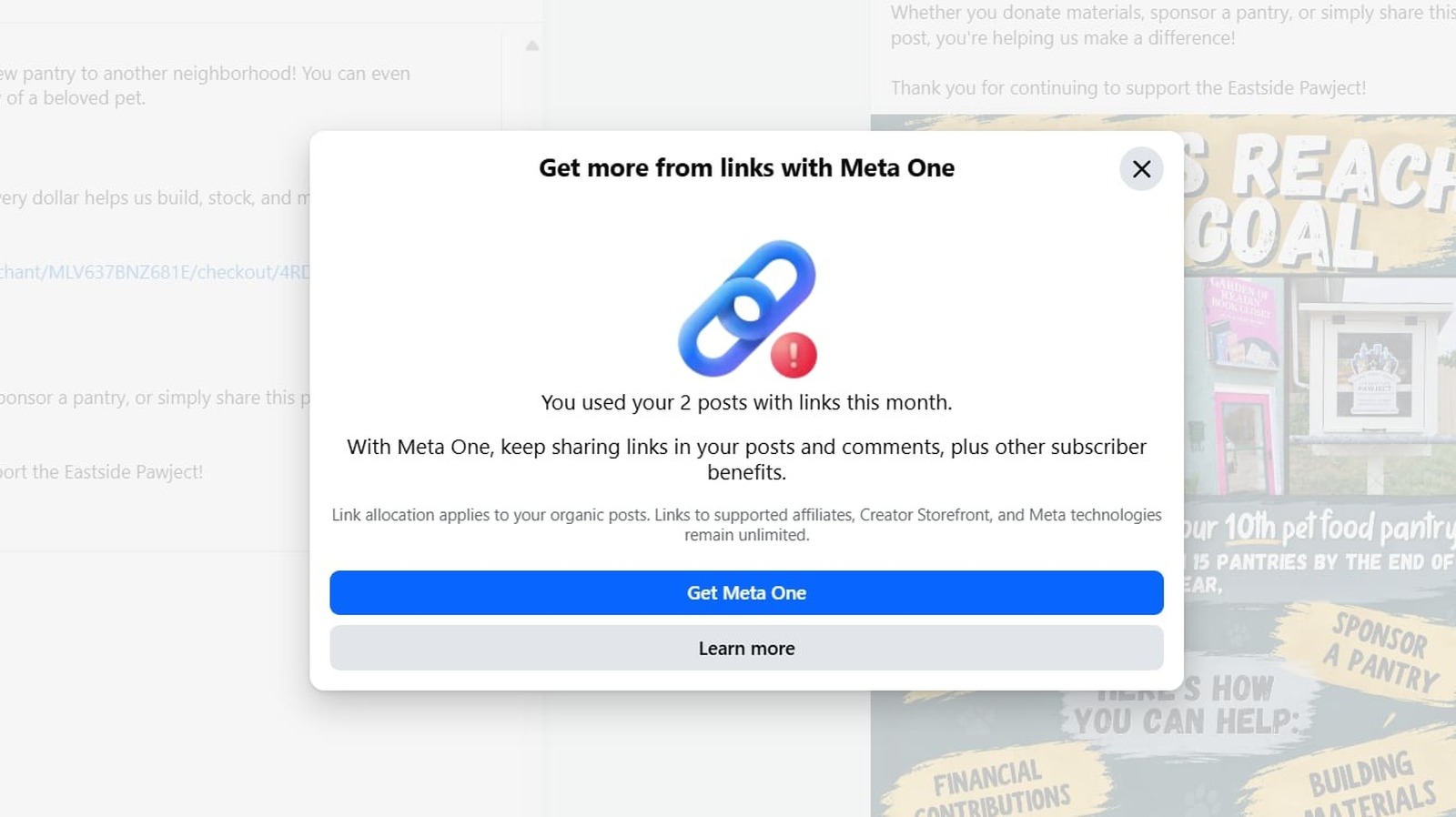
"You can add links to 2 posts per month, and you've used them all," a message said. Sharing additional links would require signing up for a Meta One subscription that would cost $50 or more a month.
Starks is one of a growing number of people to encounter Meta's ongoing experiment with charging creators, businesses and other professionals to post links on Facebook. Meta says the test, which is part of its push to sell more subscriptions, isn't supposed to affect pages for nonprofits or government entities. But that's not the case, according to nonprofit leaders who spoke with Engadget. All have pages that are identified as nonprofits and have been approved to use Meta's fundraising tools, which requires a separate verification process. Many are now rethinking how they use the platform.
"More than half of what we do as a city, is linking back to information on our website," Starks tells Engadget. 'It's scary because we don't know how we're going to pivot." Worried the city's other pages would soon be hit with similar restrictions, Starks instructed his staff to stop posting links in Facebook posts altogether. He made a graphic explaining to the city's Facebook followers that relevant URLs would now appear in the page's comments instead. He's frustrated by the changes, which Meta claims are not supposed to affect government-run pages. The library's page identifies it as a government building and the account was previously verified by the company.
"When you have an official governmental entity that is trying to get out in some instances very, very, important information, and we're being paywalled by Facebook all because we're trying to post a link, that's a problem," he said.
Nonprofit organizations are also scrambling after being caught up in the test. Bethany English is co-president of a small nonprofit that organizes pet food pantries in Indianapolis. Last week, she tried to create a Facebook post about an event the organization was participating in, only to find she was no longer able to post a link to her nonprofit's website because she had used her allotted two links for the month.
Like Starks, the only alternative she was offered was to sign up for a Meta One subscription. An "expert" level plan, which would allow her up to 20 links each month, would cost $150 a month.
English says that social media has been "a huge deal" for her organization, the East Side Pawject, which she co-founded last year. The Facebook page, which has just under 1,000 followers, helps people find pet food pantries and learn where to drop off donations. Posts on Facebook also direct people who want to volunteer or contribute to fundraisers to the organization's website. But paying $150 a month just to be able to regularly share links is difficult for English to justify. "We're a very small nonprofit, and we want to do big things, but that makes it very hard when something just like having social media is going to cost that much," English tells Engadget.
She's already thinking of potential workarounds, like creating more dedicated F…