
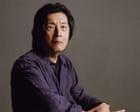
Lee Chang-Dong … ‘I constantly asked myself: am I worthy of telling this story?’ Photograph: Chae Dae-han/Netflix View image in fullscreen Lee Chang-Dong … ‘I constantly asked myself: am I worthy of telling this story?’ Photograph: Chae Dae-han/Netflix Film Interview ‘Fighting an impossible fight is the only way to reclaim dignity’: Lee Chang-dong on class warfare and his searing Oscar contender Rebecca Liu The auteur’s new film – a study of labour, capital and the fallout of redundancy – won the grand jury prize at Venice. Telling tales of the disenfranchised is ‘our moral responsibility’, he says
Prefer the Guardian on Google A quintessential 21st-century horror story: a private equity firm has set its sights on your company. That’s the premise behind director Lee Chang-dong’s new film, Possible Love, and the idea for it first came more than a decade ago, when mass layoffs resulted in a standoff that “fundamentally changed the Korean labour movement”.
In 2009, workers at Ssangyong Motors company protested against plans to lay off between 37 and 43% of the workforce, staging a historic 77-day strike and occupation of the factory that was eventually broken up by riot police. “Until that point in time in Korea, labourers’ rights were widely accepted,” Lee says, speaking through an interpreter in a central London hotel; “however, afterwards, the basic rights of labourers changed; to the public, they couldn’t be seen as more important than market profitability or corporate competitiveness.”
At the time, Lee shelved the project. “The more I examined the pain of these individuals” – after the violent crackdown on the Ssangyong Motors strike, there were several suicides, and reports of long-term mental health issues – “I constantly asked myself: am I worthy of telling this story? And if I am, how do I tell it? Do I stand close to the workers, or keep my distance?” Later he and his co-writer Oh Jung-mi, wrote “many different” scripts, including one with post-apocalyptic elements, before Oh suggested introducing a character who is a documentary film-maker, thereby finding a way to work in Lee’s ambivalence about his intentions.
The result is a sharply observed Russian doll of a film that places a narrative about “labour and its relationship to capital” within a broader story about the ethics of film-making, and the tensions and desires that emerge when a working-class couple collide with an astronomically wealthy one. It has, like many of Lee’s previous films, been received to great acclaim: it recently won the grand jury prize at Venice film festival , and has been hailed by critics as one of the best films of the year.
The film’s opening title shows the 10th commandment, “Thou shalt not covet”. You can already guess that it will be swiftly broken. Soon we see the depressed Ho-seok, who has been fired from his job at a metal factory, reprimanding his free-spirited wife Mi-ok for caring about her clothes. They’re on their way to a funeral of Ho-seok’s former colleague, who killed himself after being made redundant, and meet the ambitious film-maker Lee Ye-ji and her financier husband Sang-woo. They radiate the kind of glow afforded by wealth. After a stay at a luxury resort in Qatar made Ye-ji reflect on the nature of hidden labour, she’s making a film about the state of labour in Korea, and believes she’s found her ideal subjects; if only Ho-seok, who refuses to go to therapy let alone talk about his experiences in front of a camera, woul…