
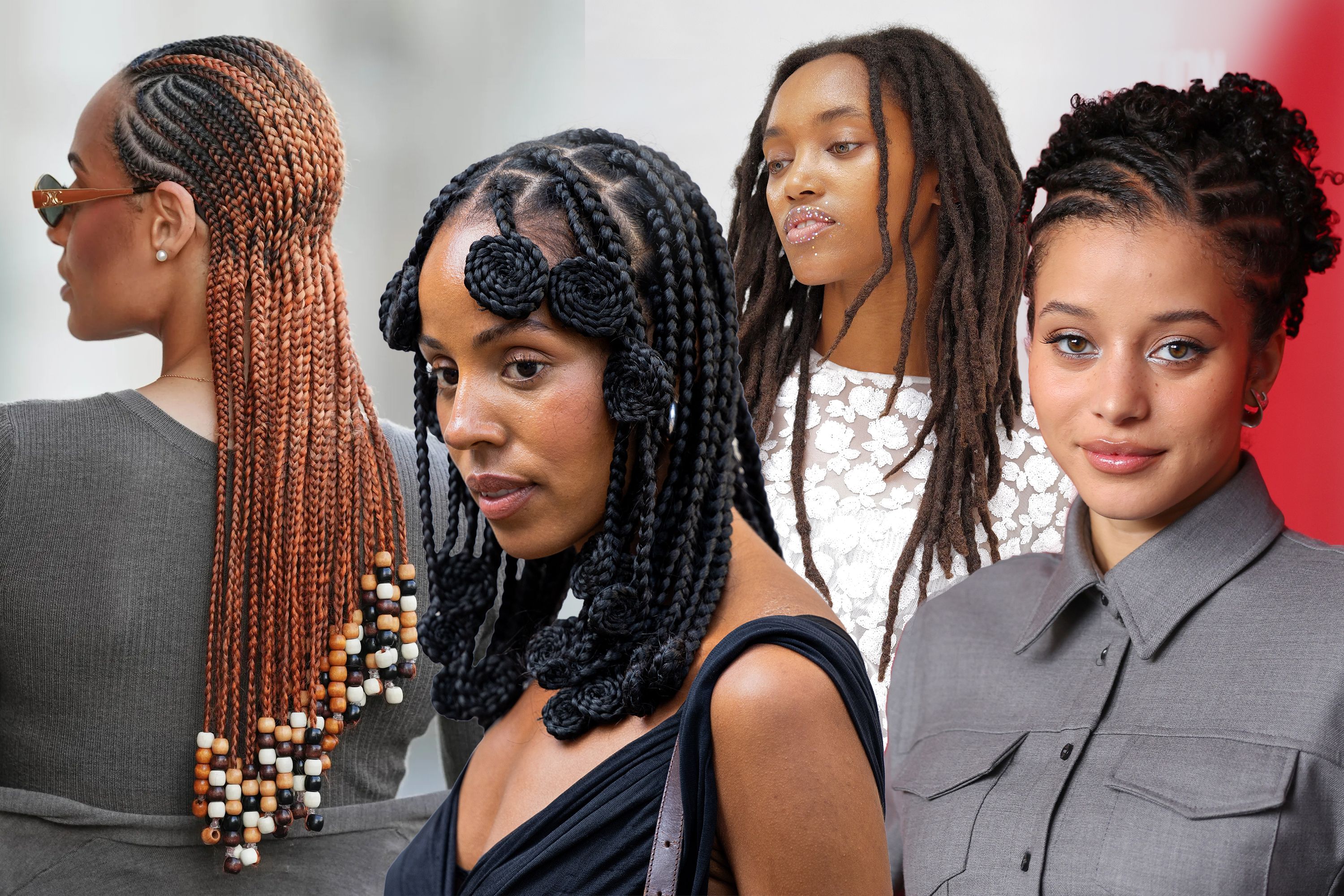
Source Photos: Getty Images Save Story Save this story Save Story Save this story Whether or not you’ve actually used the term “protective hairstyle,” if you have tightly curled or coily hair , there’s a very good chance you’ve worn one. Those plaits with the ball hair ties you wore on your first day of kindergarten? A protective hairstyle. Those Scary Spice-inspired Bantu knots you rocked in high school? Protective. The goddess braids you just copied from Pinterest? You guessed it.
What do these various looks have in common? Simply put, they keep you (and the environment) from messing with your hair. Protective hairstyles are “designed to protect the hair from damage, over-manipulation, heat , environmental stressors, and anything that can cause damage to the hair shaft,” says Cataanda James , a New York-based cosmetologist and curly hair expert. Since the scalp’s natural oils have a harder time traveling down the strands to fortify them, curly and coily hair types are more fragile and prone to damage. By minimizing manipulation, you reduce friction and, by extension, breakage . Thus, “your natural hair can retain length and stay healthy,” says Kia Harper , a professional braider based in California.
Pretty much any style that swaddles your natural hair can be considered protective; among the many cited by the experts are braids, twists, locs, crochet styles , sew-ins, Bantu knots, and wigs. “Even a tucked bun can be protective,” notes Rashuna Durham , a professional hairstylist based in Binghamton, New York. That said, a few overarching categories dominate the protective hair space. Keep reading to learn more about them.
The most popular types of protective styles Is there anyone who should avoid (or be mindful of) protective styles? Potential downsides to protective styles The most popular types of protective styles Braids Photo: Getty Images Photo: Getty Images Photo: Getty Images Photo: Getty Images “Braids are typically formed with three or more sections of hair,” says James, and these sections are woven over and around one another. Arguably the poster child for protective styles, braids are beloved for their versatility: “Many braided styles can also be restyled into buns, ponytails, or updos, giving people several looks from one installation,” says Ladosha Wright , an Ohio-based professional hairstylist. They’re also fan faves for how long you can keep them in (some styles last well over a month) and how easily they give you the option to add fullness and length with added hair.
When it comes to braids, the options seem endless. Some of the most popular include cornrows , which are braided very closely to the scalp, often in straight lines (hence the name); Fulani-inspired styles , which are cornrowed in the front before cascading into loose plaits down the back; and box braids. Falling under the umbrella of box braids are knotless braids, including the trendy goddess and boho styles . These braids—in which the added hair is gradually fed into the plait, as opposed to being tied in at the base via a knot—“are especially popular because they can create a lighter, more flexible feel when installed properly,” says Durham.
Photo: Getty Images Photo: Getty Images Photo: Getty Images Photo: Getty Images “Twists are typically created by wrapping two sections of hair around each other,” says Durham.
While they don’t get quite as much recognition as their three-section counterparts, don’t sleep on this trusty look: “With or without…