
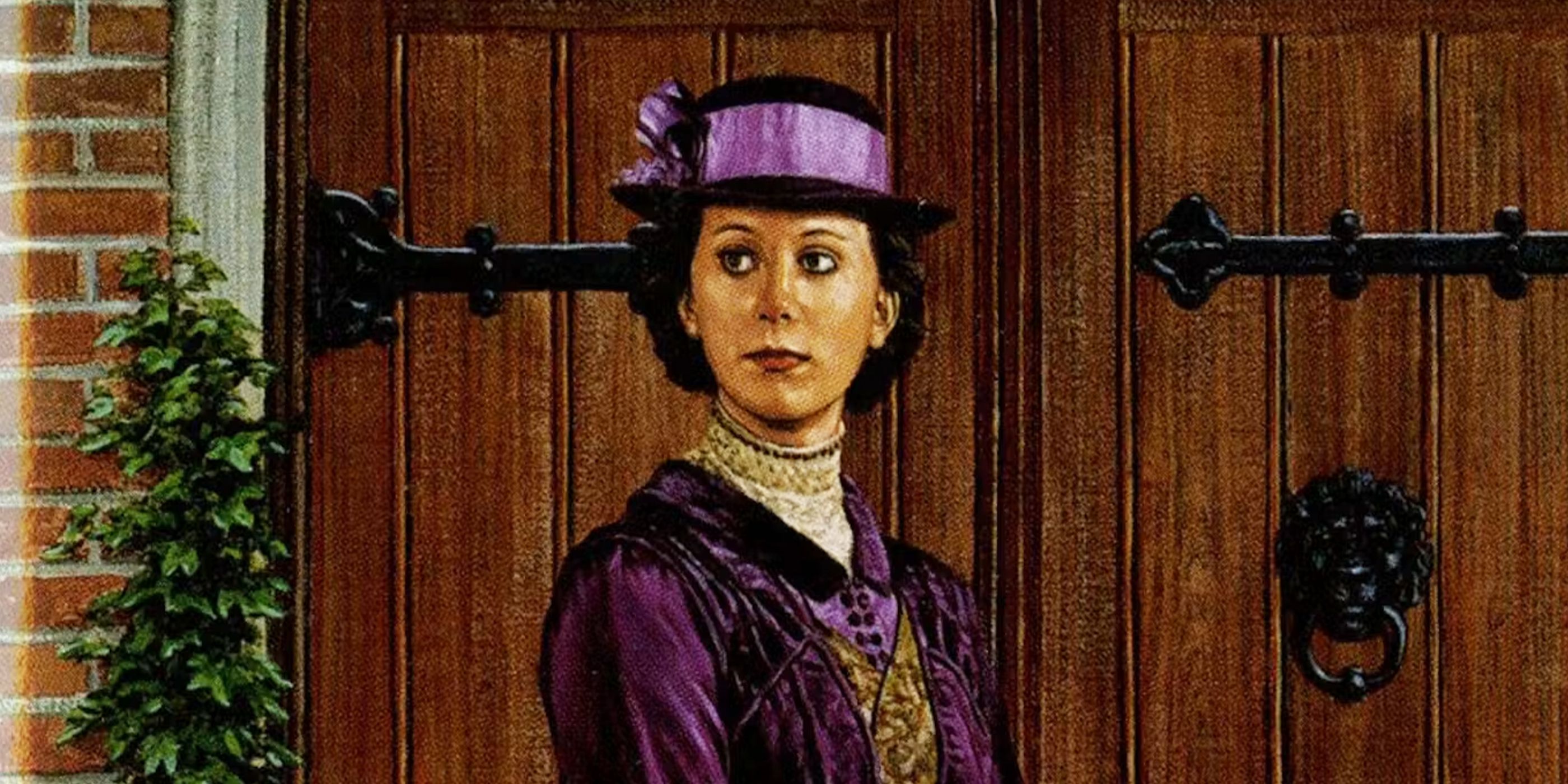
Book art for Charlotte Bronte's Jane Eyre Image via Macmillan Publishers Add Collider on Google Add as Preferred Source Follow on Google Discover By Linda Chavers Published Oct 28, 2026, 11:01 PM EDT Linda Chavers is a writer, cultural critic, and longtime consumer of stories in just about every form they come in. Her essays have appeared in The Boston Globe Magazine, The LA Times , The Independent , Elle , and (the now sadly defunct) Gawker Media. Linda can turn almost anything—from a novel to a reality TV reunion—into an argument. That's because she's opinionated about anything she gets to stay in pajamas for. It's also because she holds a Ph.D. in African and African American Studies from Harvard University, where she specialized in modern literature. She has taught at Harvard University and Temple University.
Her tastes are wide-ranging. She loves literary fiction, popular culture, reality television, and Law and Order marathons.
When she's not writing, or avoiding writing by thinking very seriously about writing, Linda is usually reading a novel or trying to remember which show she watched on which streaming app she's still subscribed to.
There are books with good stories, and then there are books where the sentences themselves make you stop. Maybe you reread a paragraph because you missed something the first time; maybe you reread it because you didn't. Either way, great prose makes the language feel inseparable from the story being told .
These five classics all do that differently. Toni Morrison turns memory into flesh, Ralph Ellison gives us a voice constantly negotiating how it is seen, Charlotte Brontë turns interior life into high drama, Truman Capote makes nonfiction move like a novel, and Gabriel García Márquez writes the impossible as though it were simply another Tuesday. If you want to understand what prose can actually do, start here .
Beloved - 1987 - book cover Image via Vintage Toni Morrison tells us almost everything about Beloved in eight words: "124 was spiteful. Full of a baby's venom." There is a haunted house, an angry dead child, and not a single attempt to ease us into either one; she gives a physical location emotions before we even know who lives there. Morrison writes about slavery the same way — not as something that began and ended but as a living, ongoing remembrance . Sethe's past at Sweet Home keeps breaking into her new life in Ohio through memories, bodies, ghosts, and eventually Beloved herself. The story arrives in pieces , sometimes before we understand what we are being told, because Sethe doesn't experience her own history in a clean chronological order either. By the time we understand why 124 is spiteful, the novel has already made the past feel very much alive .
Morrison's prose is so extraordinary because it is almost always beautiful and brutal all at once . Her sentences move through memory sideways, again and again, incompletely, and usually without warning; one word will open a door Sethe has spent years trying to keep closed, and Morrison often trusts us to follow without stopping to explain the way. Even "rememory," Morrison's word for a memory that seems to exist outside the person remembering it, turns trauma into something almost physical that another person could stumble into. She moves from lyrical description to horrific violence without changing registers, leaving the reader without any comfort of pretending those things belong to separate worlds. Beloved does not only t…