
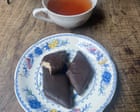
Rachel Roddy’s take on Neapolitan mostaccioli , or chocolate–covered spiced biscuits. Photograph: Rachel Roddy/The Guardian View image in fullscreen Rachel Roddy’s take on Neapolitan mostaccioli , or chocolate–covered spiced biscuits. Photograph: Rachel Roddy/The Guardian A kitchen in Rome Food Rachel Roddy’s chocolate–covered spicy biscuits – a recipe for Neapolitan mostaccioli Halfway between a cake and a biscuit, with a throat-warming level of spice, these Italian treats have been around since medieval times, and only get better with age
Rachel Roddy Thu 5 Nov 2026 07.00 CET Share Prefer the Guardian on Google E stablished in 1982 by sisters Piera, Pina and Grazia Saverese, Pasticceria Savarese is a Neapolitan pastry shop in south-east Rome. It is a densely decorated place – a composite of mirrors, tiles, frames, panels, shelves, cabinets – as well as a highly organised one: every cubbyhole and loop serves a function. Two counters support two aluminium-framed, glass cabinets, each with three glass shelves holding pastries, tarts, cakes and biscuits.
The house speciality is la pastiera Napoletana , a latticed tart with a deep filling of ricotta, wheat berries, sugar, milk, candied fruit and spices – it’s traditional at Easter, but available here all year round. La pastiera was the reason we first visited the shop a few years ago, on the recommendation of a Neapolitan friend who dislikes cooking as much as she likes eating. She also recommended the diamond- or rombo -shaped mostaccioli , which are halfway between a cake and a biscuit and spiced in a way that warms the throat (they remind me of Yorkshire parkin biscuits); they are also completely covered in dark chocolate.
There is plenty of folk etymology around the name mostaccioli, but there’s no doubt as to their ancestry in the various sweet and heavily spiced morsels served as part of medieval banquets. The Renaissance chef Bartolomeo Scappi mentions mostaccioli from both Naples and Milan, and gives a recipe for the latter that involves whipping eggs, sugar, flour, coriander seeds and anise into a batter, then baking it twice. Three hundred or so years later, the “ gallant cook ” Vincenzo Corrado provides several recipes, including one for mostaccioletti that calls for flour, sugar, cinnamon, cloves, nutmeg and water to be kneaded into a dough, which is then left to ferment for two days, rolled into whatever shape you please, then baked until done. I like Vincenzo’s instructions.
Neither Scappi or Corrado mention grape must, or mustum , the dense, fruity syrup produced by boiling down grape juice to a third of its original volume, which some suggest is the origin of the names mostaccioli and mostaccioletti. But maybe that’s because both chefs, with their enormous budgets, could afford to cook with sugar and honey, while grape must ( mostocotto ) was a less expensive alternative. These days, mostocotto, or saba , is hardly cheap, but it does make a full-flavoured alternative to honey, as do treacle or golden syrup. A microwave is a fabulous addition for melting the chocolate.
Depending on the temperature of your kitchen, the chocolate will take anything from 20-50 minutes to harden all the way through. If your kitchen is too warm and it’s taking too long, 10-15 minutes in the fridge should speed things up. Delicious the same day, mostaccioli, like gingerbread, parkin and lebkuchen , improve with age. Store in a tight tin in a cool place, and the moisture from the honey will ke…