
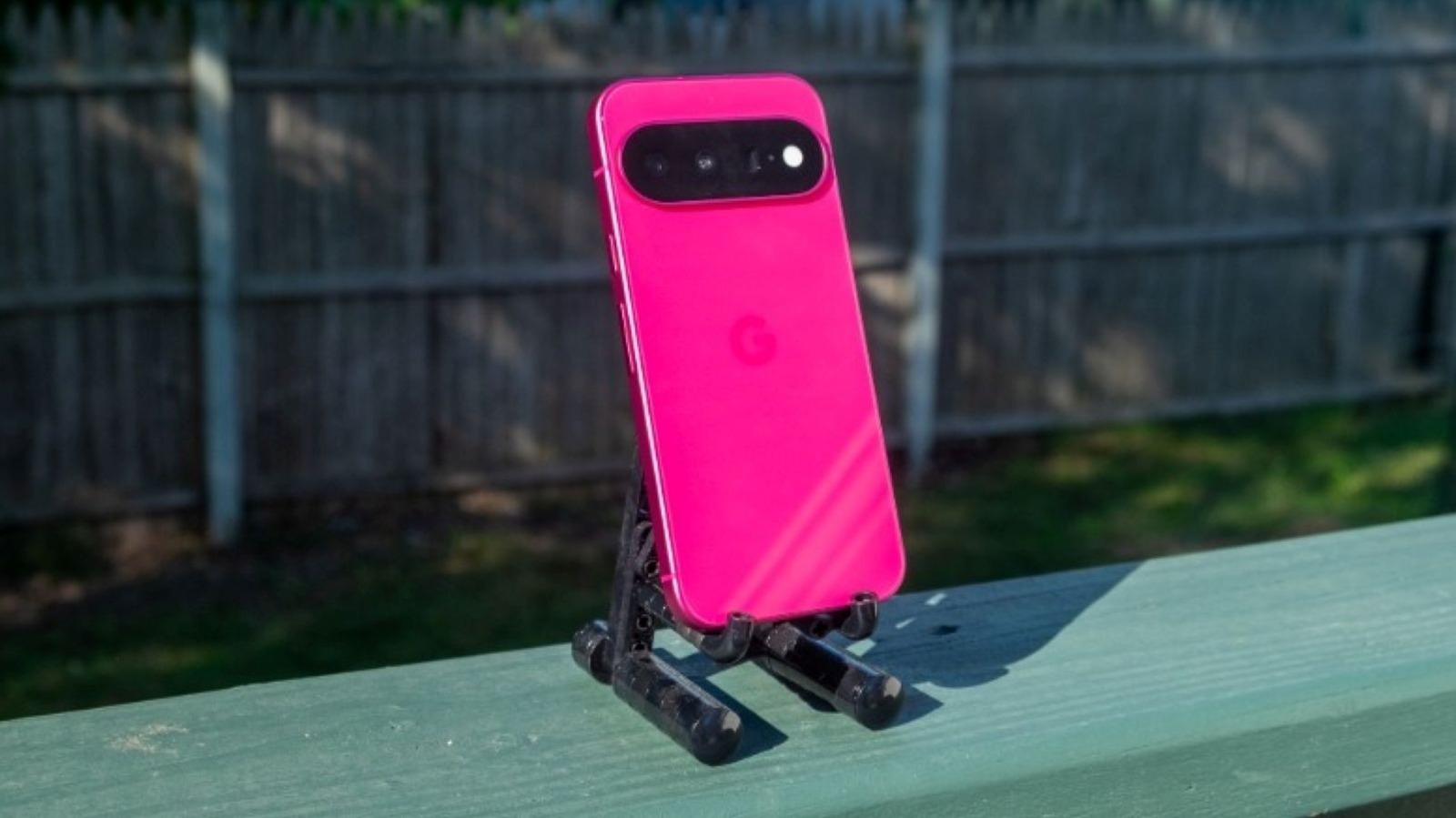
Pixel 10 owners can skip this one. Pixel 9 owners have a real decision to make.
Nathan Ingraham for Engadget Add Engadget on Google: Preferred Source Google Discover Google's new Pixel 11 went on sale in August 2026, but new doesn't always mean better. It uses the same 6.3-inch display and 5x telephoto camera as the previous year's model ; has the same 12GB of RAM; and its battery is just 15mAh bigger. You'll enjoy double the storage space, but it also costs $899, which is $100 more than the launch price of the Pixel 10.
If the question is whether it's worth upgrading from the 10 to the 11, the answer is no. Keep the phone you've got. If you're a Pixel 9 owner, the advantages are more pronounced. Jumping two generations gets you a telephoto lens, better battery life and an additional two years of software updates, making the upgrade a worthy consideration.
With the Pixel 11, you get a Tensor G6 chip, which replaces last year's Tensor G5. Google claims the G6 gives users 25 percent improvements in web browsing speed, alongside 15 percent improvements in app launches. The 48MP main camera gets a larger sensor that's reportedly 56 percent more sensitive to light, and Super Zoom reaches 30x instead of 20x. Wireless charging has increased from 15W to 25W, and the phone now comes with 256GB rather than 128GB.
While 30x zoom sounds impressive, our hands-on testing found that these zoom shots looked fine on the phone's screen but lost a lot of detail once we opened them on a laptop. The phone itself was quick and fluid, though admittedly nothing we threw at it pushed it very hard.
On its comparison page with the Pixel 10, Google lists two camera features as exclusive to the Pixel 11: Magic Capture and Camera Looks. Magic Capture records a short clip and pulls out the best frames as stills, while Camera Looks lets you set and tweak a default filter. However, Android Central's Harish Jonnalagadda argues that most of this year's software additions will reach older Pixels through Google's regular updates anyway. Once you take those away (or, rather, add them to the Pixel 10), you may be essentially paying for a faster chip, double the base memory and quicker wireless charging. That's hard to justify at $899, especially if you bought the Pixel 10 in 2025.
Sam Rutherford for Engadget The Pixel 9 has two rear cameras, a 50MP main and a 48MP ultrawide, and tops out at 8x Super Res Zoom. To that, the Pixel 11 adds a 10.8MP telephoto camera with a 5x optical zoom and optical image stabilization. That's more optical reach than the $799 iPhone 17, which has no telephoto at all, or the $899 Galaxy S26, whose 10MP telephoto stops at 3x. When we reviewed the Pixel 11 , that telephoto was its main advantage over phones at the same price. It's not a Pro camera, though. The Pixel 11 Pro's telephoto uses a 48MP, 1/1.95-inch sensor, while the base model makes do with a 1/3.2-inch sensor.
In terms of its battery, the Pixel 9 has a 4,700mAh that Google rates for more than 24 hours, while the Pixel 11's 4,985mAh cell is rated for more than 30 hours. In our testing, the Pixel 11 lasted from 8AM on a Saturday to 7PM on Sunday on a single charge. You'll also get Pixelsnap magnets built in with the 11, so magnetic Qi2 chargers and mounts attach without a case, which can't be done with the Pixel 9. The 11's screen is also brighter, peaking at 3,000 nits against the Pixel 9's 2,700.
Google promises seven years of OS and security updates from the date each Pixel fir…