
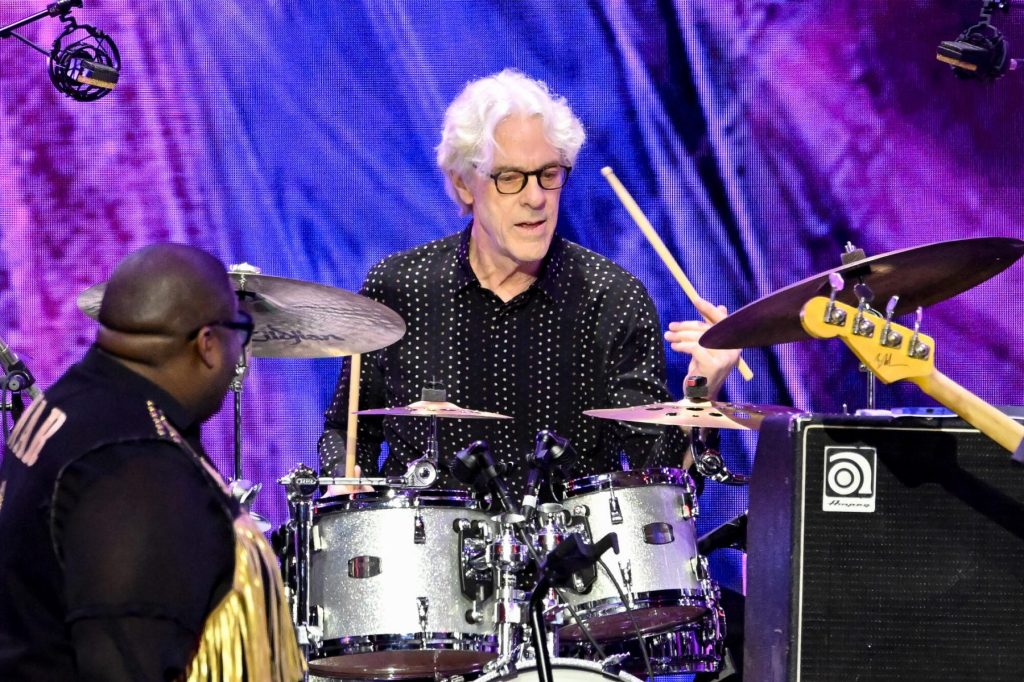
As should be expected, Stewart Copeland is spending a fair amount of time talking and answering questions about the Police during his current spoken word tour of North America. And he’s pleased to report that he, Sting and Andy Summers “get along just fine” these days, even in the midst of a lawsuit over royalties. Explore The Police See latest videos, charts and news
“We’re not (in court). The bean counters are, somewhere over in London,” the group’s drummer tells Billboard. “For me it’s, ‘Lemme know how it works out…'” Related Little Mix's Perrie Edwards Posts Stunning Photos of Wedding To Soccer Star Alex Oxlade-Chamberlain in Portugal Howie D Embraces His Puerto Rican Roots in 'Coqui': 'I’ve Held Myself Back, But Now is the Time' Obama Presidential Center Grand Opening to Feature Stevie Wonder, Bono, Bruce Springsteen, Eddie Vedder, Tems, The Roots & More
Copeland and Summers sued Sting in England last year, claiming that under band songwriting agreements dating back to the Police’s formation in 1977 they are owed $2 million in unpaid royalties. Summers, in fact, has been particularly outspoken in feeling he should have received a songwriting credit for the Grammy Award-winning 1983 smash “Every Breath You Take.” The case has made its way to the U.K.’s High Court; records indicate Sting has paid his former bandmates $870,000, but Copeland and Summers are still seeking the rest of the claim.
Copeland, however, says he still talks to Sting, about “kids, Instagram memes, bullshit… I’m happy that we get along just fine, and we know way. It’s not because of satanic impulses or any of the human infirmities of jealousy, greed, pride, whatever. It’s because we had a spell where our music universes overlapped and we created some incredible stuff. We really achieved everything we needed to achieve. Really, as I’ve been saying a lot recently, ol’ Sting-O and I, we make music for different reasons, and it has a different place in our lives. So we get along great as long as we’re not trying to make music together.”
The Police was together between 1977-1984, releasing five studio albums capped by 1983’s eight-times platinum Synchronicity, which has been inducted into the Grammy Hall of Fame and the Library of Congress’ National Recording Registry. The trio reunited for three concerts on Amnesty International’s A Conspiracy of Hope tour in 1986 and a 2003 Rock and Roll Hall of Fame induction, then for a global reunion tour during 2007-2008, assisted by band therapy according to Copeland. “We had professionals come along and straighten us out; I guess their day job was probably, like marriage counseling,” he recalls. “It worked so well after our session the business suits said, ‘Hey guys, let’s put another six months on the tour!‘ ‘Sure!’
“It was actually a lot of fun — a lot of misery and a lot of fun at the same time. But after two years of it, we were all read to get back to our central mission.”
That’s been busy multi-media careers for all three of the Police men — in Copeland’s case forays into opera and classical composition, film and video game scoring, filmmaking and writing. He’s the subject of a new documentary, Copeland, which premieres June 19.