
BBC News, Arabic Go to content Main Watch Listen Main Sections News Economy Health and Science Culture and Arts 2026 World Cup Investigations News Economy Health and Science Culture and Arts 2026 World Cup Investigations What do we know about the terms of the agreement to end the war between the United States and Iran? Image source, Getty Images
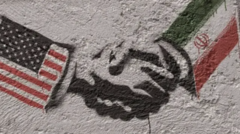
The United States and Iran signed a memorandum of understanding extending the ceasefire between them, and U.S. President Donald Trump confirmed the signing of the memorandum of understanding with Iran following the G7 summit in France after Tehran announced the signing of Trump and his Iranian counterpart of the text of the agreement.
The agreement, which has come into effect immediately upon signing, includes 14 points and is known as the memorandum of understanding, a commitment that Iran will never possess a nuclear weapon, and it also states a commitment to allocate $300 billion for "reconstruction and economic development" in the country, although the United States is "not obliged" to contribute to the plan.
This agreement comes after four months of conflict between the United States and Israel with Iran.
The Trump administration described the agreement as "performance-based", as Iran will only benefit if it adheres to its commitments.
Although the text of the agreement leaves many questions unanswered and many key issues unresolved, here’s what we know about some key points.
The first paragraph of the agreement states that the United States and Iran and their allies will announce an "immediate and permanent" halt to military operations on "all fronts" - including Lebanon.
From the American perspective, Trump's concern is growing that Israeli military operations against Hezbollah could impede the agreement with Iran.
In contrast, Tehran has repeatedly confirmed that Lebanon must be included in the ceasefire agreement.
A spokesperson for the Iranian Foreign Ministry stated on Wednesday that any continuation of Israeli military operations in Lebanon would constitute a "violation of the understanding" and that "necessary measures will be taken".
The agreement emphasizes that "from now on" neither side will initiate any war or military operation against each other, and will refrain from threatening to use force or using it against each other, with a guarantee of "the safety of Lebanon's territory and sovereignty".
The final agreement will confirm the permanent "halt" to the war, according to the memorandum.
It is unclear how Israel will react to this point.
The text of the memorandum, which was read verbatim to reporters during a call with U.S. officials, indicates that the United States and Iran "will respect each other's sovereignty and territorial integrity", while refraining from interfering in each other's internal affairs.
Iranian opposition groups are likely to disapprove of this clause.
Earlier in the year, Trump promised Iranian protesters that "help is on the way" during anti-government protests that swept Iranian cities.
According to the third paragraph of the memorandum, the United States and Iran commit to negotiating and reaching a final agreement within a maximum period of 60 days, extendable by mutual consent.
The countdown for this 60-day period began after the leaders of the two countries officially signed the memorandum of understanding.
Trump signed the memorandum during a dinner held following the G7 summit at the Palace of Versailles in France on Wednesday evening, according to the White House's statement to BBC.
Iranian President Massoud Beizkian also signed it, according to the White House.
Earlier, both Trump and Iranian officials indicated that an official signing ceremony would be held in Geneva later this week. Pakistani Prime Minister Shahbaz Sharif confirmed that a ceremony would be held on Friday in Switzerland "in celebration of this landmark event and the launch of technical talks".
After signing the memorandum of understanding, the United States will begin removing its naval blockade and any "harassments or obstacles" imposed on Iranian ports, according to the fourth clause.
The naval blockade will be completely lifted within 30 days, according to the memorandum and the Iranian Foreign Ministry.
During this period, the number of vessels allowed to pass through Iranian ports by the United States will be proportional to the traffic that Iran regains in the Strait of Hormuz.