
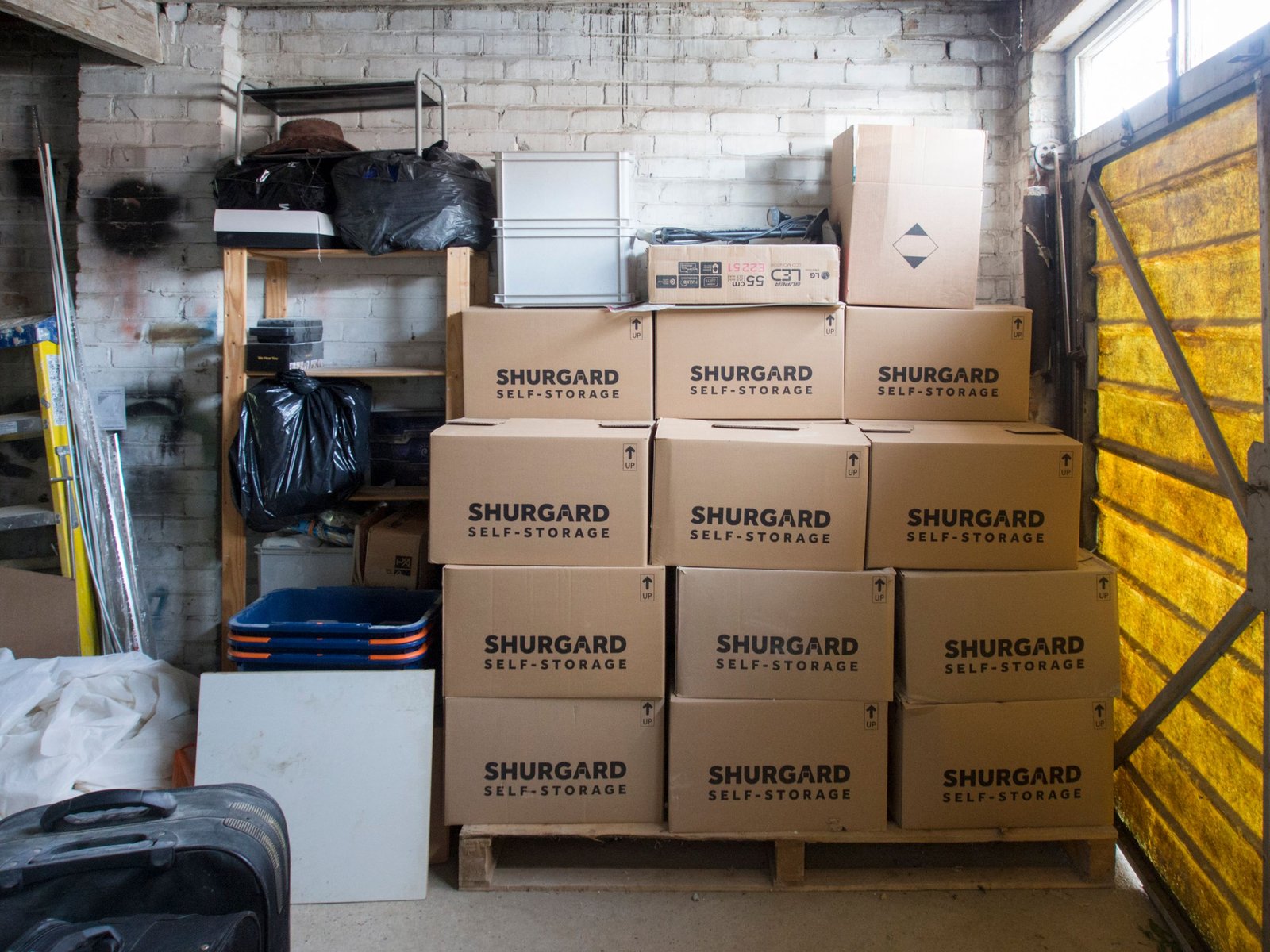
Storage design is often overlooked in the early planning stages, yet it significantly impacts the long-term efficiency of the building's operation. One of the most common spatial decisions in residential and commercial projects is the choice between placing storage in a basement or on the ground floor. Both options serve the same purpose, but the performance differs markedly in terms of environmental conditions, accessibility, cost, and long-term usability.
Typically, basement storage provides greater capacity and better space utilization, while ground floor storage offers easier access and reduced environmental risks. The correct choice depends on the type of building, climate, and frequency of use.
Basement storage refers to storage areas that are below ground level, often fully or partially underground.
Basements are commonly used for long-term storage of items that do not require frequent access.
Ground floor storage is located at the same level as the main entrance or living and work areas.
This type is suitable for items that are accessed frequently.
Ground floor storage is more practical for everyday use, especially in homes without elevators. In contrast, the basement requires more effort to access, making it suitable for infrequent use.
The basement is below ground level, which makes it more susceptible to moisture unless well insulated and ventilated. Ground floor storage is safer from groundwater and moisture.
The basement benefits from the natural insulation of the surrounding soil, helping to stabilize temperature levels. On the other hand, the ground floor is more exposed to external weather changes.
The basement provides large, open spaces, making it ideal for bulk storage or utility rooms. The ground floor competes with living spaces, reducing the possible size of storage.
Building a basement is expensive due to excavation, structural support, and insulation systems, while ground floor construction is simpler and cheaper.
A basement can pose risks during evacuation or flooding if not designed properly. The ground floor is safer and more accessible during emergencies.
Basement storage is suitable for • seasonal items • archives • mechanical systems • bulk home storage • seldom-used items
Ground floor storage is suitable for • everyday supplies • kitchen tools • cleaning equipment • entryway storage • frequently used items
Basement storage is ideal when • the project requires large storage capacity • climate control is well managed • waterproofing is designed correctly • usage frequency is low • above-ground space is limited
Ground floor storage is better when • frequent access is necessary • ease of use is a priority • the climate is humid or prone to flooding • the construction budget is limited • simplicity and safety are priorities
Many well-designed buildings rely on integrating both systems together. The basement is used for large, long-term storage, while the ground floor is used for daily use. This approach balances capacity and accessibility and increases space efficiency.
Both basement and ground floor storage serve different roles within the building. The basement provides large capacity and thermal stability but comes at a higher cost, with moisture risks and reduced accessibility. Meanwhile, the ground floor offers greater ease of use and safety but is limited in terms of capacity and space efficiency.
The best solution depends on item usage frequency, the environmental conditions of the site, and the building's overall spatial strategy. In most cases, integrating both systems provides the most practical and efficient solution.