
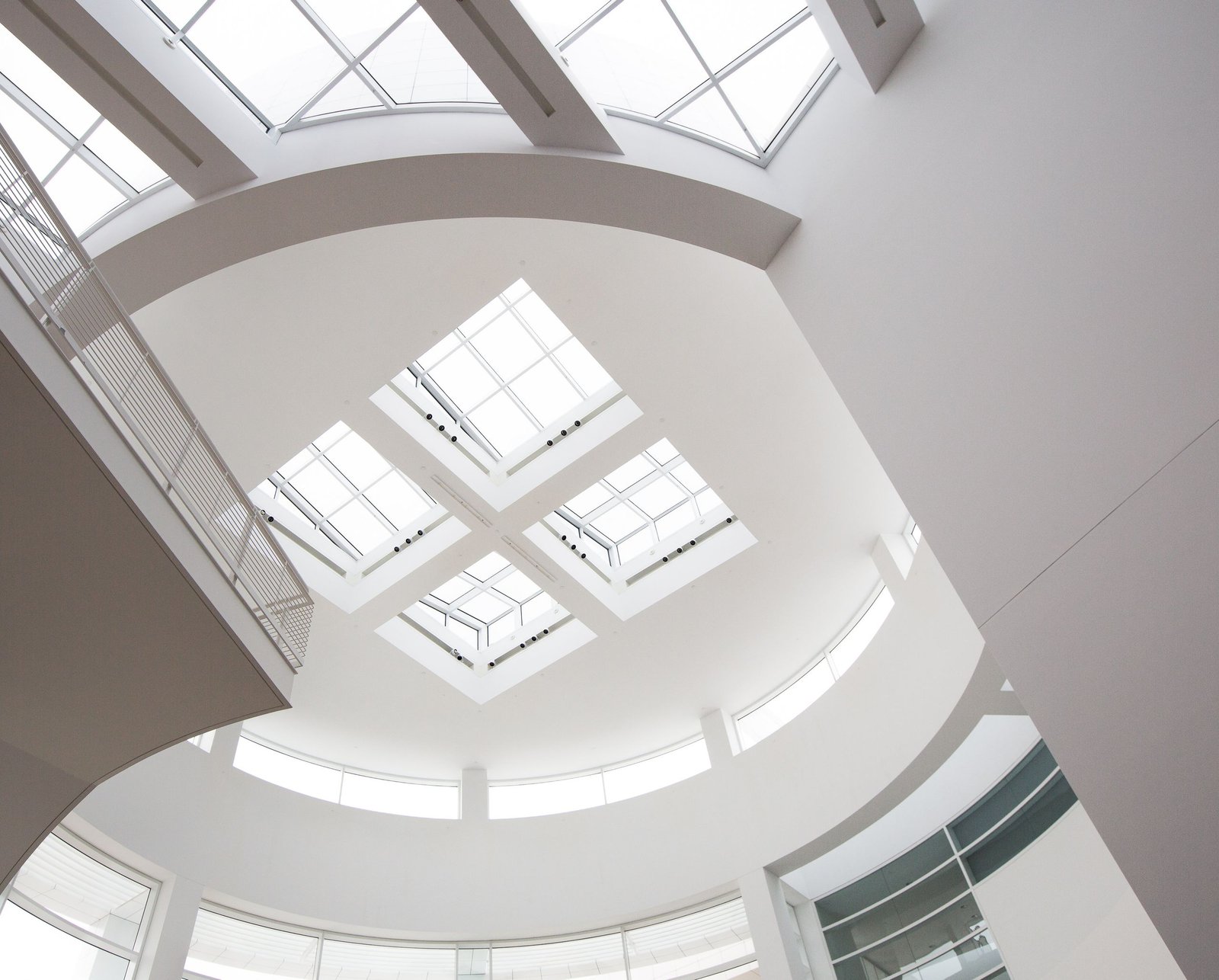
Natural lighting plays a crucial role in the quality of any building, improving visual comfort, reducing the need for artificial lighting, and enhancing energy efficiency when designed correctly. Among the most commonly used solutions for introducing natural light are skylights and clerestory windows. Although both aim to increase natural light, their mechanisms and impacts on the building differ significantly.
Skylights allow light to enter directly through the roof, whereas clerestory windows admit light through elevated openings in the walls. The choice between them depends on the orientation of the building, climate, roof shape, privacy requirements, and desired light quality.
Skylights are glass openings installed in the roof to bring natural light from above.
They are widely used in kitchens, bathrooms, hallways, staircases, and rooms lacking exterior windows.
Clerestory windows are horizontal windows mounted at the top of the walls near the roof.
They are commonly used in modern homes, museums, schools, and commercial buildings.
Skylights provide strong lighting that reaches deep into the space.
In contrast, clerestory windows produce softer and more diffused light, making them more comfortable for daily use.
Skylights may increase thermal load in hot areas if high-efficiency glass is not used.
Clerestory windows are easier to protect with awnings or roof overhangs.
Heat rises, so operable skylights help to efficiently vent out hot air.
Clerestory windows also operate efficiently when combined with low windows for achieving cross ventilation.
Both systems allow natural light to enter while maintaining a high level of privacy.
Clerestory windows also contribute to defining roof lines and emphasizing the horizontal character of the building.
Roof penetrations require careful execution to prevent water leaks.
Clerestory windows are generally easier to maintain as they are part of the wall system.
Clerestory windows may require raising the wall height or modifying the roof shape, but they are often less prone to water infiltration problems.
• When the room lacks exterior windows. • When there is a need for the maximum possible amount of natural light. • If the view of the sky is an important element in the design. • When wanting to improve natural ventilation. • When the roof design allows for their installation.
They are suitable for kitchens, bathrooms, hallways, and staircases.
• When soft and uniform light is needed. • When privacy is a priority. • If walls are needed for furniture or artwork. • When relying on cross ventilation. • When controlling solar heat is important.
They are widely used in living rooms, studios, classrooms, and galleries.
Many modern projects rely on the combination of skylights and clerestory windows. Skylights provide strong lighting for interior spaces, while clerestory windows ensure diffuse lighting and improve air circulation within the building.
This integration helps achieve better distribution of natural light, enhance energy efficiency, and improve the quality of the indoor environment.
Both skylights and clerestory windows are among the best solutions for natural lighting, but each has different advantages and uses. Skylights provide direct, intense lighting and a sense of openness to the sky, while clerestory windows offer more balanced lighting and better heat control while maintaining privacy.
The appropriate choice depends on the building orientation, climate, space nature, and design objectives. In many projects, the combination of the two systems results in the best performance in terms of lighting, thermal comfort, and energy efficiency.