
Enterprise Tech Humanoid Robots: 18 Companies Racing To Build The Next Big Thing In AI By Bernard Marr ,
Summary Humanoid robots are rapidly transitioning from science fiction to practical applications, attracting significant investment from tech giants and startups. Their appeal lies in operating in human environments and adapting to diverse tasks, promising solutions for labor shortages and hazardous work. Global momentum is accelerating, with China's ecosystem expanding and major players like 1X Technologies, Agility Robotics, Apptronik, Tesla, and Samsung driving commercial deployment. While still nascent, the focus is on developing safe, reliable, and affordable robots for industrial use, with domestic roles emerging later. This shift, integrating AI, advanced sensors, and manufacturing, marks AI's crucial expansion into the physical world.
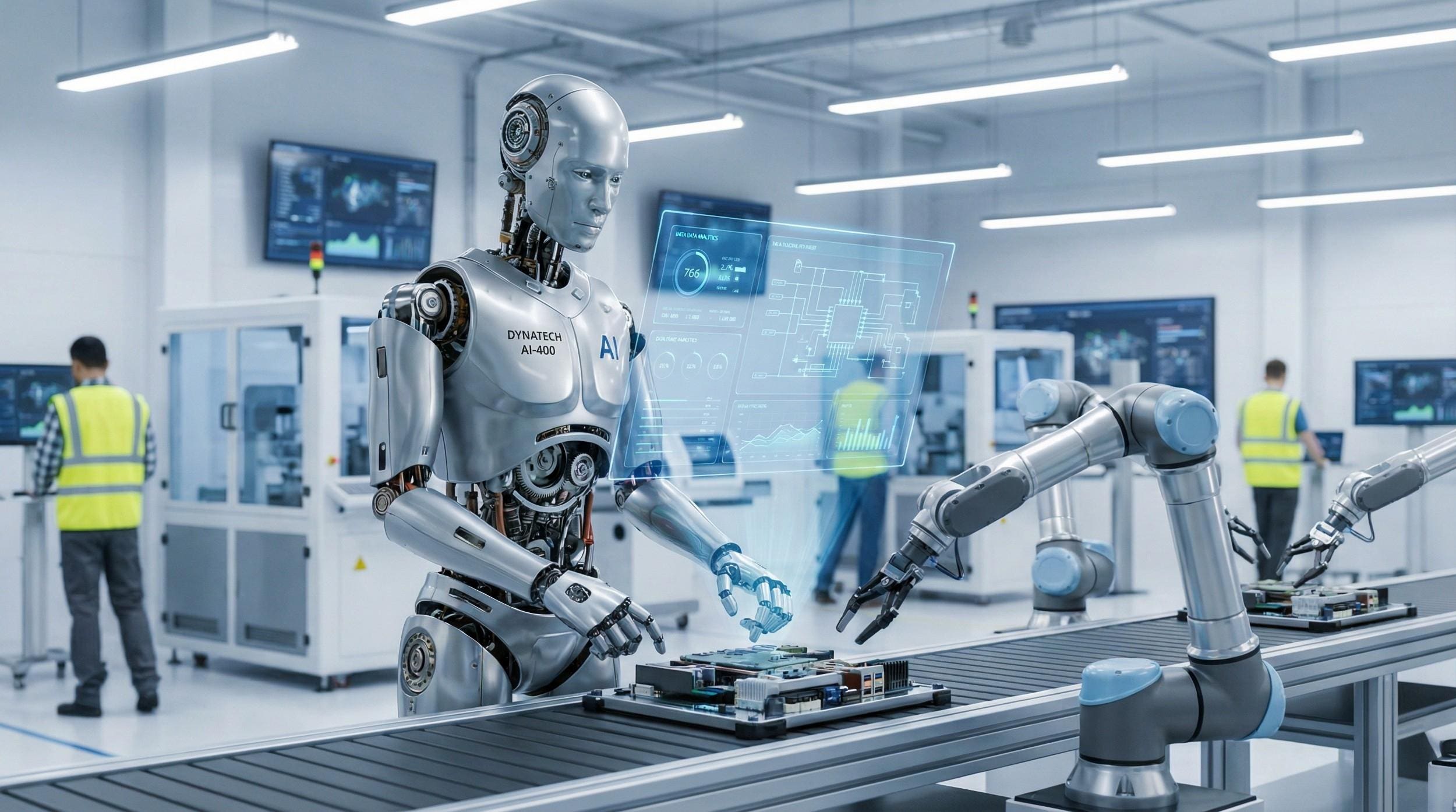
Humanoid robots are moving from science fiction into factories, warehouses and potentially our homes, as tech giants and ambitious startups race to bring them into the real world. Adobe Stock Humanoid robots are having their ChatGPT moment.
For decades, they belonged in science fiction, glossy lab demos and viral videos. Now they are starting to appear in factories, warehouses and test homes, with some of the world’s biggest technology companies racing against ambitious startups to build robots that can work safely alongside people.
The appeal is easy to understand. Most robots are designed for one specific task. A humanoid robot, in theory, can operate in spaces built for humans, use tools designed for humans and move between different jobs without the need to rebuild the environment around the machine.
And with billions of humanoid robots predicted to walk among us in the coming decades, investors, manufacturers and technology giants are paying attention. If humanoid robots can be produced at scale, they could help tackle labor shortages, take on dangerous work and eventually support everyday tasks in homes, hospitals and care settings.
The field is still young, and many bold claims remain unproven. Even so, momentum is building fast. In China, the humanoid robot ecosystem is expanding rapidly. The Ministry of Industry and Information Technology said the country had more than 140 humanoid robot manufacturers by 2025, with over 330 product models, while major players in the U.S., Europe and Asia are pushing prototypes toward commercial deployment.
So, who are the companies leading this race, and which names should business leaders be watching?
1X Technologies has attracted attention because of its backing from OpenAI and its focus on humanoid robots for the home.
The company has shifted from wheeled industrial robots toward domestic humanoids designed to live and work around people. Its Neo robot is being marketed as a home assistant, which, in demonstrations, has been seen to perform everyday chores such as folding laundry, unloading dishwashers and tidying up clutter.
Neo can reportedly be bought for $20,000 or rented for $499 per month, and deliveries are currently expected to begin in 2026. The company’s big bet is that the first mass-market humanoid robots may arrive through the front door rather than the factory gate.
That is a bold strategy. Home environments are messy, unpredictable and full of edge cases, which makes them far harder than controlled industrial settings. If 1X can make domestic humanoids reliable and useful, it could help define what a robot assista…