
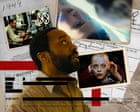
‘People have a right to know the truth’ … conspiracy theory cinema is big business. Composite: Guardian Design; PR; FlixPix/Alamy; AP; PARAMOUNT; U.S. Department of War View image in fullscreen ‘People have a right to know the truth’ … conspiracy theory cinema is big business. Composite: Guardian Design; PR; FlixPix/Alamy; AP; PARAMOUNT; U.S. Department of War Disclosure Day You can handle the truth! Why cinema suddenly loves conspiracy theories From Disclosure Day to Backrooms, a new wave of films promote stories of paranoia, alienation and mistrust. What are they trying to tell us?
Xan Brooks Fri 19 Jun 2026 09.00 CEST Share Prefer the Guardian on Google The Guardian’s journalism is independent. We will earn a commission if you buy something through an affiliate link. Learn more .
T hank heavens for cinema, that light in the darkness and the source of all shocking scoops. It tells us to wake up and take action before it’s too late. That we live in the Matrix. That the CIA killed JFK. That our spouse is a robot and our boss an Andromedan. Also that there is an Escher-style staircase beneath the Tokyo subway and a disembodied zombie leg stalking the hook-up parks of Brazil.
The Guardian’s journalism is independent. We will earn a commission if you buy something through an affiliate link. Learn more .
How might we react if a trusted friend said all this? Would we be entertained or appalled, enlightened or freaked out? Would we even regard them as a trusted friend any more?
“People have a right to know the truth,” declares the young whistleblower in Steven Spielberg’s Disclosure Day , a line that echoes a thousand other whistleblowers. As played by Josh O’Connor, heroic Daniel Kellner has a backpack of state secrets that incontrovertibly prove the existence of aliens and points to a sinister government cover-up. Disclosure Day is fiction, but it hints at insider knowledge. The 79-year-old director – the most trusted brand in Hollywood – even appears in the trailer to vouch for the film’s authenticity. He splices himself amid the crop circles and spacecraft, commenting on the action like an authoritative news anchor. He says: “Wouldn’t it be wonderful for people to know that all of this is true?”
We are not alone, Spielberg tells us – and neither, for that matter, is his film. Disclosure Day is merely the biggest and splashiest in a wave of paranoid conspiracy tales that recall the 1970s heyday of The Parallax View, Soylent Green, Capricorn One and The Conversation. These modern-day descendants tell different stories and wander down different rabbit holes. But they all speak the language of alienation and mistrust and seem to be groping towards a revelatory final truth.
View image in fullscreen ‘Do you ever get paranoid that you’re not being paranoid enough’ … John Malkovich in Wild Horse Nine. Photograph: Entertainment Pictures/Alamy In Yorgos Lanthimos’s Bugonia, it’s the conviction that the world’s millionaire elite are literal aliens in disguise. In Olivia Wilde’s The Invite , it’s the fevered speculation over the sexual kinks of the neighbours. In the forthcoming Wild Horse Nine, it’s the dark buried treasure of the US’s cold war past. Martin McDonagh’s comedy-thriller casts Sam Rockwell and John Malkovich as a pair of CIA veterans, spinning their wheels on Easter Island as they prepare for their next super-secret assignment. “Do you ever get paranoid that you’re not being paranoid enough?” asks Malkovich at one point. It’s a r...