
Cloud Why AWS AgentCore Harness Is A Big Deal For Enterprise Agents By Janakiram MSV ,
Forbes contributors publish independent expert analyses and insights. I cover emerging technologies with a focus on infrastructure and AI Follow Author Jun 21, 2026, 11:59pm EDT --:-- / --:-- This voice experience is generated by AI. Learn more . This voice experience is generated by AI. Learn more . Summary AWS has launched its Amazon Bedrock AgentCore harness, simplifying AI agent development to two API calls. This new service tackles the complexities of scaling agents, managing concurrency, memory, identity, and state as a managed offering. The harness integrates existing AgentCore primitives, providing a robust runtime and persistent context, crucially allowing flexible model switching mid-session. This strategic move aligns with similar offerings from Google and Microsoft, indicating a broader industry shift where the operational layer, rather than just the foundation model, becomes the key differentiator and potential vendor lock-in. While the harness is free, underlying service costs require careful evaluation for enterprise buyers, who must balance streamlined deployment with potential lock-in and billing complexities.
Amazon Bedrock AgentCore AWS At its New York Summit on June 18, AWS made the Amazon Bedrock AgentCore harness generally available , and the pitch reduced agent development to two API calls. CreateHarness defines an agent, InvokeHarness runs it, and a production-grade agent stands up in minutes.
The model is important, but it is not the hardest part of building and running agents at enterprise scale. A single developer can stand up a working agent on a laptop in an afternoon. The work multiplies the moment that agent has to serve more than one user, because concurrency, isolation, identity, state and scaling all arrive together. With the harness, AWS is turning that plumbing into a managed service customers configure rather than build, which moves the operational layer of every agent onto AWS.
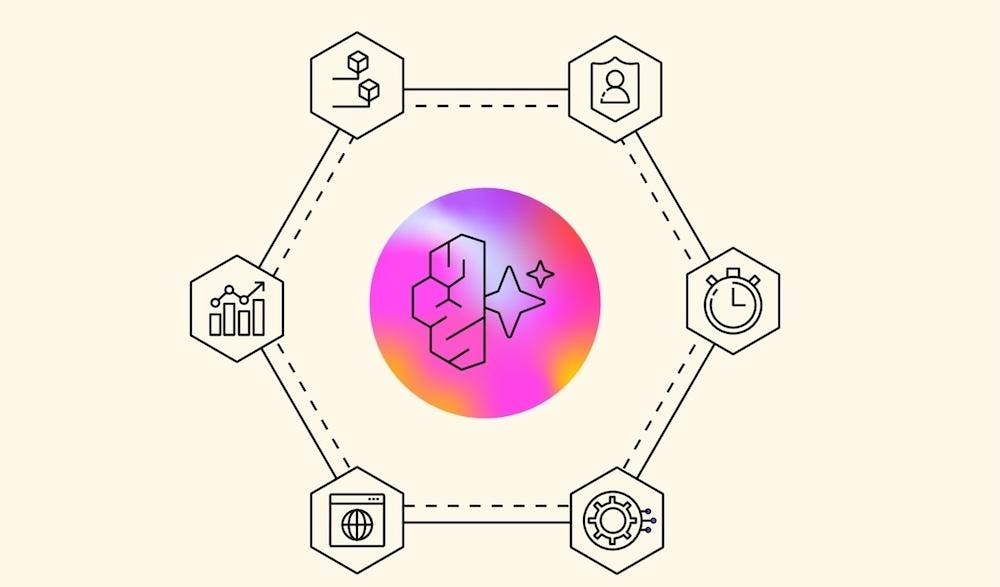
Before explaining why the harness matters, let me dissect what it assembles. It pulls the existing AgentCore primitives into one managed unit rather than leaving a team to connect them by hand. The Runtime isolates each session, the Memory persists context across turns, and the Gateway exposes tools. The Identity vault holds credentials, and the Observability layer traces every step. In this model, the foundation model provides the reasoning while the harness provides the runtime, memory, identity and tool access required to execute the work.
Customers declare the model, the tools, the skills and the instructions, and AWS assembles and runs the loop. Several pieces are new at general availability. Memory now provisions automatically when a harness is created, so an agent recognizes a returning user without a second setup call. A single toggle loads an AWS-curated catalog of skills with no network fetch, and every step of an invocation streams back in real time and traces to Amazon CloudWatch.
The capability customers asked for most is model switching inside a session. A team can plan with Claude, write code with another model and summarize with Gemini, and the conversation keeps its context across the handoffs. The model becomes a field set per call. Everything that gives the agent continuity stays on AWS, the memory, the gateway and the identity vault that holds the API keys.
The convergence across the major clouds makes this more t…