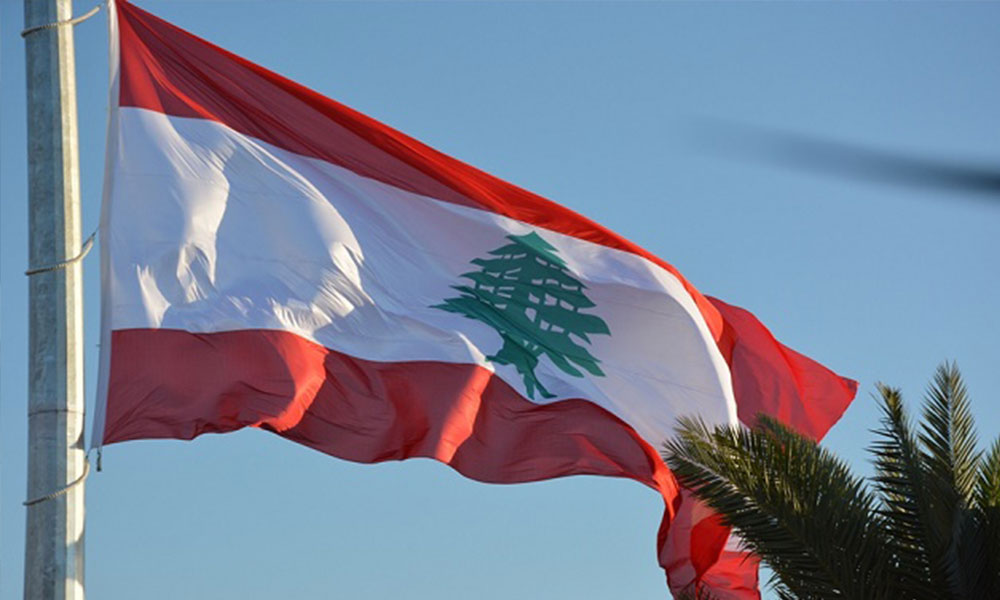
Lebanon was once synonymous with the 'Switzerland of the East', before successive 'resistance' projects led it into a 'swamp of the East'. Yesterday, its name returned to Switzerland, not as a model of prosperity that was shattered by 'axis' militias, but as an item on the agenda of the US-Iran dialogue in the Bürgenstock resort overlooking Lake Lucerne, where a ceasefire on the Lebanese front was top of the agenda. Thus, the approach is divided into two parallel lines: the first between Washington and Tehran, aimed at preventing renewed confrontations and containing their regional repercussions; and the second the anticipated Lebanese-Israeli negotiations tomorrow, which address essential sovereignty and security files, from Israeli withdrawal and border demarcation to military deployment mechanisms, the state's authority, and the restriction of weapons to its hands. Trump’s positions clearly reflected this division of roles. On the one hand, he pressured Tel Aviv to accept the ceasefire, and on the other, he held Tehran responsible for restraining its allies (Hezbollah) in Lebanon, threatening with more severe US strikes if the escalation continued. His threats triggered a response from Iranian Parliament Speaker and chief negotiator Mohammad Baqer Qalibaf. Conflicting narratives added to the scene's fogginess, with Tasnim news agency reporting that the Iranian delegation left the talks in protest against Trump’s statements, while Axios reported that the delegation did not withdraw. Thus, it appeared that the 'Switzerland of the East' file had come to confuse the Switzerland negotiations. In the broader regional context and its repercussions on Lebanon, Syrian President Ahmad al-Shara clarified in an interview with 'Al-Mashhad' channel that Trump's statements regarding Lebanon were misunderstood, denying any intention for Syrian forces to enter Lebanese territories or for Damascus to take on the task of disarming Hezbollah. He affirmed that the discussion revolves around a positive Syrian role that could contribute to shaping a solution to the crisis. Al-Shara stressed that Lebanon's stability is directly linked to Syria's security, calling on Hezbollah to find a place within the state, and prioritize Lebanese interests over other considerations. In the face of this complex entanglement, the clearest equation for Lebanon remains that Switzerland is a table for extinguishing the fire, while Washington remains a space for addressing the roots of the conflict and mapping out arrangements for the next phase between Beirut and Tel Aviv. In this context, 'Sawt al-Watan' learned that the Lebanese negotiating delegation received final instructions from President Joseph Aoun, while communication lines remain open between Aoun, delegation head Simon Karam, and Ambassador Nada Muawad, as well as the civil and military delegations. The first day of negotiations will be joint, with the Lebanese and Israeli delegations meeting, in their civil and military parts. The second day will be purely military, while the third day will be dedicated to political negotiations chaired by Karam. Information indicates that the Lebanese delegation will renew the proposal for the Nabatieh area as an experimental zone, but the data suggest an Israeli rejection of this proposal. In contrast, the coast extending from Tyre to Zahrani and Sidon may be proposed as an experimental alternative, but the atmosphere confirms ongoing Israeli rejection, especially after field advances in the Ali Tahr area, which is considered one of Hezbollah's largest military centers in the south. This rejection reflects the nature of Israel's position on the settlement, as Tel Aviv treats the ceasefire as a temporary truce. It insists on keeping its forces within what it calls 'security zones'. In this context, Benjamin Netanyahu said: 'We will reach an agreement with Lebanon when we get rid of the Hezbollah threat'. Additionally, Israeli public broadcasting reported that 'the army will begin, in the coming days, to reduce the number of its forces in southern Lebanon, after completing most of its offensive missions, and that both the Lebanese and Israeli sides will determine this week the areas from which Hezbollah has been removed, in preparation for handing them over to the Lebanese army'.
Music & Singing
Lebanon at Two Tables: Switzerland for a Ceasefire and Washington for Weapon Resolution
Lebanon was once synonymous with the 'Switzerland of the East', before successive 'resistance' projects led it into a 'swamp of the East'. Yesterday, its name returned to Switzerland, not as a model of prosperity that was shattered by 'axis' militias, but as an item...
AAdmin
June 22, 2026
4 min read