
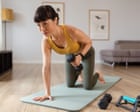
Stick to compound lifts and keep it simple. Photograph: Maca and Naca/Getty Images View image in fullscreen Stick to compound lifts and keep it simple. Photograph: Maca and Naca/Getty Images The Filter US Life and style How to start strength training in midlife, according to female trainers 40 and over Experts share a few tools, from dumbbells to resistance bands to cooling towels, to help women get stronger
Summer running essentials: nine must-haves to stay cool while training for a half-marathon
Sign up for the Filter US newsletter, your weekly guide to buying fewer, better things
Prefer the Guardian on Google The Guardian’s journalism is independent. We will earn a commission if you buy something through an affiliate link. Learn more .
Meet our strength training experts The equipment our experts recommend You don’t need anything fancy Use the ‘most underrated’ workout tool Stick to compound exercises Lift your bodyweight Modifications don’t signal weakness Keep your cool during perimenopause Recovery is part of the workout U nfortunately, muscle mass peaks long before wisdom does. After age 40, we lose about 3% to 8% of it per decade, and after 50 the losses accelerate. Known as sarcopenia , this decline means our muscles don’t respond to exercise the way they once did. For many women, perimenopause makes the uphill climb even steeper, making it tougher to build strength and recover after workouts.
The Guardian’s journalism is independent. We will earn a commission if you buy something through an affiliate link. Learn more .
That doesn’t mean it’s pointless to exercise later in life – in fact, it’s fully the opposite. You may not get abs, but your health improves across the board when you strength train: “Regular aerobic and resistance training cuts the risk of almost every noncommunicable disease – type 2 diabetes, cardiovascular disease, Alzheimer’s,” Leigh Breen, an expert in skeletal muscle physiology and metabolism at Birmingham University, previously told the Guardian .
Even if you’ve never picked up a dumbbell before, it’s not too late. “People who’ve trained for years are better protected, but even late starters can dramatically reduce their disease risk in a short time,” said Breen.
Beyond the physical benefits, getting stronger in later life can simply feel empowering. “Taking up space and putting on muscle is a beautiful thing,” said Ann Marie Chaker, a professional bodybuilder in her 40s who was formerly a Wall Street Journal reporter.
So how do you start a strength training routine in midlife? We asked female personal trainers and coaches like Chaker to weigh in. All 40 and over, they’ve written bestselling books, founded workout platforms and hold degrees focused on human physiology.
View image in fullscreen Photograph: grinvalds/Getty Images Meet our strength training experts Stephanie Gaudreau : a certified personal trainer who founded Strong With Steph , a program that focuses on training women over 40
Anne Marie Chaker : a professional bodybuilder and author of Lift , a book on weightlifting for women
Caroline Idiens , age 54: the founder of the popular fitness program Caroline’s Circuits and author of Fit at 50
Kate Whetsel , age 51: a certified personal trainer and health coach, specializing in women going through perimenopause
Dr Teal’s Pure Epsom Magnesium Salt Soak
You don’t need anything fancy A recent study found that just five extra minutes of exercise and 30 minutes less sitting each day coul…