
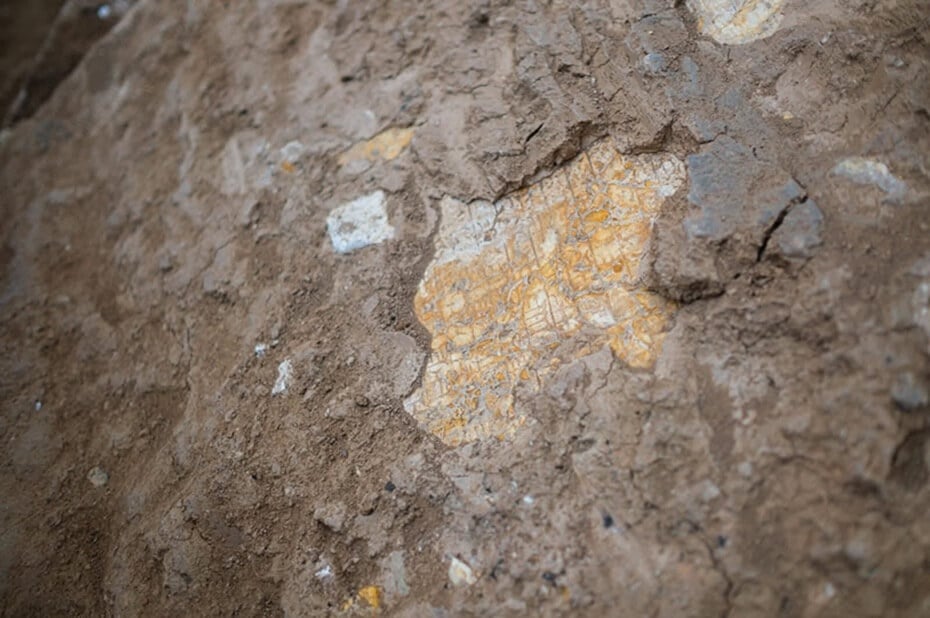
A recently unearthed Assyrian stele found in Nineveh, Iraq. Photo: Ministry of Culture
Baghdad (IraqiNews.com) – A 2,600-year-old Assyrian stele was discovered by archaeologists in Iraq at the site of the famous Shamash Gate in Nineveh.
This 2-meter-high artifact dates back to the time of King Ashurbanipal and contains both reliefs of the king and cuneiform texts about his construction works.
This discovery highlights an ironic twist when reflecting on the region’s history. The authorities found the stele as they were clearing debris and repairing the gate that had been badly destroyed under ISIS occupation of Mosul.
King Ashurbanipal was a Neo-Assyrian emperor who ruled from 668 BC to 627 BC. He is known in history as the person who had extensive collections of cuneiform writings in the royal library located in Nineveh.
This stone slab has dimensions of two meters in height and 1.55 meters in width, made from local marble in Mosul.
The frontal side of the monument has the king himself, while the reverse has a smaller sculpted design of other Assyrian kings.
Cuneiform inscriptions on the back of the monument tell about the construction of buildings in Nineveh throughout the Assyrian Empire.
The artifact has been transported successfully to where it will be conserved.
The Iraqi government is working on putting this object on display, either at the original site or at the soon-to-be-opened Mosul Civilization Museum.