
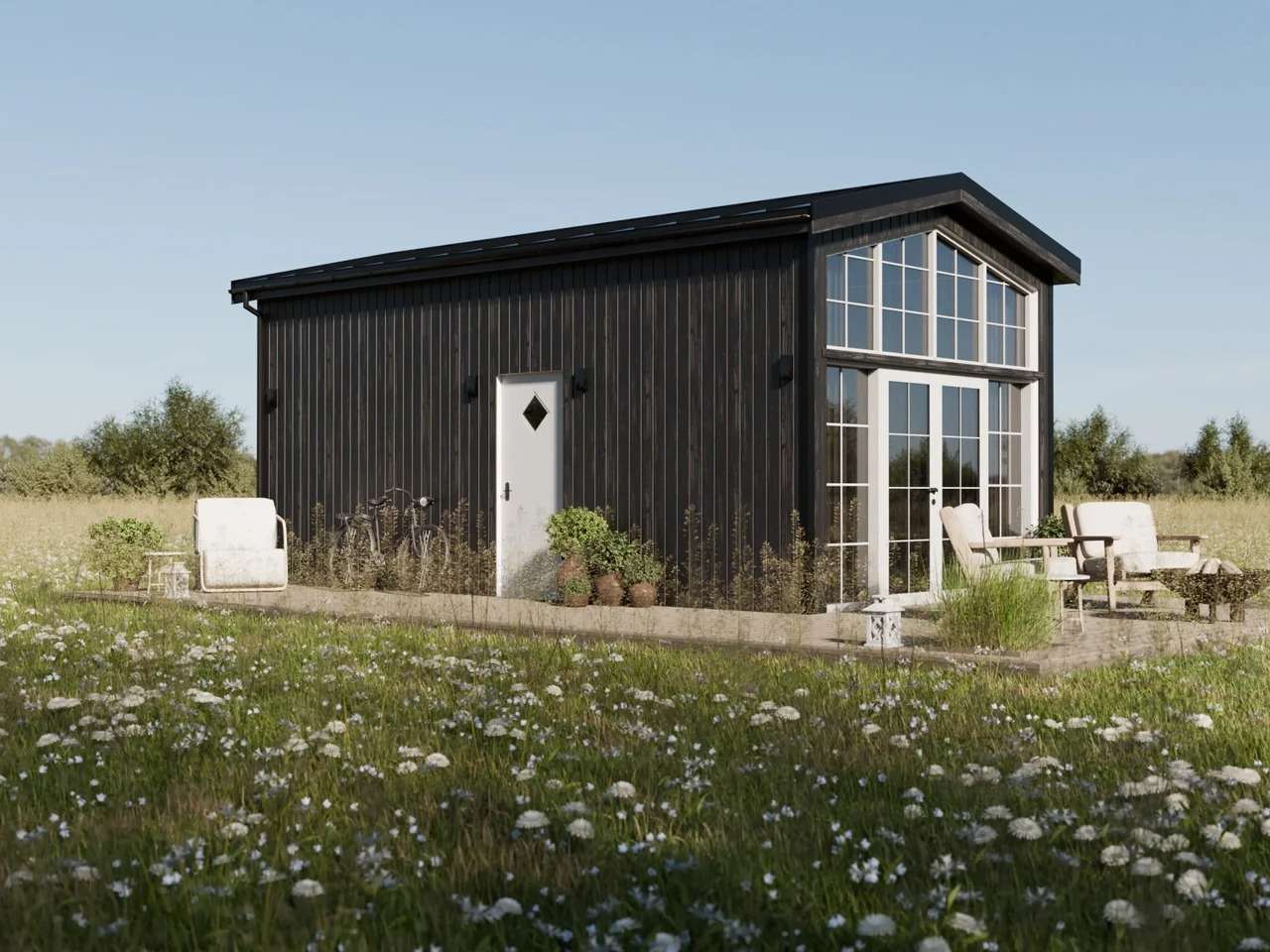
On June 26, 2026 Home » Projects » The Lucia Project addresses space limitations through multi-level spatial organization. The massing and visual connection to the surroundings transcend the constraints associated with small, retractable homes by opting for a permanent installation on fixed foundations instead of a movable structure. This shift allows for an increase in usable space within a plan of 39 square meters, alongside providing a higher interior height compared to conventional mobile units.
Externally, the building utilizes a cladding of spruce or engineered wood panels, giving it a visual presence that aligns with the Scandinavian character of the project. The mass is covered by a simple metal roof that protects against varying weather conditions, while the extended glass facade serves as a visual element linking the interior and exterior and allowing natural light to penetrate deep into the internal spaces. This reflects a growing interest in design issues related to the relationship between the building and its surroundings.
The internal organization is built around an open space that benefits from the large glass facade to enhance natural lighting and visual connection to the surroundings. As the lighting changes throughout the day, reflections of light and shadow on the wooden surfaces add visual diversity to the interior scene.
The main space extends approximately 7.5 meters in length, capitalizing on the interior height to reduce the feeling of crampedness. The use of natural materials and the clear distribution of functions contribute to achieving a living environment that balances spatial efficiency and maximizes the available space, which is also associated with developments in contemporary interior design.
The ground floor is organized functionally to integrate living, working, and storage areas within a coherent layout that minimizes movement obstacles. This is reflected in the integration of workspace and storage units within fixed elements embedded in the walls, maintaining clarity of movement within the space.
An internal staircase connects the ground floor to the mezzanine area, with the space below being utilized as additional storage units. This utilization reflects the design's commitment to optimizing secondary spaces and enhancing efficiency within a limited area.
The upper level includes the main sleeping area within a mezzanine space that benefits from the arrangement of furniture and low storage units to achieve the best usage of the available space. The relatively low ceiling helps distinguish this level from the ground floor and highlights its functional privacy.
The sleeping area also benefits from light coming from the lower level and the presence of wooden materials in shaping its interior atmosphere, aligning with the overall design language of the project, a language observable in many similar architectural projects.
The Lucia model provides a set of customization options, including the addition of an external balcony or pergola, alongside furnishing packages and various options for finishes and colors. These options offer greater flexibility in adapting the unit to user needs and site specifics.
The project relies on environmentally friendly materials and execution that follow a specialized architectural design rather than conventional ready-made solutions, consistent with Scandinavian standards focusing on sustainability, quality of construction, and long operational life. The choice of suitable building materials is also tied to achieving higher levels of performance and sustainability.
The Lucia layout shows how a space of 39 square meters can accommodate essential living functions through careful organization of spaces and versatile utilization of internal elements. The project depends on reducing unused areas and integrating storage functions within building components to maximize the utilization of available space.
The importance of design is highlighted here through the balanced relationship between interior organization and visual connection to the surroundings, presenting a model for how to address small spaces through thoughtful planning instead of merely relying on increased space alone. This approach aligns with many architectural researches focusing on spatial efficiency.
The Lucia model redefines the concept of a tiny house by relinquishing mobility in favor of permanent stability, replacing the flexibility of movement with higher spatial efficiency.