
See more of our coverage in your search results.
Add The New York Post on Google A burn with no return.
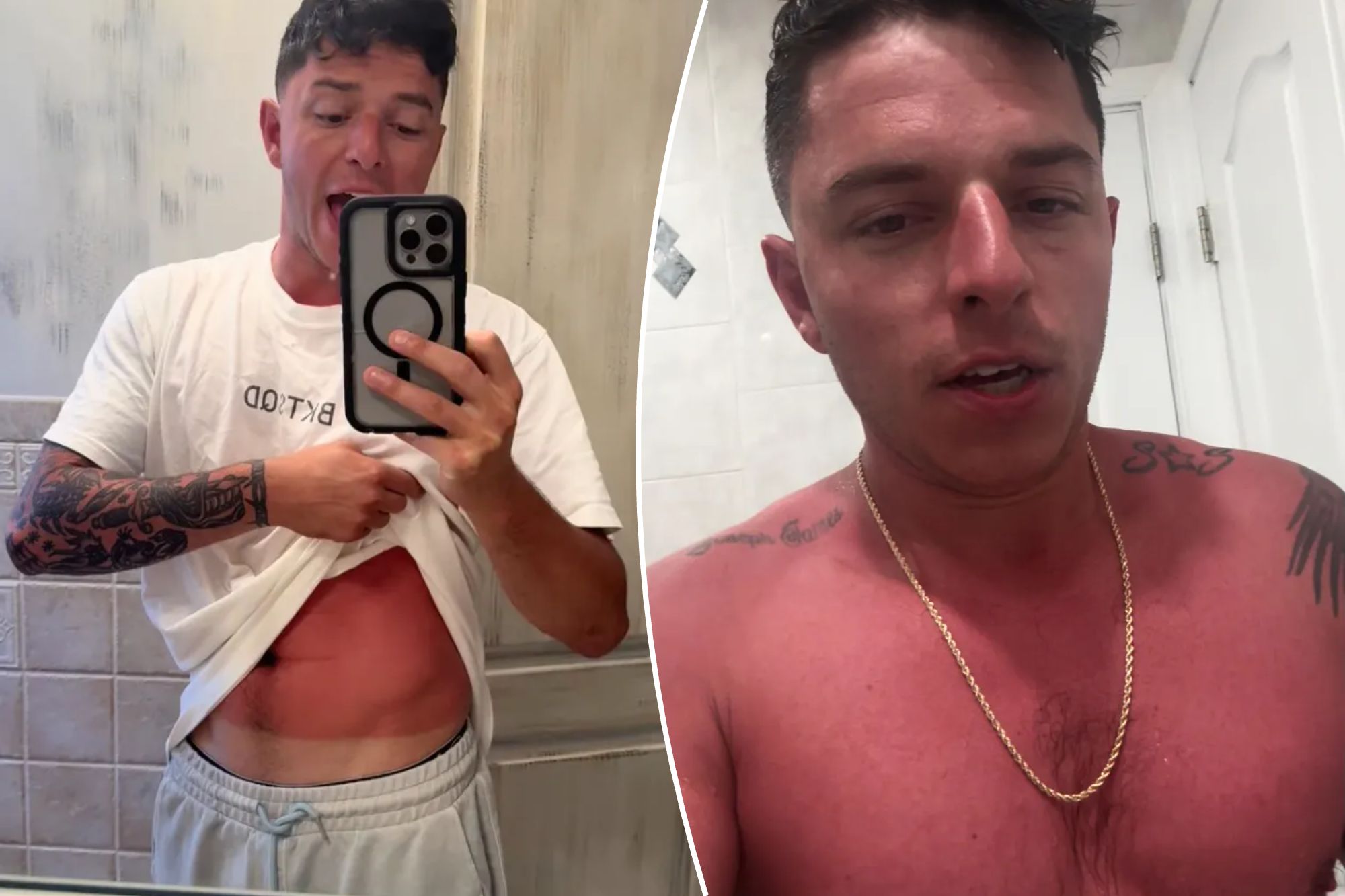
Last week, “The Circle” Season 7 star Jojo Scarlotta went viral for his “horrendous” sunburn, which was painful, bright red and blistering after he failed to properly reapply sunscreen.
“I just showered. I can’t breathe. I think I’d rather stick thumbtacks in my nutsack than deal with this again,” he said. “They said the UV was a f – – king three … I look like Larry the f – – king lobster.”
Viewers were certainly stunned, warning him that he’d sustained a “life-changing sunburn” and should seek medical care.
“Life-changing sunburn” isn’t an official medical term — but the idea behind it is “very real,” dermatologist Dr. Michelle Henry of Skin & Aesthetic Surgery of Manhattan told The Post.
“A severe, blistering sunburn can permanently increase your risk of developing skin cancer because ultraviolet radiation damages the DNA inside your skin cells,” she explained.
“While your body can repair some of that damage, it doesn’t repair all of it. The DNA mutations that remain can accumulate over your lifetime.”
In fact, severe sunburns double your risk of melanoma , the deadliest form of skin cancer — so Henry says that if you do get burnt to a crisp, it should shake you out of your SPF-skipping slip-ups.
“I like to think of a severe sunburn as a wake-up call, not a life sentence. The good news is that the choices you make after that burn still matter,” said the doc, who is also a Melanoma Research Foundation Board Member.
“Every intense sunburn adds to your skin’s lifetime DNA damage,” said Henry.
“We don’t have one exact threshold where researchers can say, ‘This one burn changed everything,’ but we do know the risk increases with both the severity and number of burns.”
Have 10 or more severe sunburns in your life? You’ve got about 240% the risk of developing melanoma.
When in your life you got a bad sunburn may matter, too. Henry points to a Norwegian study that suggests that getting repeatedly sunburned as a child increases risk even if you’re careful later in life.
Five or more blistering sunburns as a teen puts you at a 80% higher risk of melanoma.
While most people worry about skin cancer, Henry says, there are more immediate concerns: A burn means the skin barrier is disrupted .
“If enough skin is affected, people can become quite sick because damaged skin loses fluid and can’t regulate temperature as effectively,” Henry said. “Large blisters also create an opening for bacteria, increasing the risk of infection.”
A burn could cause permanent pigment changes or scarring. UV also speeds up skin aging by breaking down collagen and elastin, contributing to wrinkles, discoloration and loss of firmness early, Henry said.
You might also get a fever, chills, headache, nausea and vomiting.
“I don’t want people to panic if they’ve had one terrible sunburn. I do want them to take it seriously,” she said. “It’s never too late to change your relationship with the sun, and those changes can meaningfully reduce your future risk.”
Is it worse to have just a few really bad burns — or just tan a lot without SPF over time? The…