
Livestream Menu Make It select USA INTL Livestream Search quotes, news & videos Livestream Watchlist SIGN IN Create free account Markets Business Investing Tech Politics Video Watchlist Investing Club PRO Livestream Menu
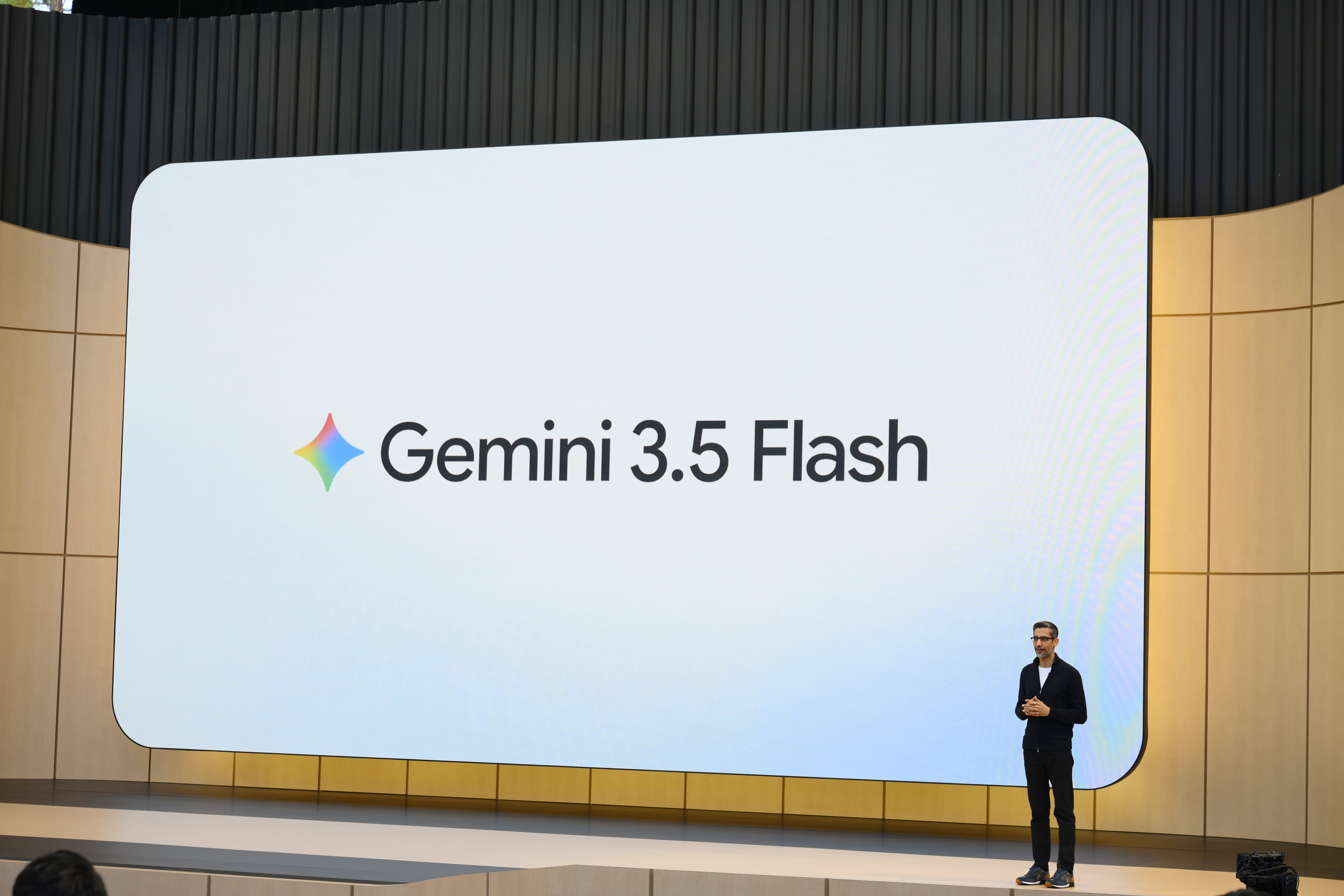
Alphabet burnishes one of its best weapons in the battle for AI supremacy Published Sat, Jun 27 2026 9:12 AM EDT Updated Sat, Jun 27 2026 9:21 AM EDT Paulina Likos @paulina_likos Alphabet has squashed concerns that artificial intelligence will destroy its Google tech empire. One of its biggest weapons in the fight: homegrown silicon chips. Google's in-house tensor processing units (TPUs) serve as the engine to the company's Gemini chatbot, which has bolstered its image in the past year against rivals like OpenAI's ChatGPT. They also represent an integral part of Google's fast-growing cloud-computing business, where customers — including buzzy AI startup Anthropic — rent access to the chips; in some cases, they can now buy TPUs for their own data centers. Google also has a new AI compute venture with asset management giant Blackstone, built around the TPU. Google's compute business is seeing strong demand, with Wall Street projecting Google Cloud revenue to surge roughly 64% this year, to $96 billion, according to FactSet. Analysts see robust expansion continuing in 2027, with growth modeled above 50%. With demand for AI computing power surging, Google's TPUs are increasingly seen as a compelling alternative to Nvidia's market-leading graphics processing units (GPUs). They position Alphabet as a major force in AI infrastructure, even as Google Cloud still trails Amazon Web Services and Microsoft Azure in revenue. That status benefits both Google's internal AI efforts and helps win outside customers — a lucrative one-two punch that figures into Jim Cramer's admiration for the stock. Google is "probably the most underappreciated competitor of Nvidia," said Brad Gastwirth, global head of market research and market intelligence at Circular Technology , a supply chain services firm focused on compute infrastructure. While AI computing is a complex process, the appeal of the TPU comes down to a widely understood idea in life: making your money go further. In this case, the goal is to obtain the most computing power for every dollar spent, an increasingly critical consideration as companies race to deploy AI at scale. Main stages of AI computing At the simplest level, there are two primary stages of AI computing. Training: This happens first. Training teaches an AI model by feeding it massive amounts of data so it can learn patterns and improve its responses. This is the phase in which companies develop large language models such as Gemini. It requires enormous computing power, making it one of the most expensive parts of building AI systems. Inference: The process by which a trained AI model makes predictions or decisions based on new data. Inference is much less computationally heavy than training on a per-task basis. But once a model is deployed, inference is theoretically occurring all the time. So, the cumulative inference costs for a model can exceed its training costs over its lifetime. Put simply, the purpose of training is to learn, while the purpose of inference is to make predictions. The nature of TPUs enables them to deliver strong performance on AI tasks while reducing the cost of running those systems. TPUs belong to a class of chips called application-specific integr…