
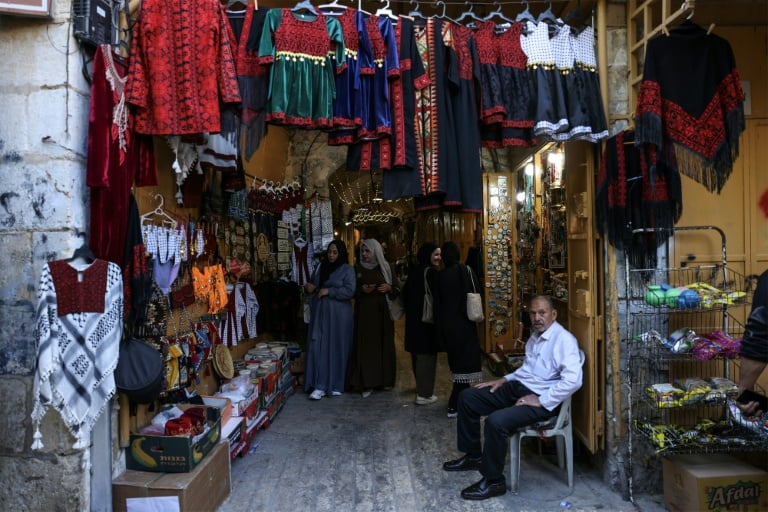
Herbon is the only West Bank city with an area under direct Israeli military control
Hebron – For Israeli settler Nitzan, Hebron’s Old City and its sacred Cave of the Patriarchs shrine are a must-see for all of humanity, but for Palestinian Issa Amro, it has become a symbol of Israel’s expanding grip on the city.
Holy to Jews, Muslims and Christians and believed to be the burial place of biblical figures including Abraham, the site has long represented the competing claims that define Hebron, the largest city in the Israeli-occupied West Bank.
Known to Muslims as the Ibrahimi Mosque, the shrine sits within a heavily controlled area where around 40,000 Palestinians live alongside about 200 Israeli settler families — but under separate systems of movement and security.
Israeli authorities have installed checkpoints, gates and patrols across key streets in the area, citing security concerns, and Palestinians who do not live in the restricted zone are not allowed to enter freely.
Israel’s far-right Finance Minister Bezalel Smotrich recently announced that the shrine’s administration, including planning and construction powers, would be transferred to Israeli authorities, a significant shift that has alarmed Palestinians but cheered Israeli settlers.
“It’s a place that all the humanity should visit to say thanks for Hashem, which is God,” Nitzan, a resident of the nearby Kiryat Arba settlement, told AFP.
“We kind of visit our parents here,” said the 36-year-old employee of Israeli national parks, declining to give his full name.
But for many Palestinians living in its shadow, the site now symbolises the steady tightening of Israeli control over a city where two communities live in close proximity but inhabit starkly different worlds.
“We feel that we live in a big jail in Hebron: the checkpoints restrict movement so nobody from outside can come to our houses,” said Issa Amro, an activist who lives near buildings occupied by settlers.
Over time, many Palestinian shops in the Old City have shut, and the once vibrant thoroughfare flanked by old stone buildings now stands empty.
Amro showed AFP video of men throwing stones at his home’s windows, saying they were Israelis who told him they had come to take his house. He is often harassed by settlers and Israeli soldiers, he added.
The Oslo Agreements of the 1990s between Israelis and Palestinians divided the West Bank into areas under each group’s respective control.
Years later in 1997, Hebron became the territory’s only Palestinian city to have an area under direct Israeli military control, named H2, which includes the Cave of the Patriarchs.
The holy site is also separated into an area for Jews and one for Muslims, each with a separate entrance.
The plaza leading to the entrance used by Jewish visitors is clean and orderly and, until recently, included a restaurant called the “Settlers’ Cafe”.
“Before, any little construction here used to need the prime minister’s involvement,” Aaron Marwani, a city councillor in Kiryat Arba, told AFP.
“But little by little, the process got easier,” said the 35-year-old lawyer, who has been coming to the Cave of the Patriarchs since childhood.
Israeli parks employee Nitzan doesn’t believe coexistence can happen in Hebron and said he favoured greater separation.
“For me it’s difficul…