
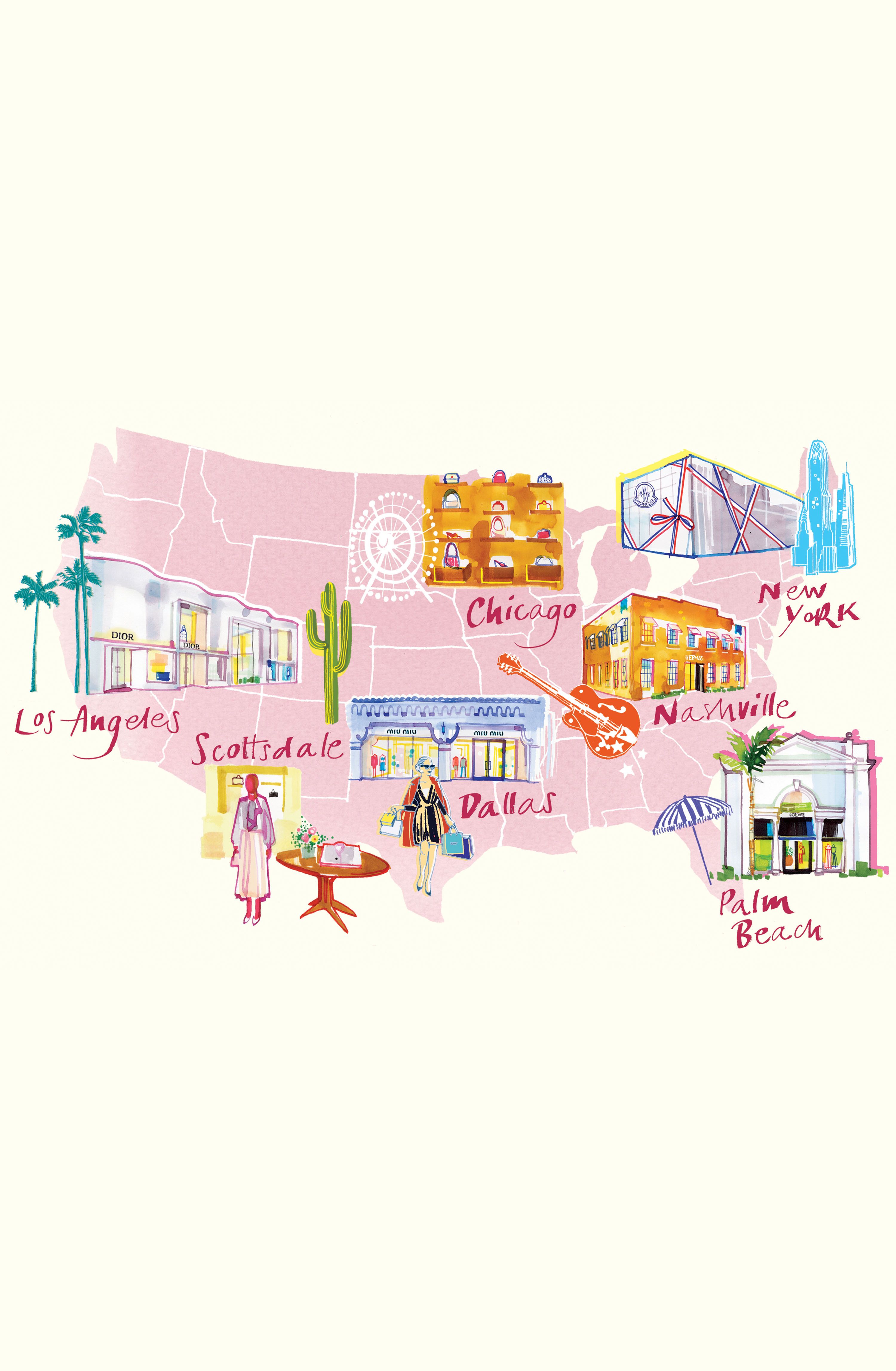
Save Story Save this story Save Story Save this story The United States is back in fashion — at least, as far as luxury is concerned. Brands across the board are focusing on the US, upping their flagship boutique sizes and specs, and venturing further into the country after years of prioritizing slim slices of the coasts.
North America led luxury store openings in 2025, accounting for 27% globally, according to Savills. “Every brand I talk to is reinvesting in the US,” says HSBC US head of retail and apparel Eric Fisch.
There are multiple levers behind the recent uptick in US investment and focus. It’s largely driven by the yet-to-bounce-back Chinese market, Fisch flags. “There was this view that China was shut for Covid, and then it was going to just explode. Here we are six years later and there hasn’t been any explosion.” The rise of local Chinese challenger brands has also hindered luxury’s comeback, he adds. In the US, however, employment rates remain solid and the stock market is up, driving confidence — and spend — among high-net-worth shoppers.
The US has thus been a bright spot in recent quarters, standing out as a growth engine in a spate of luxury earnings dominated by revenue dips and declines. The Sun Belt — America’s southern and southwestern states — is where to watch, Fisch says, highlighting cities including Charlotte, Nashville, Miami, and Charleston . “It’s a combination of local wealth and more tourism flowing to those markets,” he adds. “Brands are realizing that there’s a great ROI opportunity on the leases that are obviously less than those on Fifth Avenue or Newbury Street, but have a lot of foot traffic.”
We break down the most promising markets for luxury in the US today, from mainstays New York and Los Angeles — which continue to drum up investment — to more nascent, ultra-buzzy markets like Scottsdale and Nashville. “When [luxury brands] started opening in Williamsburg, I was skeptical,” Fisch says. “Now, we’re so far past Williamsburg.” Here’s where to go next.
Vibe : Resort-esque. The desert landscape means malls reign supreme, while sprawling golf courses offer a space to congregate — on the course or at the club.
Consumer : Affluent retirees and wealthy out-of-towners in search of sunshine with second homes in the city (or state). Wealthy families whose parents live day-to-day in athleisure — with gold jewelry, expensive handbags, and Chanel flats or Gucci sneakers to complete the look — but dress up for a lunch or dinner at the country club.
Shopping : Much of Scottsdale’s luxury offerings are concentrated in department stores — it’s hot year-round, after all. Scottsdale Fashion Square is home to many Arizona-first boutiques including Dior and Brunello Cucinelli. Even Hermès, which tends to look for unexpected locations in new cities, opted for the tried-and-true mall.
Hermès: First AZ store, Scottsdale Fashion Square (2025)
Loro Piana: First AZ store, Scottsdale Fashion Square (2025)
Montblanc: New store, Scottsdale Fashion Square (2026)
Vibe : Beachy island living, with a city twist — there are many more high-rises than one might expect.
Consumer : A mix of locals and foreign investors who purchase luxury properties in the city. Tourists come ready to spend and save: tax rates are lower in Hawaii than many other US cities, at about 4%. Many brands also offer “Hawaii pricing”, which is about 10% lower than mainland US prices. Locals, meanwhile, are eligible for kamaʻāina discounts, which are…