
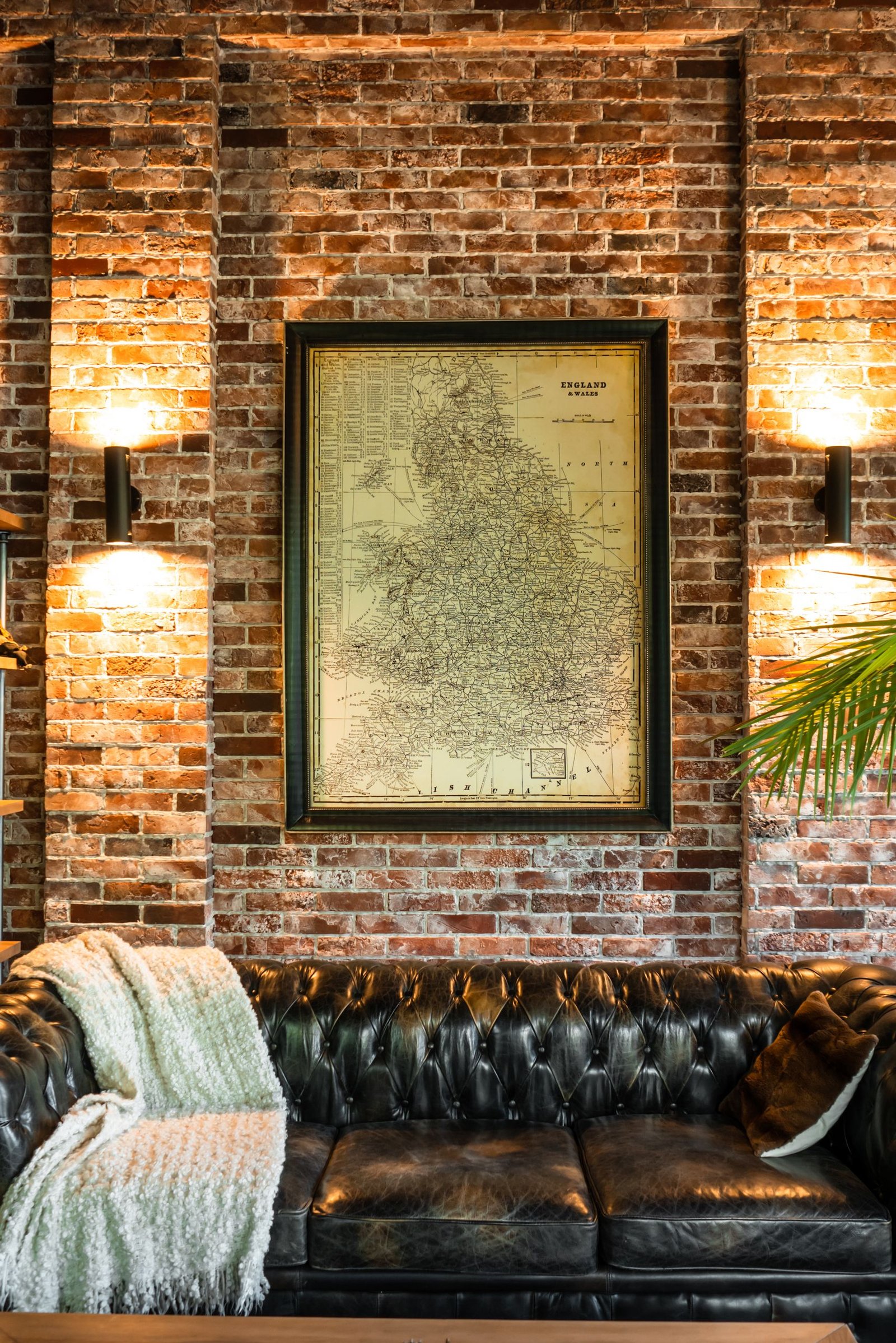
Wall finishes play a significant role in defining the identity and long-term performance of a building. One of the most common options is the use of exposed brick or covering the walls with a layer of render. While both options serve to protect the wall, each has a different impact on appearance, maintenance, lifespan, and future development potential.
Exposed brick relies on showing the building material itself as an aesthetic element, while rendered walls provide a uniform surface that can be painted or finished in various ways. The appropriate choice depends on the climate, architectural style, maintenance requirements, and whether the wall is internal or external.
Exposed brick is a wall where the bricks are left visible without being covered by render or any other finishing. It can be part of the structural frame or just a decorative finish.
Rendered walls are walls that are coated with a layer of render to achieve a smooth or decorative surface before painting or other finishes.
Rendered walls are used in most residential and commercial projects.
Exposed brick gives space depth and a distinctive character, while rendered walls provide a calm backdrop that allows furniture, lighting, and decorative elements to stand out more clearly.
Exposed brick is often used as a feature wall within a space, while rendered walls are used in most interior areas.
Render provides greater freedom in color selection, but it requires repainting and maintenance over time.
Exposed brick can retain its appearance for decades when executed correctly.
However, render may show surface cracks due to movement or weather conditions.
Rendered walls typically require cosmetic maintenance periodically to keep their appearance.
Whether the wall is made of exposed brick or covered with render, the quality of waterproofing and execution details are the most important factors in preventing moisture.
The thermal performance of the building relies more on the insulation system used within the wall, not just on the type of finish.
Exposed brick requires precise execution since the final wall will remain visible, while render allows hiding minor defects in the construction work.
Rendered walls provide greater freedom in repainting or changing the interior character over time.
• When wanting to highlight the natural building material. • If the goal is to reduce long-term maintenance work. • When the quality of brickwork execution is high. • In projects with industrial, rustic, or contemporary character. • In areas suitable for exposed brick facades.
It is widely used in facades, heritage buildings, industrial-style apartments, and distinctive interior walls.
• When wanting a clean and uniform appearance. • If future color changes are expected. • When design flexibility is a priority. • To hide minor defects in construction work. • When using various finishes and paints.
Suitable for most residential, commercial, and educational projects.
Many modern projects rely on using both exposed brick and rendered walls together. Facades or one of the interior walls may be executed in exposed brick to add a distinctive architectural character, while rendered walls are used in the rest of the areas to provide greater flexibility in finishing and decor.
This approach helps achieve a balance between architectural identity, ease of maintenance, and potential for future renewal.
Both exposed brick and rendered walls offer various advantages in both internal and external uses. Exposed brick is characterized by durability, natural character, and low maintenance, while rendered walls provide a calmer appearance and great flexibility in changing colors and finishes.
The best choice depends on the project's style, climatic conditions, expected level of maintenance, and required visual identity. In many contemporary projects, combining the two options achieves the best balance between practical performance and architectural appeal.