
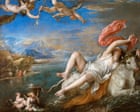
The Rape of Europa by Titian. Photograph: Alamy View image in fullscreen The Rape of Europa by Titian. Photograph: Alamy Book of the day Art and design books Review Depraved by Daisy Dixon review – a history of dark and dangerous art From classical painting to video games, this survey of the taboo and the twisted won’t let you look away
Prefer the Guardian on Google M useums are damned if they do, damned if they don’t. Ignore the problems of the past and they’re criticised for being problematic. Rewrite their labels according to changing politics and they’re called preachy and woke. The fact is, history is filled with immoral art. But how do we know it when we see it? And what, if anything, should we be doing about it?
In her timely and punchy new book, the philosopher Daisy Dixon explores some of the most controversial artworks ever produced. She’s interested in how an artist’s character can influence their creations, and the harmful effects those creations can have on the world.
She’s not the first. Plato panicked over art’s power to corrupt citizens, while Oscar Wilde celebrated its provocative potential. More recently, Claire Dederer puzzled through the problem of what we ought to do with great art by bad men in her 2023 book Monsters .
Come to Depraved expecting a conventional view of art history and you’ll be disappointed, though. Alongside traditional media from prehistory to the present, including paintings, novels and plays, are more contemporary “art forms” such as video games; there’s also a lengthy tangent on pornography. Some of the stuff is so repulsive it’s hard to read about. There’s talk of live goldfish being pulverised in blenders in the name of performance art, and a film featuring shocking scenes of paedophilia. A video game named Rape Day needs no explanation, but Dixon won’t let you look away.
Depravity, she writes, can lurk beneath the surface of a “pretty oil-soaked canvas”. “What is wrong with this beautiful picture?” she asks of Titian’s The Rape of Europa, a staggering 16th-century painting of the princess being dragged across the briny sea by Jupiter, king of the gods, in the guise of a bull. “Well, it tells us that sexual violence is alluring and erotic. It tells us that ‘No’ does not count as genuine refusal; that women, deep down, desire such violation.” But the textures! The luminous colours! The raw emotion! I feel myself bristling, before conceding that the bull’s dewy eyes and garland of flowers perhaps do prettify pain.
The first sculpture of a naked woman was so lifelike that one man attempted to have sex with it According to the author, art can be depraved in five ways: it can show an immoral state of affairs; cause someone to do a bad thing; express a dangerous message; be created by an immoral artist; or be made in a morally suspect way. Forget good intentions. In 2017, protests erupted around Dana Schutz’s contribution to the Whitney Biennial, a painting of the mutilated body of Emmett Till, the 14-year-old black boy murdered in 1955 after being falsely accused of flirting with a white woman. Schutz’s aim was to present white remorse. The overriding response was that her use of black pain as material was appropriation. “Artistic speech can become depraved even when it is expressed in good faith,” writes Dixon.
How does art alter our moral compass? According to ancient writers, the first Greek sculpture of a naked woman was so lifelike that one man attempted to have sex with it before thro...