
Venture Capital Software Continent: The Missing Map Of The Modern Software Industry By Ben Topor ,
Forbes contributors publish independent expert analyses and insights. Founder of Titan Capital Partners, a growth stage tech investment firm Follow Author Jul 01, 2026, 02:28am EDT --:-- / --:-- This voice experience is generated by AI. Learn more . This voice experience is generated by AI. Learn more . The Software Continent Decoding The Software Landscape by Ben Topor The Eight City-States and How Capital Flows Between Them The software industry is often described as if it is constantly reinventing itself. Cloud, SaaS and now AI are each framed as a reset. But beneath the surface, the structure of the industry is far more stable than it appears. What changes is not the terrain, but the tools built on top of it.
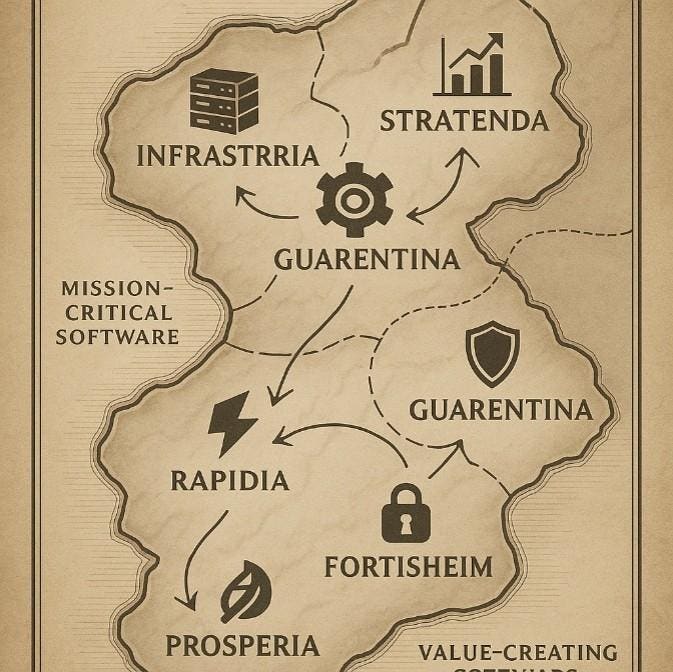
To understand how software markets actually behave - especially in the current wave of AI-driven investment - it is useful to think of the industry not as a collection of categories, but as a continent . A system composed of distinct “city-states,” each governed by its own economic logic. Companies do not just build products; they operate within one of these cities, whether they realize it or not.
At the base of the continent sit the foundational systems - the layer where software becomes part of the environment itself. Companies like Amazon Web Services or Snowflake are not chosen repeatedly; they are embedded. Their success is not driven by features, but by indispensability. Once integrated, they are extremely difficult to replace, and over time, they quietly accumulate power.
Closely adjacent are the systems of record, the software that owns the “truth” inside organizations. Salesforce in CRM or Workday in HR are not necessarily loved products, but they are deeply entrenched. Control the record, and you control the workflow. This creates a form of durability that is less visible than growth, but far more resilient.
Another part of the continent is driven by a completely different force: fear. In cybersecurity and compliance, spending is not tied to ambition, but to risk. Companies like CrowdStrike or Palo Alto Networks operate in an environment where the buyer is not asking how to improve outcomes, but how to avoid failure. This is why, even in downturns, these budgets tend to hold.
Further along the continent, the logic shifts from protection to optimization. Some systems exist to reduce costs. Companies such as UiPath or ServiceNow often enter organizations with a simple promise: eliminate inefficiencies. The value here is measurable, which makes adoption easier - but it also makes competition harsher. If a better or cheaper solution appears, switching is rational.
In contrast, another set of companies focuses on expanding revenue. Platforms like HubSpot or Shopify succeed when they can directly tie their product to growth. This is a more aspirational category, but also a more fragile one. The central challenge is attribution. If the product clearly drives revenue, it becomes essential. If not, it is one of the first tools to be reconsidered.
Then there are systems built to inform decisions. Historically, this meant business intelligence tools like Tableau. Increasingly, in the age of AI, it means something more ambitious: turning data into action. Companies like Databricks or Palantir are attempting to bridge this gap. But as models and infrastructure become more commoditized, the real question becomes who owns the d…