
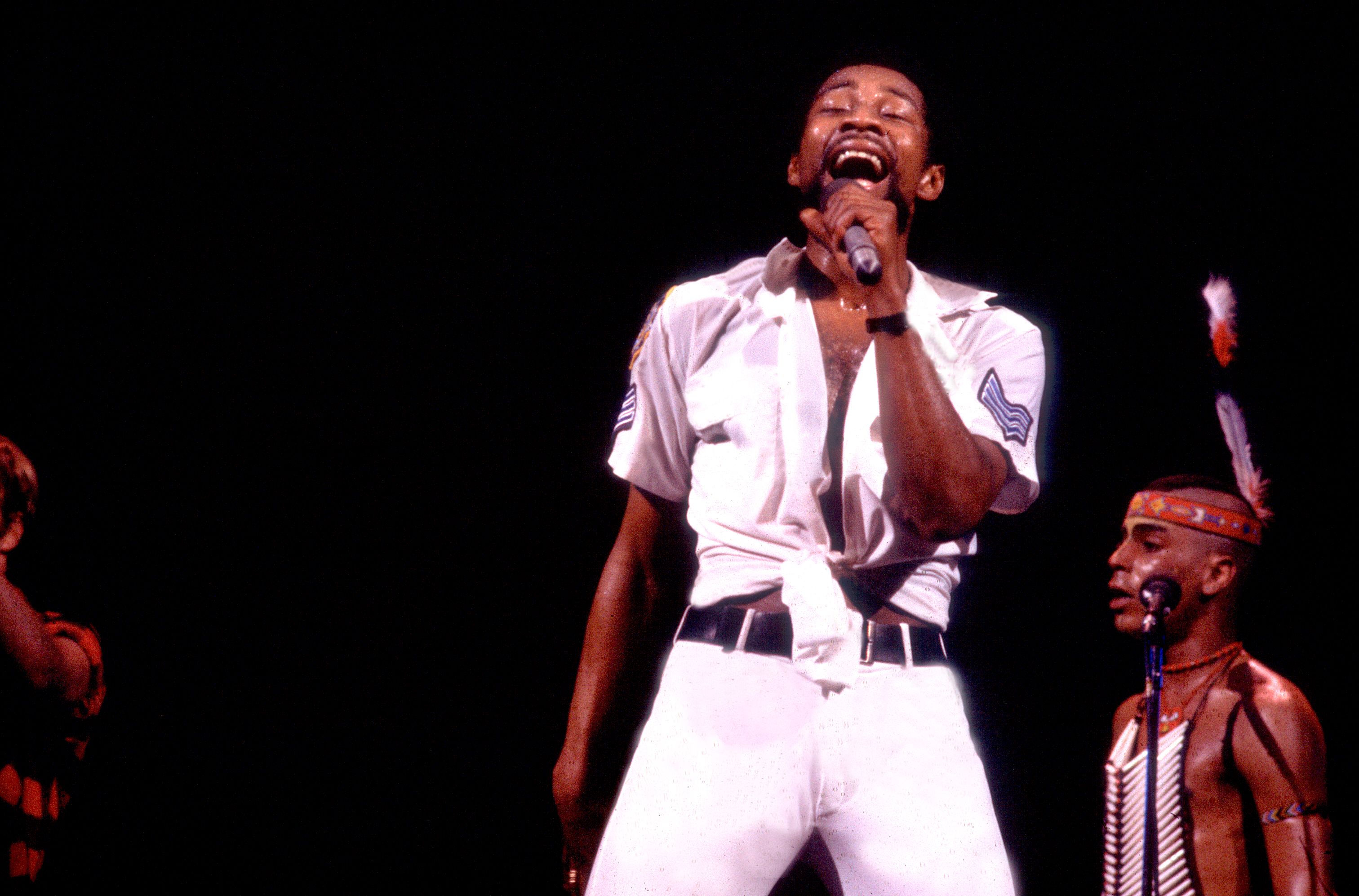
Village People’s Victor Willis, 1979 (Getty Images) Save Story Save this story Save Story Save this story Victor Willis, who co-founded the Village People and co-wrote their biggest hits, died Tuesday, June 30, after a “short but aggressive illness,” according to a post on the singer’s and the Village People’s Facebook pages . His wife posted a similar statement on the singer’s own Facebook page . Willis was 74 years old.
Formed in 1977, the Village People were effectively the concept band of producer/composer Jacques Morali and Henri Belolo, the duo behind Can’t Stop Productions. Morali dreamed up the group after stumbling into a Greenwich Village gay bar where “boys decked out in butch drag were dancing around a man called Felipé Rose,” who was wearing an Indigenous American costume, as Tim Lawrence writes in Love Saves the Day: A History of American Dance Music Culture, 1970-1979 . Willis was enlisted to sing backup on a concept album about gay New York life, but eventually convinced Morali he should be singing lead. The band’s self-titled 1977 debut, conceptualized and produced by Morali, was a landmark in the expansion of Eurodisco in the United States, as well as an international hit.
Second album Macho Man continued to push the Eurodisco sound, cementing the core Village People lineup of costumed, mostly mustachioed men modeled on American archetypes. Disco-at-large was boiling over, leaving its imprint on pop and rock through blockbuster remixes of songs like Rod Stewart’s “Da Ya Think I’m Sexy?” Into this combustible moment, the Village People unleashed “Y.M.C.A.,” an anthem of lustrous orchestral motifs and suggestive lyrics from third album Cruisin’ . Co-written and sung by Willis, who wore the police and naval officer costumes, “Y.M.C.A.” dialed down none of the band’s ostentatious style but became ubiquitous anyway, unreservedly embraced by most of the mainstream. As disco promoter Kenn Friedman told Lawrence in Love Saves the Day , the album “did not happen in gay clubs but in straight ones.” The Village People, he said, became, “the first gay-to-straight ‘crossover’ group.”
Willis, who was heterosexual, was happy to play up homoeroticism on stage and on record but joined the group in presenting a more muted media presence as their fame rocketed. (Said Rose at the time, “I’ll tell the gay press I’m gay. If the straight press asks, we tell them it’s none of their business. Or ‘none of their fucking business!’ depending on how they ask.”) The ambiguity allowed the group to operate on the border between queer and straight culture, becoming one of the few disco artists—alongside Donna Summer and Chic—to achieve continued success, rather than scoring one-off or scattered dancefloor hits.
Fourth album Go West , again produced by Morali, provided the group’s final hits: the title track and “In the Navy.” By the end of the 1970s, the band and movemenet were losing goodwill, loathed by both the hip disco cognoscenti and a reactionary macho counterinsurgence that culminated in the vinyl furnace at Disco Demolition Night in Chicago. (A Village People-soundtracked film from 1980, Can’t Stop the Music , was renamed from Discoland: The Music Never Ends and presented a straight-coded version of the band, in an unsuccessful bid to dissociate them from disco.) Yet the Village People’s hits endured in a way few other disco novelties could, forever blasted out at weddings and occasionally ill-fitting public events.
Willis left the band…