
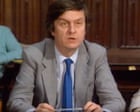
Paul May at a press conference about the Birmingham Six in 1990. Photograph: RTE Archives View image in fullscreen Paul May at a press conference about the Birmingham Six in 1990. Photograph: RTE Archives Law Obituary Paul May obituary Tireless campaigner against miscarriages of justice who helped to secure the release of the Birmingham Six
Prefer the Guardian on Google In 1985 Paul May, who has died aged 74 of a pulmonary embolism, became the chair of the Birmingham Six campaign. Six years later, the convictions of Billy Power, Paddy Hill , Johnnie Walker, Richard McIlkenny , Gerry Hunter and Hughie Callaghan for the Birmingham pub bombings in 1974 were quashed by the court of appeal, but only after they had spent 17 years in prison.
As the campaign got under way from a small backroom in the Camden Irish Centre, north London, the journalist (and later Labour MP) Chris Mullin presented new evidence in World in Action TV programmes and a book. Alongside his work as a housing officer for Islington council, Paul expanded the campaign until it had a huge network of supporters in Britain and abroad. By the time the Six’s new appeal opened, he had done much to sway public opinion concerning one of the worst miscarriages of justice in British history, and he organised or was involved with such cases for the rest of his life.
Paul was completely on top of the underlying evidence. He produced pamphlets that summarised and let the evidence speak for itself, so that people could draw their own conclusions. Travelling around the country, he spoke at often small public meetings to spread the word.
As the Birmingham Six campaign grew, he spoke to and briefed many politicians and journalists, as well as recruiting a growing number of well-known actors, comedians and musicians to the cause. He organised increasingly large fundraising events, culminating in a concert at the Wembley Conference Centre in 1990, with acts including the folk singers Christy Moore and Peggy Seeger.
View image in fullscreen The released Birmingham Six, with Chris Mullin MP in the centre, at the Old Bailey, London, in March 1991. Photograph: News Group/Shutterstock At the heart of the initiative lay Paul’s friendships with the Six, when they had no hope and felt that they would be buried in prison for the rest of their lives. Paul visited them and also visited their families. As a friend and advocate he made sure they had, and felt they had, a voice.
In speaking out about what happened to the Birmingham Six, Paul gave confidence more widely to Irish people living in Britain. In the 1950s and 60s boarding houses and pubs had carried signs saying “No Blacks. No dogs. No Irish”. This anti-Irish racism was compounded by general anti-Irish sentiment linked to the IRA bombing campaign that extended to England from the Troubles in Northern Ireland. The Birmingham Six campaign gave the wider Irish community a sense of vindication, pride and energy.
Paul also collaborated closely with other miscarriage of justice campaigns: for the Guildford Four, wrongly convicted of the Guildford pub bombings in 1974; for the Maguire Seven, wrongly convicted of being in possession of the explosives in connection with the Guildford and Woolwich pub bombings in 1974; the Tottenham Three, wrongly convicted of the killing of PC Keith Blakelock on the Broadwater Farm estate, north London, in 1985; the Bridgewater Four, wrongly convicted of the murder of the newspaper boy Carl Bridgewater in Stourbri…