
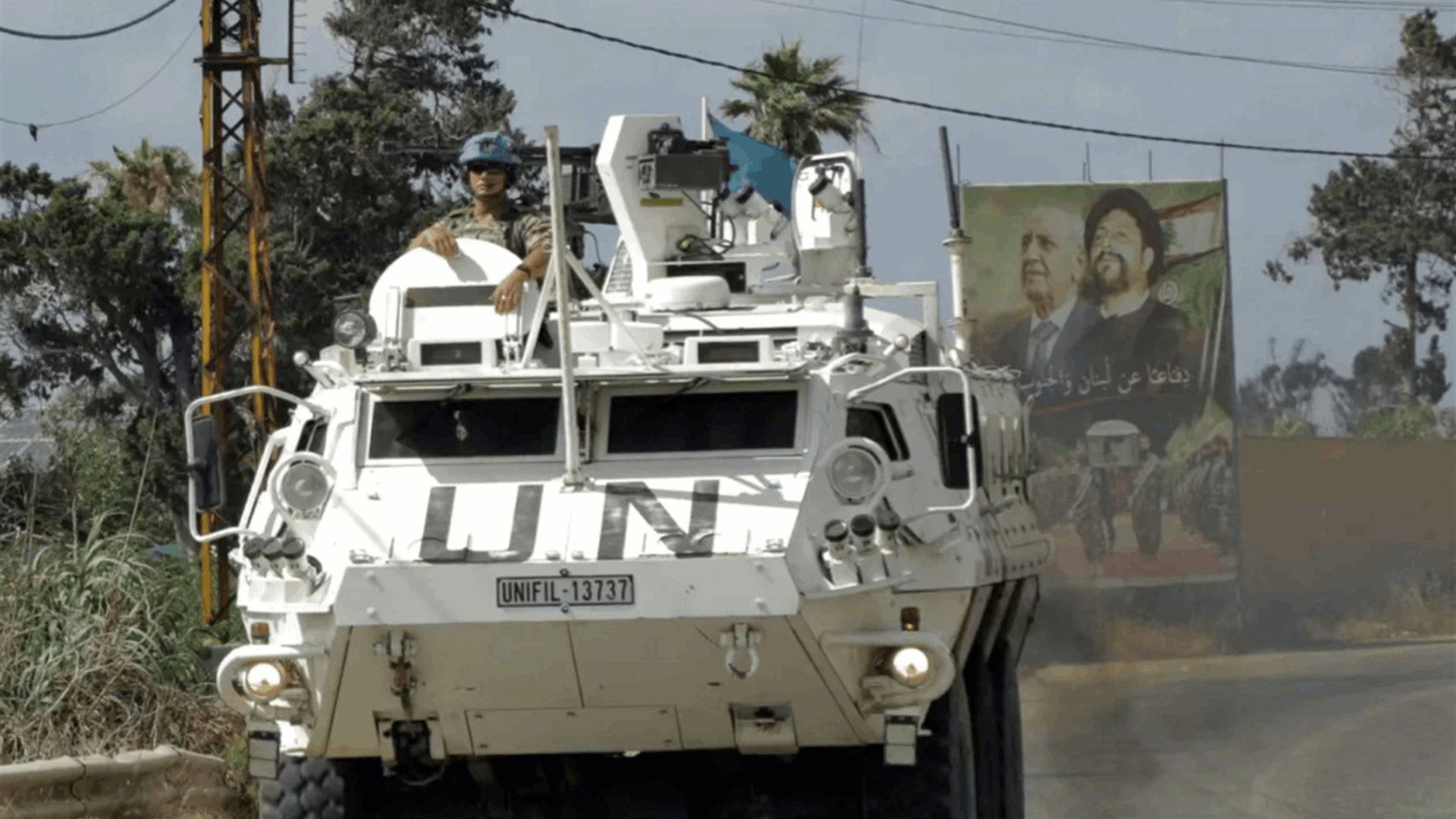
Restrictions are tightening on the movement of peacekeeping forces (UNIFIL) that are still present in southern Lebanon, whose mission ends at the end of this year. The operational procedures taken by the Israeli army in the security zone that was established along the border with Lebanon and extends more than 10 km into Lebanese territory, have reduced the movement of these forces and led to the siege of residents in 3 Christian villages that are still inhabited.
Multiple sources confirmed that Israeli forces moved last Wednesday the gates that were located at the border crossings into Lebanese territory, specifically to advanced points in the security zone in the first practical measure since 2000. The Israeli army had moved the gates to the border fence after its withdrawal from southern Lebanon, reinforcing them in 2018 with concrete walls built along a large part of the border. However, those gates were opened following the Israeli army's incursion into Lebanese territory in October 2024 during the extensive war with 'Hezbollah'.
Restrictions limiting 'UNIFIL' movement extend to the area of operations of the United Nations Interim Force in Lebanon (UNIFIL) in the south of the country, specifically in the area between the Litani River to the north and the Blue Line to the south on the Lebanese-Israeli border.
The spokesperson for 'UNIFIL' in Lebanon, Dany Al-Ghafri, noted that "since March 2, 2026 (the date of the outbreak of the last round of fighting between Israel and 'Hezbollah'), soldiers (UNIFIL) often face restrictions that limit their movement in many areas of their operations due to road closures and the establishment of barriers or others; leading to the suspension and delay of some patrols," stressing that "despite these challenges, (peacekeepers) continue their tasks on the ground to monitor the situation and report violations detected in accordance with Resolution 1701, as they work to facilitate humanitarian aid reaching the populations in dire need of it".
Al-Ghafri emphasizes in a statement to 'Asharq Al-Awsat' the need to remind all parties of the necessity to "respect the freedom of movement of all (UNIFIL) patrols, logistics convoys, and operational activities; because any restrictions placed against them constitute a violation of the international resolution 1701", pointing out that these parties must "fulfill their commitments to ensure the safety of these forces and United Nations properties".
No leaving their sites. Al-Ghafri confirms that 'UNIFIL' forces are still in all their locations within their area of operations along the Blue Line, explaining that they "do what they can based on the current circumstances, monitoring what is happening on the ground and reporting it to the Security Council impartially and ensuring humanitarian assistance convoys reach those in need and facilitating the work of humanitarian organizations".
The current number of 'UNIFIL' soldiers is around 7,500 coming from 47 countries.
Al-Ghafri talks about the "close and ongoing coordination around the clock with the Lebanese army", saying: "We conduct joint activities on land and at sea as they are our strategic partner in implementing Resolution 1701, and through the liaison and coordination mechanism, (UNIFIL) communicates with Lebanon and Israel to contain tensions and prevent any misunderstandings and exchange information".
In early June, a Serbian soldier from 'UNIFIL' was killed after shells fell on his position near Marjeyoun in the southeast of the country, becoming the seventh soldier of the international force to die since last March.