
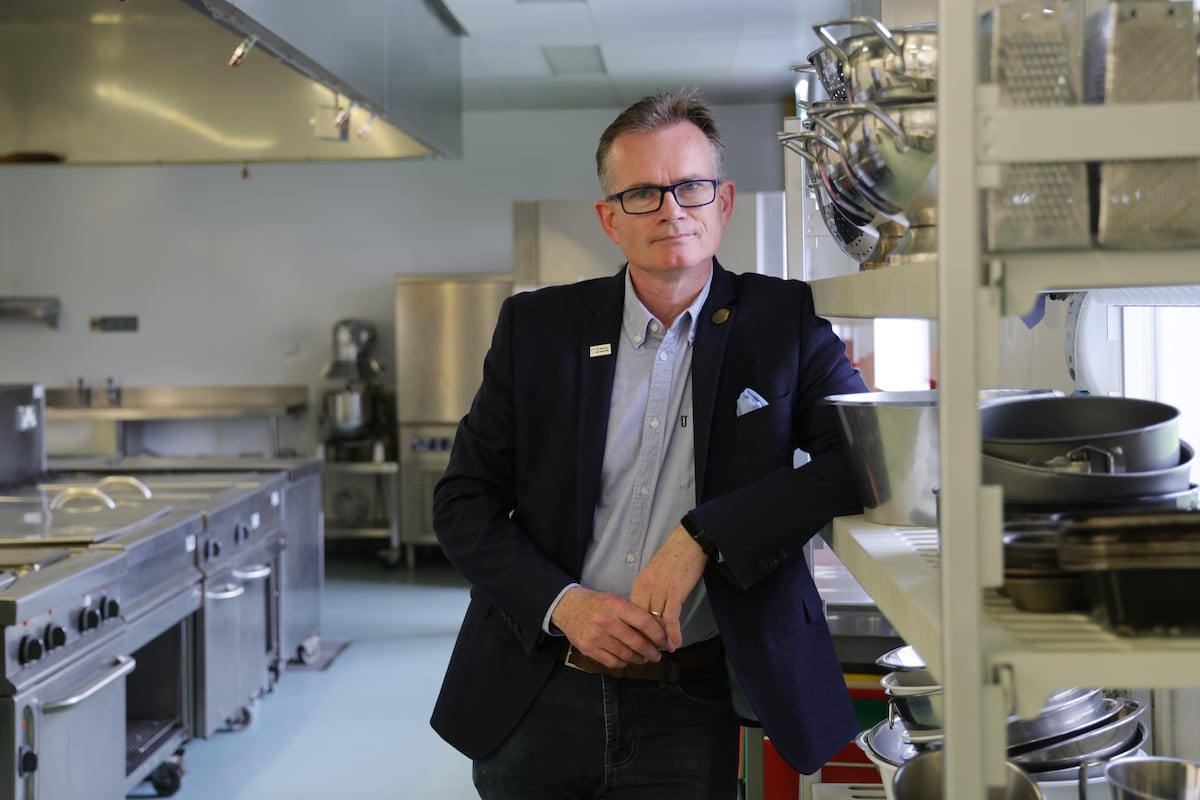
Academic Deirdre Curran recalls a summer long ago when she went to the US on a student visa and worked in a busy bistro. “I was the worst waitress in the place,” she says.
Curran, who lectures on management at University of Galway, was “100 years younger” back then. Decades later, however, she retains an interest in what goes on behind the scenes when food is served in restaurants and hotel dining rooms.
In recent research on work conditions in that world, she found “disconcertingly high” numbers of people being treated badly and “unacceptable levels” of bad behaviour.
The survey, titled The Lived Experience of Hospitality Workers in Ireland: A 2025 Snapshot, looked at 736 workers – 220 of the respondents worked in five- and four-star hotels, 24 were chefs or cooks in managerial roles and 37 were chefs or cooks in non-managerial roles.
Although 72 per cent agreed or strongly agreed they were treated with dignity and respect, many did not. “That’s actually an improvement because I did a similar project in 2021 and it was worse,” Curran says.
Her report was stark, stating: “A large proportion of respondents report ill-treatment, bullying and harassment – witnessed or experienced: 53 per cent of respondents stated that they had witnessed bullying or harassment in the previous two years.
“Of these, 40 per cent of respondents stated that they witnessed verbal abuse while 17 per cent stated that they had witnessed psychological abuse. Of the 38 per cent who stated they had experienced bullying or harassment, the most common forms reported were verbal abuse (41 per cent), psychological abuse (22 per cent) and racial abuse (9 per cent).”
Restaurant kitchens can be volatile, with top-end places even more so. Food and decor must be excellent, but chefs and cooks work in conditions that are often cramped and dimly lit – and heat blasts like a furnace. Time is short, tempers too. Turbulent chefs – unsavoury creatures who leave staff with a sense of dread and foreboding – may be a cultural cliche, but they’re out there.
“There have been problems over the years but it’s not every kitchen and it’s not all high-end kitchens,” says Alan Fitzmaurice, president of the Panel of Chefs of Ireland, a two-time member of the national team at the Culinary Olympics and now head chef at The Glasshouse hotel in Sligo.
“I remember being roared at,” he says of his junior days in other establishments. “I remember having a silver salver thrown at me,” he adds, describing an ornamental tray used for serving food.
“I remember one of those being thrown at me and it was thrown at me to hit me. It wasn’t kind of like ‘I’m mad and I’m throwing it against the wall’ – ‘I’m mad and I’m throwing it at you’, you know. A big difference.”
Stories of nasty behaviour in kitchens are nothing new, although they vary considerably by degree.
In April, the acclaimed Danish chef René Redzepi, founder of the world-renowned Noma restaurant in Copenhagen, stepped down after the New York Times reported accusations he inflicted physical and psychological violence on staff for years. Still, Redzepi has since declared plans to return as “creative director” of Noma with a focus on long-term projects.
The late writer and chef Anthony Bourdain, author of classic memoir Kitchen Confidential, once described gastronomy as the science of pain. This might not be very inspiring as you tuck into a romantic meal with your beloved, but Bourdain’s vivid descriptions of the crazed, hothouse underwo…