
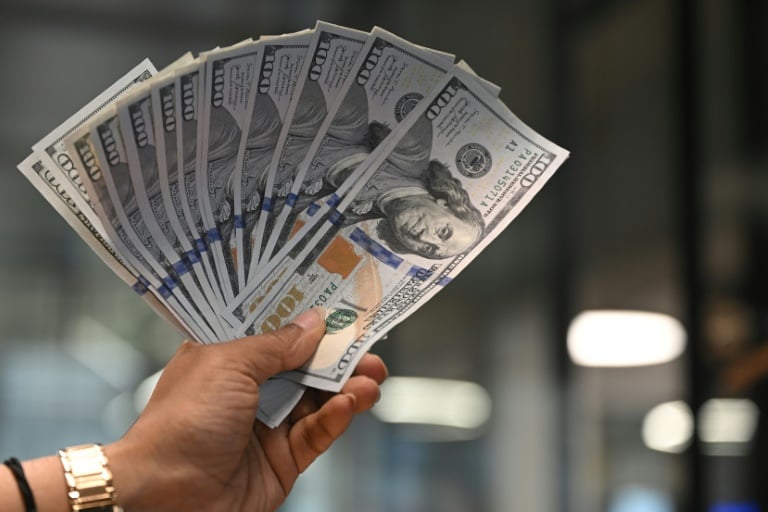
The dollar has slumped since Trump launched his trade war
Baghdad (IraqiNews.com) – The United States dollar experienced a fresh wave of depreciation against the Iraqi dinar across the parallel exchange markets of Baghdad and Erbil during evening trading on Saturday, July 4, 2026.
This downward correction occurred simultaneously with the closing of the regional financial bourses, extending a multi-day strengthening streak for the national currency. Financial analysts attribute this steady realignment to an influx of foreign currency supply and strict administrative measures targeting parallel currency speculation.
According to field data compiled from Baghdad’s primary financial hubs, the US dollar closed at 153,700 Iraqi dinars per 100 dollars at both the Al-Kifah and Al-Harthiya central exchanges. This closing rate reflects a notable decline from the morning opening session, where the currency initially traded at 154,250 Iraqi dinars per 100 dollars.
This downward shift immediately influenced consumer-facing retail operations, causing local exchange shops in the capital to drop their standard selling rates to 154,250 Iraqi dinars while adjusting their consumer purchase rate down to 153,250 Iraqi dinars per 100 dollars.
A nearly identical valuation contraction materialized within the Kurdistan Region as Erbil’s parallel markets mirrored the capital’s downward trajectory by the evening closing bell. Trading boards in Erbil documented the final greenback selling price at 153,700 Iraqi dinars per 100 dollars, while local currency brokers maintained an active purchasing rate of 153,600 Iraqi dinars.
Financial observers expect this downward pattern to persist in the parallel sector, forecasting a gradual convergence with the official central bank peg as legitimate commercial import transactions continue shifting toward regulated banking channels.