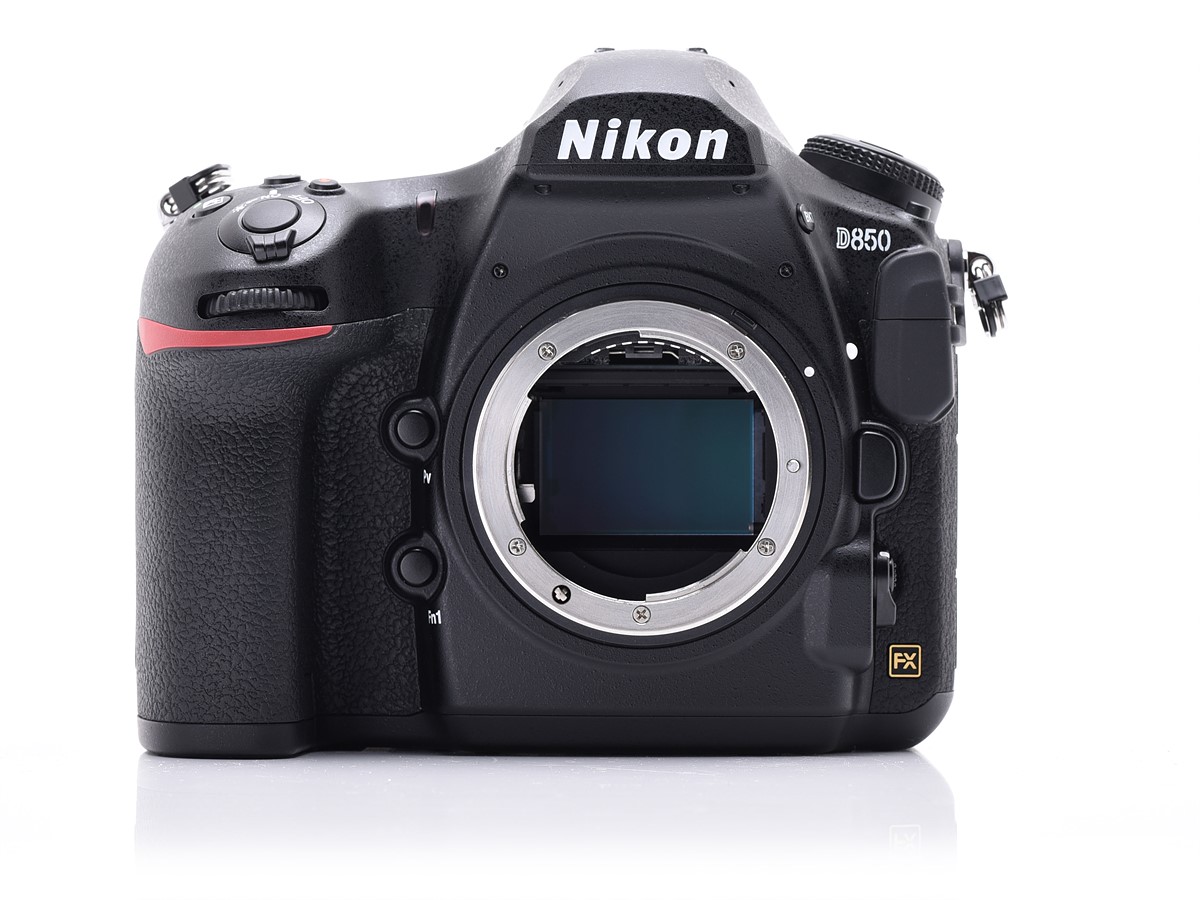
Mirrorless cameras have largely taken over from DSLRs. That transition has lead to a different kind of engineering taking the lead role. Photo: DPReview I have an admission: there's just something I don't love about shooting with the Nikon Z8. Pressing the shutter and hearing the speaker go "click" just isn't the same experience as hearing and, more importantly, feeling, a mechanical shutter fly open and slam closed at 1/200th of a second. There are absolutely benefits to this approach: the e-shutter won't wear out, no matter how many times it's used, you don't have to worry about shutter shock* and the sensor never being blocked means the EVF has a constant feed of what's happening in front of the lens. Were the Z8 the only camera I shot with, I'm certain I'd grow used to it and, in time, probably come to love the experience of an e-shutter-only life. I think, though, that this mild dissatisfaction has less to do with the Z8 specifically, and a... let's not call it an issue, but perhaps a quirk of mirrorless cameras in general and how they interact with my specific experience. They are, unquestionably, technological marvels, better in almost every way than what came before. But they aren't mechanical wonders. None of this is meant to pick on the Z8 specifically, I've just been shooting with it a lot. While most other mirrorless cameras still have a mechanical shutter, their most ambitious modes don't use it, and they're still mechanically much more simple than even basic DSLRs. Photo: Richard Butler I'm approaching 30 years old, which means my entire life has taken place after the digital revolution, both in cameras and the world at large. There is no Before Computers for me; some of my earliest memories are messing around with the settings of the family desktop when I was four. As I grew older, I turned that interest into a job, building and fixing computers and, eventually, programming them and writing about technology. As a result, I understand how they work at a pretty fundamental level. While I might describe a mirrorless camera's autofocusing and subject recognition capabilities as "magical," I know they're not. I'm familiar with how machine learning works, and could explain it in excruciating detail. I can recognize great software engineering, but I'm not astounded by it. This isn't the case for DSLRs. While I have a decent understanding of how they do what they do, I still find it incredible that it's all possible at all. What do you mean you can use a system of mirrors, optical splitters and custom-made line sensors to let you look through the lens and autofocus at the same time? And the mirror and shutter coordinate to flip up and fire at precisely the right time to expose the sensor? 10 times a second? And they figured this out in the 90s? A diagram of the autofocus sensor assembly for the Canon EOS 5D II. If you want to get an idea of how mechanically complex that camera is, go check out all the technical diagrams in our review. Image: Canon It's even truer for film, where you have a similar level of SLR complexity, but the computer part – the stuff I understand – is replaced by a strip of chemicals that physically change when exposed to light. Again, I have some knowledge of what's actually going on. I've done the reading. But every time I pull developed film out of the tank and look at the negative, it just feels like witchcraft. How could pressing a button on a mirrorless camera and kicking off the take picture function in its computer ever compare? Until you look at the pictures and realize that the Z8 can track a subject from the very edge of the frame, and have it in focus the entire time. And that it can capture it at 20fps, with no viewfinder blackout. And sync with flash at 1/250 of a second, without a mechanical shutter. It's old news today, but versus any (D)SLR, it's revolutionary. SLRs and their digital counterparts are like mechanical watches, full of complex moving parts. Mirrorless cameras are like a smartwatch; still a feat of engineering, but of a completely different kind. Photo: Richard Butler This effect extends beyond cameras, too, in our increasingly computerized world. I've pretty much exclusively worn digital watches of some form, but my coworker Richard says the obvious point of comparison is intricately made and fully mechanical watches versus computer-powered smartwatches. The silicon models are simpler, easier to understand, and more accurate than a mechanical model could ever be. But where's the soul? For me, the more obvious point of comparison is one more familiar to me (but no less clichéd): internal combustion engine vehicles versus electric ones.** Like with mirrorless systems, I understand at a fundamental level how EVs work. And no matter how many truly excellent explainers I watch, and even how often I work on my own cars, I still can't really wrap my mind around how a combustion engine does what it does. (You expect me to believe all these precise operations can be synchronized by a belt or a chain?) But like with cameras, that complexity, beautiful as it is, comes with a cost: I know some prefer the traditional experience, but driving an EV, it's hard not to see it as the future. I still can't really wrap my mind around how a combustion engine does what it does With all this said, there are still mechanical wonders around; both the kinds you'd expect, and ones that are a bit easier to overlook. As an example of the former, take Leica's M-series cameras; the rangefinder mechanisms are intricate and precise, the kind of thing an unskilled technician could take apart, but not put back together. And while the company was, at one point, only producing a few hundred of its film rangefinders a year, they've seen a surge in popularity again, indicating a demand for that mechanical, analog experience. There's plenty of complex physical engineering to be found in the mirrorless world, too. Stabilization systems, both in-camera and in-lens, are an impressive dance between gyroscopic sensors, software and actuation mechanisms, and become even more so when coordinating together. And gimbals take this to an even higher level; seeing one in action can be so mesmerizing that you'd be forgiven for forgetting that the device that you're watching corrects for the movement it's detecting in real-time and moving a who-knows-how-heavy camera setup to match only costs $300. I also fully realize that there will be those for whom the wonder is flipped; a mechanical engineer might be more awestruck by complex algorithms than mechanical linkages, no matter how delicate or ingenious. And some folks may be completely flummoxed by cameras new and old, alike. But whichever makes most sense with your brain, it's worth stopping to remember that cameras aren't just technology. They are, of course, impressive pieces of tech. But they're also doing something special, whether we understand how it's happening or not. * - Which becomes an increasing concern as sensor resolution increases; there's a reason the Sony a7R series use electronic front curtain, which avoids shutter shock, by default. ** - Apologies for choosing three particularly contentious examples.
Photography & Directing
Opinion: is the age of mechanical wonders over?
Mirrorless cameras have largely taken over from DSLRs. That transition has lead to a different kind of engineering taking the lead role. Photo: DPReview I have an admission: there's just...
AAdmin
July 4, 2026
7 min read