
July 5, 2026 July 5, 2026 Home » Architecture » Look Who's Talking Ibrahim Fawakhry — ArchUp
In the early 90s, I watched a movie that stayed with me for reasons I couldn't clearly express at the time.
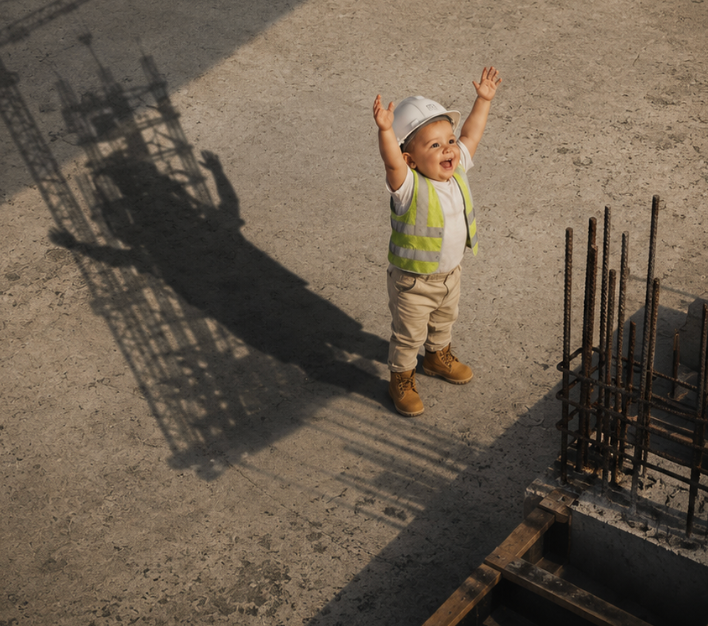
Look Who's Talking. A comedy based on a simple yet truly clever premise: the audience hears the inner voice of a baby and watches the adults around them confidently managing their lives while he observes everything with clarity they lack. The child cannot walk. Cannot speak. Cannot feed himself. But he sees things that adults completely overlook, as he has no interest in the performance they are putting on for each other.
I watched it twice. Maybe three times. I laughed, as one usually does.
Thirty years later, I found myself sitting in a meeting room thinking of that movie again. Not because I was feeling nostalgic. But because I was watching it happen in real-time.
Over the past two months, I witnessed two separate meetings that began differently and ended up in roughly the same place.
The first included one of the most accomplished architects I have known in my professional life. Three decades of practice. The kind of person you can talk to about anything that touches the specialty: municipal regulations, materials science, structural logic, contract law, environmental performance, urban planning, construction sequencing, project economics. Not because he studied those things academically. But because he lived in it for thirty years, in real sites, with real consequences when decisions were wrong.
After a few minutes of conversation, the client asked, “Can you show me your completed projects?”
A reasonable question on its face. But as the meeting continued, it became clear that the client had no framework for evaluating anything he was about to see. He didn’t know if he was assessing design quality, construction management, budget performance, or the ability to navigate government approvals. He was asking to see completed projects as someone would ask to see a menu when they’re not yet sure if they’re hungry.
What he actually wanted, without knowing how to say it, was reassurance. And reassurance is not something a thirty-year portfolio can provide to someone who doesn’t yet know what questions to ask.
The client arrived prepared. He had done his homework. And he had written questions. Sat seriously like someone who understands this was an important decision.
Then the meeting started and began to spiral. He would ask a question, receive an answer, then ask a different version of the same question ten minutes later as if the first answer hadn’t registered. He was moving toward a decision then retreating. He would say “yes” to something then strain it with conditions until the “yes” dissolved into a long list of stipulations.
He wasn’t being difficult. He was sincere, in the way people are sincere when they’re not really sure and trying to hide that, from others and from themselves.
He was entering, perhaps for the first time in his life, one of the most complex industries ever. A person might build one house in their lifetime. While the architect sitting across from him has built dozens. The information gap between them wasn’t a personal failing. It was simply the reality of the situation.
The problem was that the client didn’t fully realize that gap existed.
This is the dynamic that most professionals in this field recognize but rarely discuss directly.
The person who owns the land reasonably thinks that ownership grants certain authority over the process. And it does, legally and financially. But owning the land does not translate to knowledge of what happens between the first meeting and the completed building. It doesn’t provide an understanding of soil conditions, structural load paths, the sequencing of trades on-site, or what the contract should protect against in reality, or which corners can be cut without consequence and which ones will turn into problems five years into building occupancy.
Construction is the industry where the consequences of decisions made in the first month are likely invisible until it’s too late to address them at a low cost. Steel within the wall. Waterproofing membrane beneath the slab. The drain slope that deviates by two degrees from where it should be…