
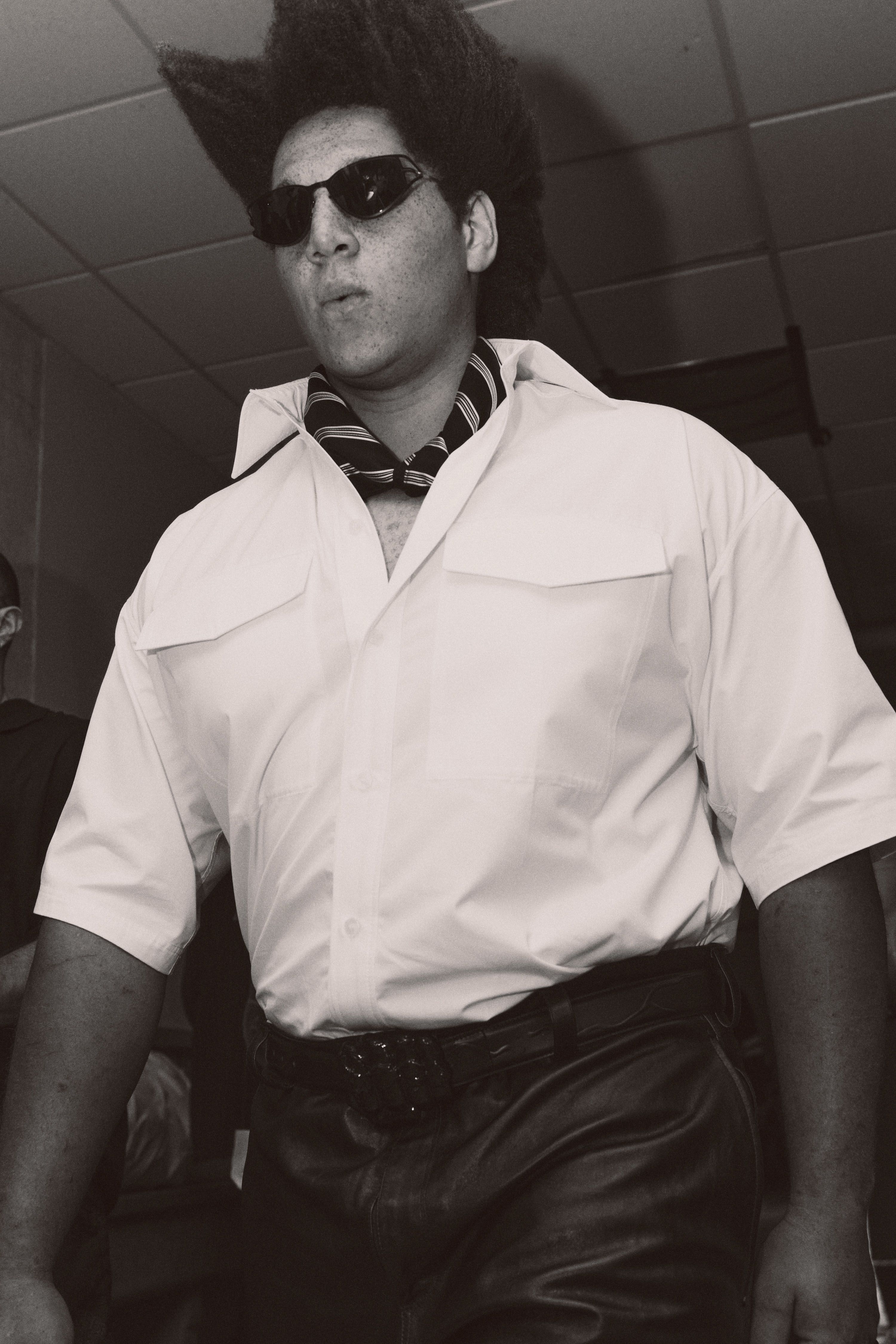
Louis Gabriel Nouchi Spring/Summer 2027 Photo: Courtesy of Louis Gabriel Nouchi Save Story Save this story Save Story Save this story Across the Spring/Summer 2027 menswear season, a new ultra-slim silhouette emerged . With second-skin garments and very skinny jeans spotted at Prada, Dior Men, and Gucci’s February co-ed show, it seems the GLP-1 effect that hit womenswear a few seasons ago is finally taking hold of men’s fashion, sparking much debate.
Meanwhile, there was a marked increase in jacked, muscular models on the runway, often dressed in ultra-short shorts and second-skin separates to show off their bulging quads and pecs, as the looksmaxxing movement continues to gain steam. The two extremes spoke to a rising tension in men’s fashion: where are the bodies that replicate those of paying customers.
Size inclusivity has never been a priority in menswear. In fact, across three years and seven seasons of Vogue Business menswear size inclusivity reports, representation of plus-size bodies on the men’s runway has stagnated, settling at 0.2-0.3% since FW25 . But as the SS27 season has shown, not only is men’s fashion refusing to cater to, and represent, men with bigger bodies. It’s now moving the goalposts on body ideals further, as slim models get slimmer, muscle men get bigger, and shows reflect an untenable body image inspired by the looksmaxxing movement , which is unachievable for the average person without a helping hand from peptides and/or GLP-1s.
Is this a permanent shift in men’s body ideals that the industry needs to account for? Or just a phase, as audiences and designers reflect the culture swirling around them? We spoke to scores of industry insiders to get their thoughts on the matter, and more broadly, where they feel men’s size inclusivity stands today.
Louis Gabriel Nouchi, founder and designer
We are going backwards. We feel really lonely. It’s always just me, Rick Owens, and Doublet [who are size inclusive at Paris Fashion Week Men’s ]. I offer my clothing up to size XXL, so it’s important that we have a cast that represents a wide range of body types. Since we are in a crisis, people turn to fashion as a refuge — a gateway into fantasies of transformation and idealized versions of the self. This can fuel a return to regressive ideals of masculinity and virility.
Mahalia Chang, style editor at British GQ
You do start to feel like there's a bit of a backwards slide in terms of inclusivity. This season, the slimmer silhouette and skinny fit was back again. That doesn’t always mean the bodies wearing that silhouette also have to be slim, but in this case, it did. I would have liked to have seen those clothes on a more diverse range of bodies, which would be a better indication of how you can actually wear them in the real world. A lot of murmuring I heard post-shows was about how it’s not a look you can wear if you’ve got anything resembling a bum, quads, or calves, which, you know, most of us do. That flow-y, oversized thing we’ve been doing for years seems to be trending away and I think we'll see smaller silhouettes return.
Men’s size inclusivity is not advancing at the same pace as womenswear. You will see a bright spot here and there, a runway that feels refreshing, different, but there's yet to be the turning point we really need. I hope it's coming.
Yasmin Mehmet, menswear buyer at Harrods
At Harrods, we’re seeing a shift away from oversized silhouettes toward more refined and tail…