
If you judged the AI revolution solely by the stock market, you might conclude that artificial intelligence has already transformed corporate America. A significant portion of this phenomenon can be attributed to financial analysts who prioritize AI infrastructure expansion.
Nvidia has become one of the world’s most valuable companies. Dell Technologies has emerged as one of the biggest winners of the AI infrastructure boom. Hyperscale cloud providers continue to invest hundreds of billions of dollars in AI data centers, while semiconductor companies are enjoying one of the strongest growth cycles in decades.
The investment story is impossible to ignore. What has been less visible is the productivity dividend that those investments are expected to deliver. AI has fueled the largest infrastructure buildout in technology history, yet most companies have not fundamentally changed how work gets done.
Employees are using ChatGPT to summarize meetings, marketing teams are generating first drafts, and developers increasingly rely on coding assistants. Those are meaningful improvements, but they remain incremental rather than transformational. The biggest gains are still ahead.
The next phase of AI adoption will be far more consequential than the infrastructure boom itself, as organizations begin to embed AI directly into business processes rather than simply using it as a conversational assistant. That shift will create new opportunities to reduce costs, improve decision-making, accelerate product development, strengthen customer experiences, and generate incremental revenue.
Ironically, the impact could be even greater for small and medium-sized businesses, which typically have fewer legacy systems, less bureaucracy, and cleaner workflows than their Fortune 500 counterparts.
One of the clearest indicators of where enterprise AI is heading comes from the companies developing the technology themselves.
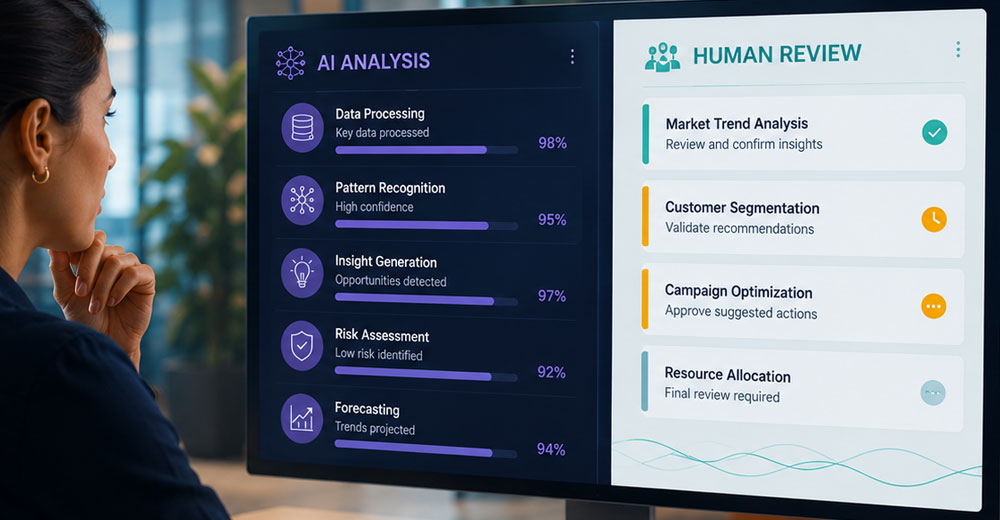
A recent Wall Street Journal article examined how OpenAI, Google, and Anthropic are deploying AI internally. Beyond summarizing meetings and drafting emails, these companies are using AI agents to execute multistep business workflows, with employees supervising, validating, and refining the output.
AI is evolving from a productivity assistant into a digital coworker capable of taking on substantial portions of knowledge work, leaving employees to apply their experience, judgment, and critical thinking where they add the greatest value.
OpenAI provides one of the clearest examples. The company says nearly every employee — not just software engineers — now uses Codex every week. Originally built to help developers write code, Codex now investigates customer billing issues, builds dashboards, creates product demonstrations, analyzes employee disclosures, and assists legal teams with routine document reviews.
AI eliminates organizational bottlenecks by enabling a single employee to complete work that previously required coordination among multiple departments.
Lawyers still review legal documents, but AI performs much of the initial analysis, allowing legal professionals to focus on higher-value work requiring experience and judgment.
Google’s finance organization tells a similar story. AI agents now compare vendor invoices against contract terms before employees review exceptions.
According to Google, the system allows finance teams to process roughly five times more invoices without increasing staffing. Even more impressive, Google est...