
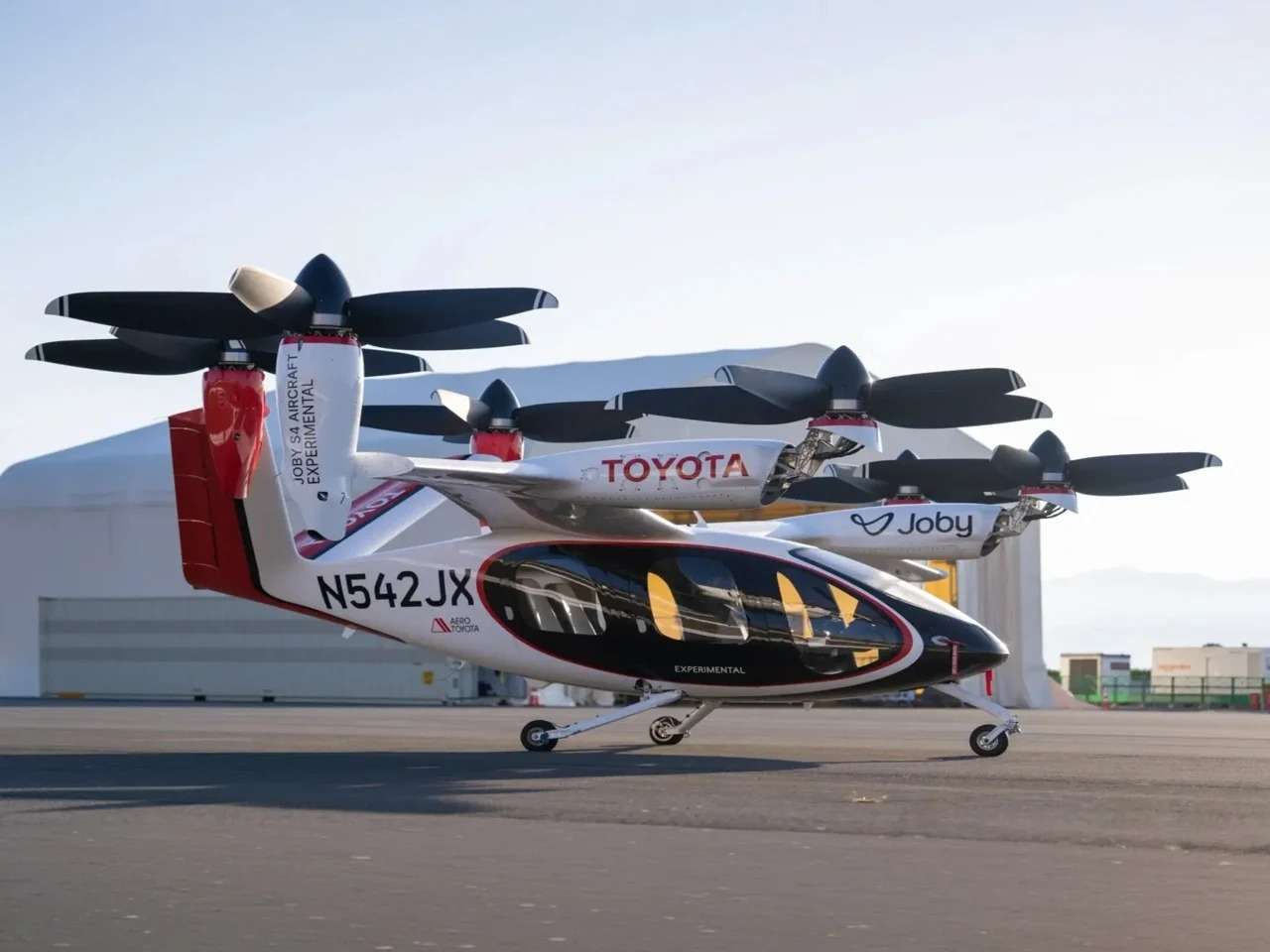
July 8, 2026 July 8, 2026 Home » Design » The Joby S4 Project Studies the Future of Vertical Mobility within Modern Urban Systems. From utopian concepts to kinetic architecture, the idea of the flying car has long been confined between futuristic imagination and conceptual models that have not found their way fully into urban reality. However, the growing collaboration between Toyota Motor Corporation and Joby Aviation represents an important step in moving electric vertical takeoff and landing (eVTOL) technologies from the experimental stage into building a more realistic industrial ecosystem. The transformation here lies not just in the vehicle itself but in its transition from being a visual symbol of the future to an engineering project associated with issues of production, quality, and manufacturing chains.
This transformation reframes the aerial vehicle within the urban landscape as a potential element within a new mobility system, where vertical movement can add a different layer to the traditional transport network, opening new perceptions of the relationship between humans, distance, and space within the city.
The structure of the partnership is reflected in the joint entity (Joby Toyota Aero Manufacturing Preparation Company), in which Toyota holds the majority stake, influencing the project's manufacturing orientation. This relationship combines Joby's experience in developing electric vertical aircraft with Toyota's long-standing expertise in lean production systems and quality control.
This integration does not mean directly transferring Toyota's production model to the aviation sector, but it indicates the potential to benefit from its organizational principles to improve manufacturing processes, reduce waste, and enhance production efficiency. Architecturally, the factory here transforms from merely an operational space to an organizational environment that reflects the relationship between material flow, worker movement, and the precision of engineering operations, elements that ultimately affect the project's ability to move from prototype to repeated production within a modern industrial building system.
The Joby S4 aircraft presents an industrial design language different from the traditional image of helicopters, relying on six tilt-rotors that allow it to transition between vertical takeoff and horizontal flight at speeds of up to about 200 miles per hour. This configuration gives the vehicle a sleeker appearance, as many mechanical complexities disappear behind a clean and streamlined structure that visually approaches modern consumer technology products.
The adoption of a fully electric system also contributes to reduced noise compared to traditional helicopters, which may lessen the impact of future aerial vehicles on the urban environment. However, integrating these technologies within cities remains tied to regulatory factors and new infrastructure that extend beyond the outer design of the vehicle itself.
The importance of electric vertical aircraft extends beyond technical performance; it encompasses rethinking the experience of movement within the city. The long route taken via ground roads can theoretically be shortened through direct aerial paths, altering human perception of distance and the relationship between different points in the city.
Demonstration flights of the Joby aircraft have shown the potential to cut travel times between urban locations and major airports, such as the route between John F. Kennedy Airport and Manhattan, down to mere minutes compared to conventional ground trips. However, realizing this scenario on a large scale depends on the completion of regulatory acceptance, the development of necessary infrastructure, and ensuring the economic viability of the service.
The evolution of the relationship between Toyota and Joby did not come as a surprise, but rather as a result of a strategic collaboration that began in 2019, involving financial investments and technical support that helped the company develop its manufacturing capabilities. The transition from financial support to direct industrial cooperation represents an important stage in the project's path, where production capability becomes a crucial element in the success of eVTOL technologies.
Joby is working on developing manufacturing processes at its facility in Marina, California, with the aim of bridging the gap between prototype development and reaching more scalable production, a stage representing one of the biggest challenges facing electric vertical aviation companies.
Despite industrial progress, this ecosystem still faces fundamental challenges,...