
By Esports Legal News 8 July 2026 4 min read
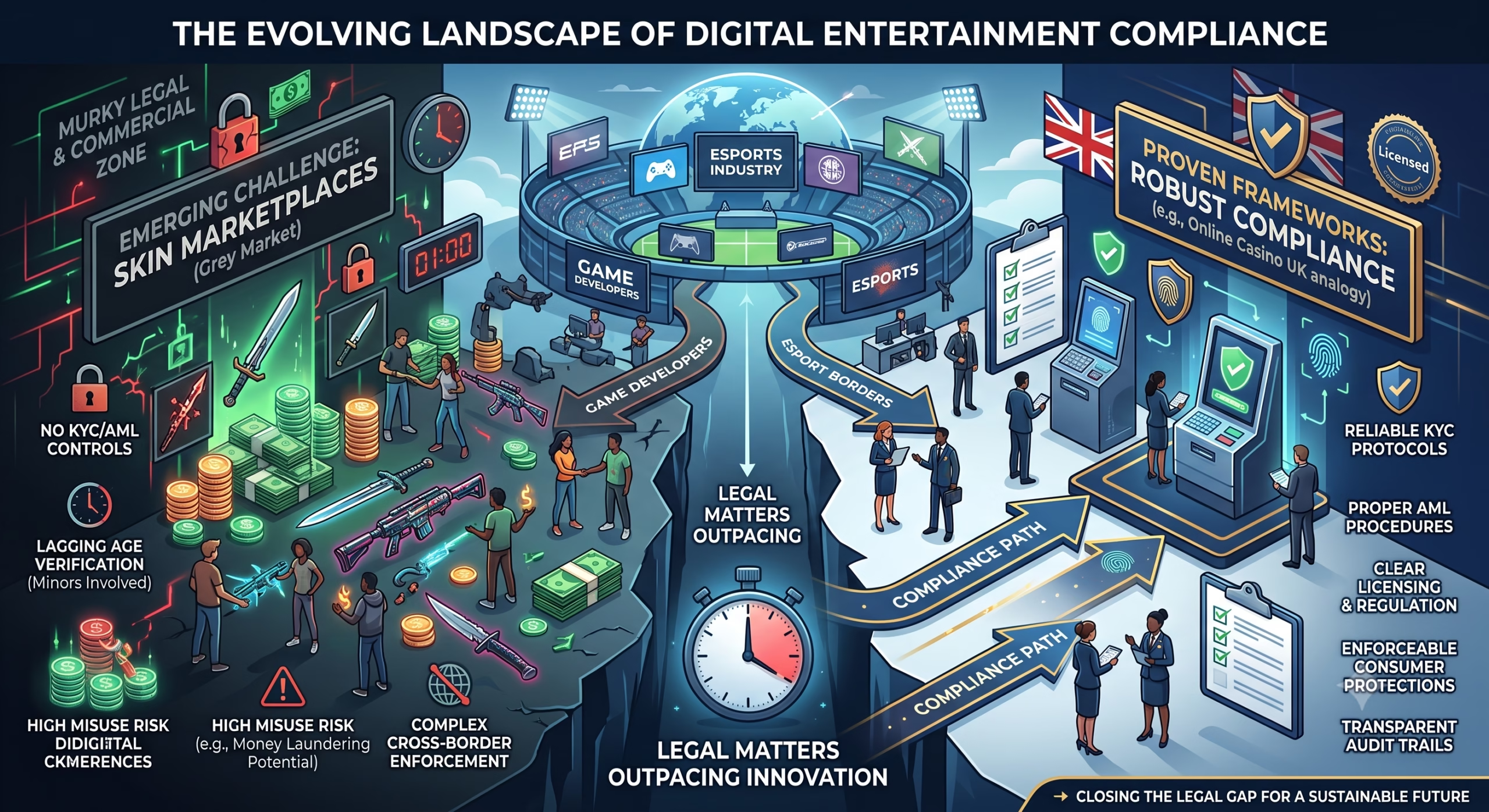
Dealing with legal matters promptly has become a defining pillar of the digital entertainment industry. The speed at which digital products reach consumers means that legal frameworks often struggle to keep pace, and the cost of falling behind can be enormous, both financially and reputationally. This reality pushed operators across every corner of digital entertainment to build robust compliance structures from the ground up.
We can see this most clearly by observing online casino UK platforms. Reliable sites in this space have ensured that users feel safe at all times through proper KYC protocols and AML procedures, areas that used to be significant weak points across the industry.
What was once a largely unregulated environment has become one of the most tightly governed sectors in digital entertainment, with clear licensing requirements and enforceable consumer protections.
But the online gaming world is now facing a different kind of challenge: skin marketplaces. This is a newer and in many ways more complex issue, and given how quickly it has grown, it is worth understanding exactly what it is and what it represents for the broader industry.
In competitive gaming, particularly in titles like Counter-Strike 2, Dota 2, and Rust, cosmetic items (commonly called skins) are used to change the visual appearance of weapons, characters, or equipment.
They have no effect on gameplay, but they carry real perceived value among players. Some rare skins sell for hundreds or even thousands of dollars on secondary markets, driven purely by demand within the player community.
Skin marketplaces emerged to facilitate the buying, selling, and trading of these items outside of official game platforms. Some are third-party sites operating independently of the game developers.
Others exist as grey-market platforms that sit in a murky legal and commercial zone. The core issue is that skins, while technically virtual items, function like a currency in practice. They can be acquired, stored, transferred, and converted into real money, which means they carry many of the same financial and legal risks as cash.
The scale of this market is not trivial. Billions of dollars change hands annually across global skin trading platforms. That volume alone carries a significant risk of misuse, and regulators have been slow to catch up.
Money laundering concerns seem to be the biggest issue at the moment. Because skin values fluctuate and transactions often lack transparent audit trails, these platforms can be used to move money across borders with minimal scrutiny.
A person could theoretically convert cash into skins, trade them across multiple accounts or platforms, and extract value on the other end with little traceability. This is precisely the kind of activity that AML frameworks are designed to prevent, but most skin marketplace operators have historically operated without those controls in place.
Age verification is another unresolved issue. Many of the players most engaged with skin trading are minors. Without proper verification systems, young users are participating in markets that involve real financial value, sometimes making purchases or trades worth significant sums without parental knowledge or legal authority.
The esports industry sits in an unusual position. It moves fast, operates across multiple jurisdictions simultaneously, and has traditionally prioritized growth over governance.
Game de…