
Dr. Al-Hussein Oubari 2026/07/10 Miscellaneous 10 Visits
The concepts of saving and spending are no longer sufficient to prepare a generation capable of dealing with a profoundly transforming financial system. With the spread of digital wallets, cryptocurrencies, and instant payment methods via mobile phones, students today interact with financial tools that did not exist when most financial literacy curricula were formulated. The problem is not only the lack of financial awareness but also the widening gap between what the student learns inside the classroom and what they practice outside its walls.
Studies from financial education programs in the Middle East and North Africa indicate that a large percentage of young people do not possess sufficient understanding of basic financial concepts, let alone advanced digital concepts. In light of the adoption of digital transformation strategies in education by several countries in the region, this reality poses a fundamental educational question: How do we reshape financial education to fit an era in which money has transformed from tangible paper to programmed numbers?
Traditional financial education relies on three main pillars: budgeting, saving, and responsible borrowing. These pillars remain valid, but they are no longer sufficient. A student who learns how to manage their weekly allowance may not know how to assess the risks associated with a digital account linked to an app on their phone, or how to differentiate between a regulated financial platform and an untrustworthy one.
Digital financial literacy does not mean adding a new chapter on technology at the end of the textbook; it means rethinking the structure of the entire curriculum. When spending becomes a one-click process and when money moves across borders in seconds, the nature of financial decision-making itself changes. Here, the role of the school in building critical financial thinking that enables the student to understand the institutional and technological context of every financial decision emerges, not just memorizing behavioral rules.
Additionally, the digital divide adds another dimension to the problem. Students who do not have equitable access to digital tools may find themselves outside the circle of the new digital economy, which necessitates designing educational programs that take into account access disparities and not just knowledge disparities.
Updated financial education should cover a set of basic concepts that reflect the reality of the contemporary financial system. The first is the concept of programmed money, i.e., money that can be automated through smart contracts that execute conditions without intermediaries. This concept may seem theoretically complex, but its educational translation is possible through simplified examples resembling automatic subscriptions in applications.
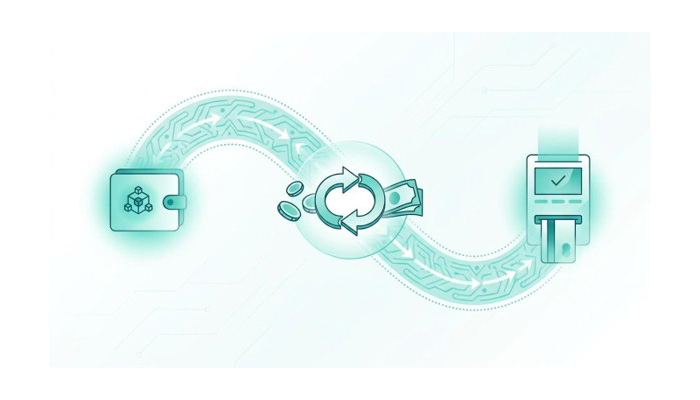
The second is understanding the infrastructure of digital payment. The student should know the difference between a traditional bank account and a digital wallet, how instant payment systems work, and what security verification mechanisms such as two-factor authentication are. This also includes introducing cards linked to digital assets, such as crypto cards, which represent a real-world example of the intersection between cryptocurrencies and everyday payment systems, and are tools that students should understand how they work and their risks within an expanded educational context.
The third is digital risks: discussions about financial fraud are no longer limited to high-interest loans. Today they include phishing, the identity of fake platforms, and the volatility of digital assets. Integrating these concepts builds the student's awareness that sound financial decisions are intertwined with digital security decisions.
Fourth: Behavioral digital economics: financial applications use a design directed at prompting the user to spend or invest, and the student must understand how user interfaces, app colors, and instant notifications affect their decisions. This dimension connects financial education with cognitive sciences and opens the door for collaboration between home economics teachers and computer teachers.
Updating financial education does not necessarily require new materials; it can be integrated into existing subjects. In math classes, the teacher can design problems based on digital payment scenarios or calculate variable transfer fees. In computer classes, discussions can arise about how financial data is stored and secured, and the concept of encryption as a foundation...