
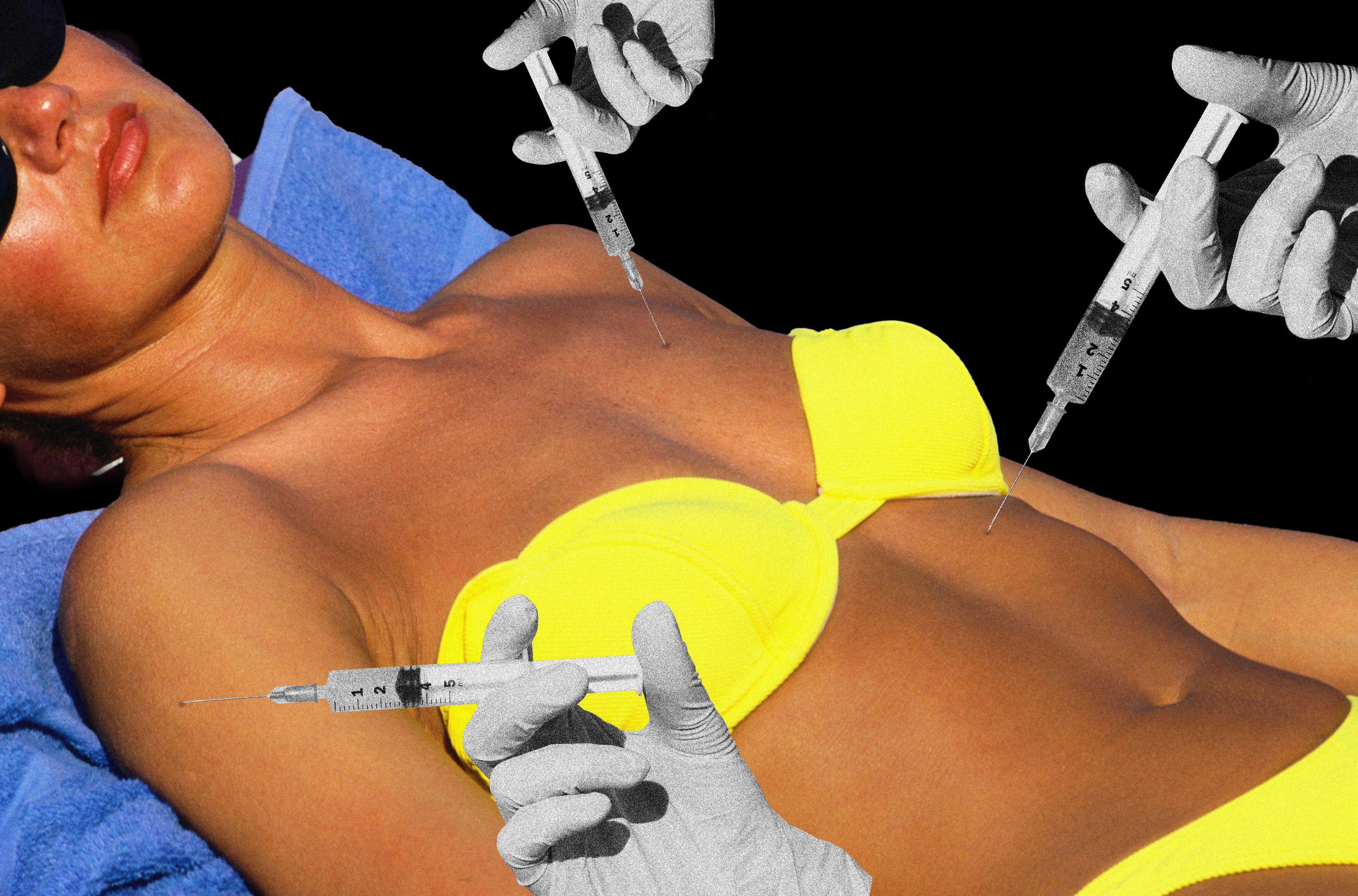
Illustration by Allure; Source images: Getty Images Save Story Save this story Save Story Save this story It’s peak summer, which means sunny skies, lemonade stands, half-day Fridays, and for many people who have yet to grasp the very real dangers of unsafe sun exposure, tanning . It’s a topic we’ve written extensively about for years, most recently the concerning uptick in tanning amongst young people and ever-changing regulations for tanning beds. Despite the fact that people know tanning is dangerous and can lead to skin damage, skin cancer, and even death, they’re still doing it—and now, potentially injecting themselves with a currently banned peptide called Melanotan II to stand in for a sun tan… or amplify the sun’s rays for an even deeper bronze.
Peptides have become increasingly popular in recent years, driven by the stratospheric rise of injectable GLP-1s for weight loss and a fleet of gray market peptides claiming to help with post-workout recovery, hormone balance, hair loss, and skin health. A handful of currently restricted peptides are up for review, with a meeting of the FDA’s Pharmacy Compounding Advisory Committee set for mid-July. Melanotan II—also called “the Barbie drug”—is one such peptide on the list; it was previously banned, but could potentially be approved or unrestricted after said meeting.
Obviously, dermatologists and anti-tanning organizations have a lot of thoughts about Melanotan II and its potential impact on tanning culture, and they’re very concerned about the outcome of this meeting, not to mention how easy it is to acquire peptides online. The Skin Cancer Foundation recently issued a statement from its president, Deborah S. Sarnoff , MD, a board-certified dermatologist and director of dermatology at Cosmetique Dermatology, Laser & Plastic Surgery in New York, saying the organization “strongly discourages the use of Melanotan II and other unapproved tanning agents marketed as shortcuts to achieving darker skin.”
But wait a second: how can a peptide make you tan in the first place, and how is the sun involved, if at all? According to Jenna Queller , MD, a board-certified dermatologist and founder of DermWorks in Boca Raton, Florida, Melanotan II is a synthetic peptide designed to mimic alpha-melanocyte-stimulating hormone (also known as α-MSH), which she describes as “a naturally occurring hormone that stimulates melanocytes, the pigment-producing cells in the skin.” By activating these receptors, the peptide can increase melanin production and thus make skin look more tan.
Though Melanotan II promises to make you look tan without soaking up the sunbed light or laying out, many Melanotan II users are using it as a tool to speed up the sun’s rays. “It’s important to understand that increased pigmentation does not eliminate the harmful effects of UV exposure,” Dr. Queller says. “Many users still intentionally expose themselves to ultraviolet radiation to deepen or accelerate the tan, further increasing their cumulative UV damage and long-term risk of skin cancer. Any cosmetic benefit is outweighed by the potential health risks.”
Amanda Kahn , MD, a board-certified internist in New York City, says Melanotan II should not be considered a “benign beauty shortcut” to use in place of bed or suntanning. “You are pharmacologically stimulating melanocytes, or the pigment producing cells in the skin, which raises safety questions,” she says. “I’ve heard that it can cause new moles, or darkening of existing m…